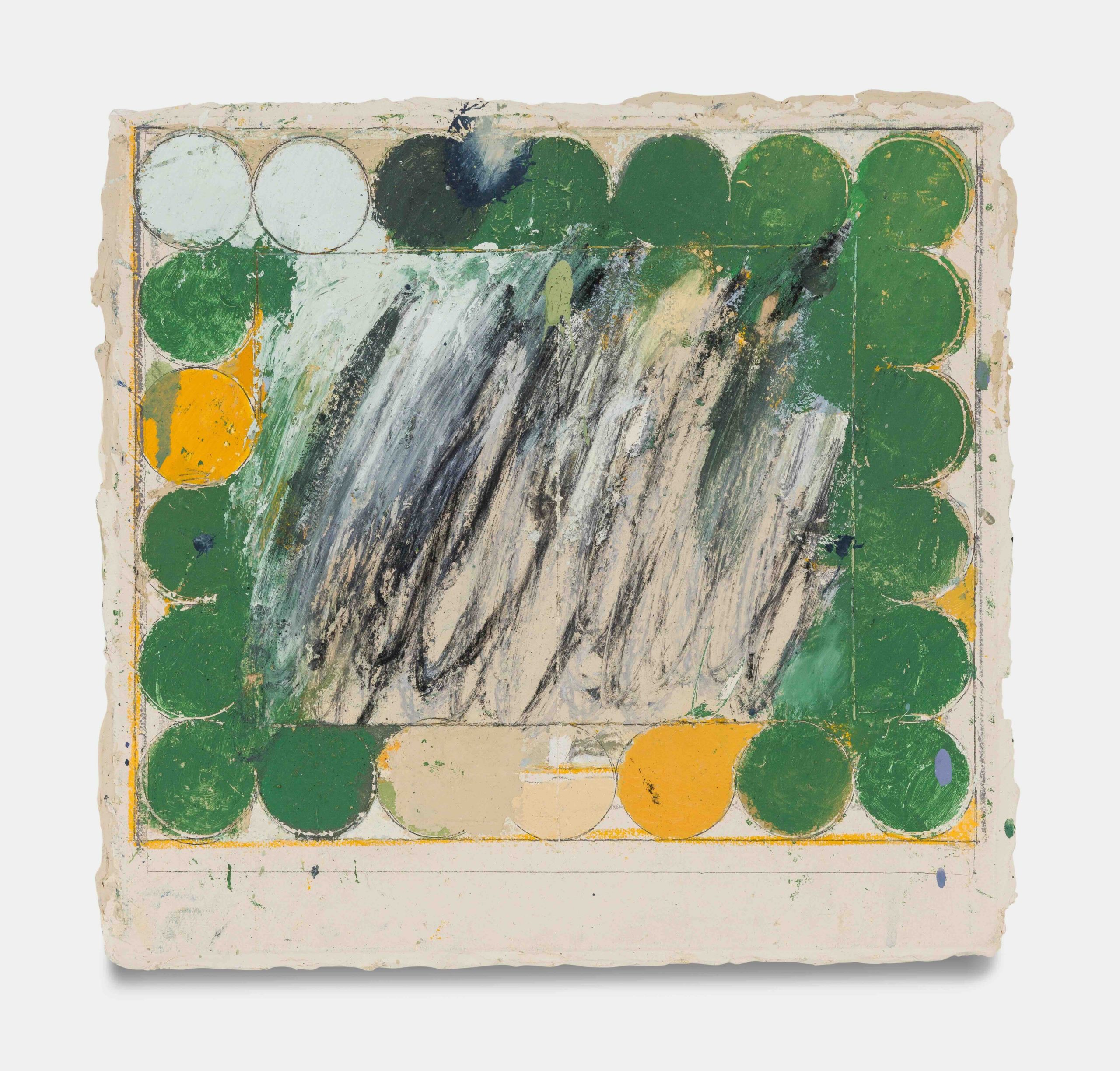
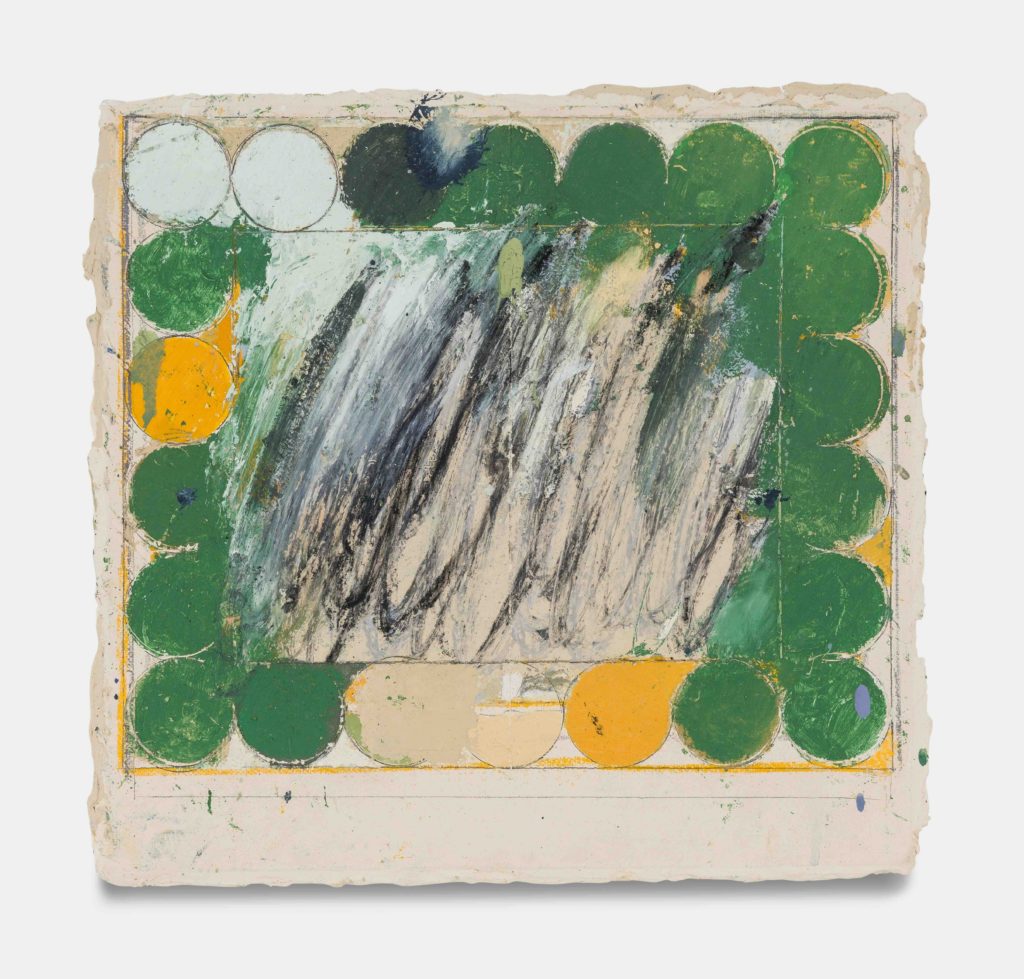
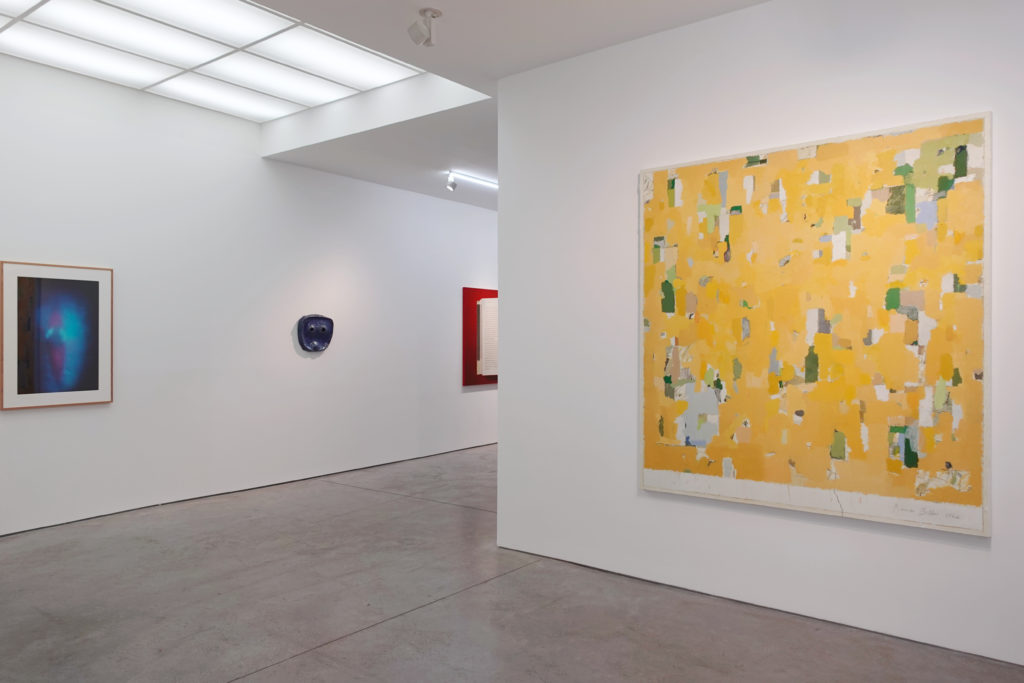
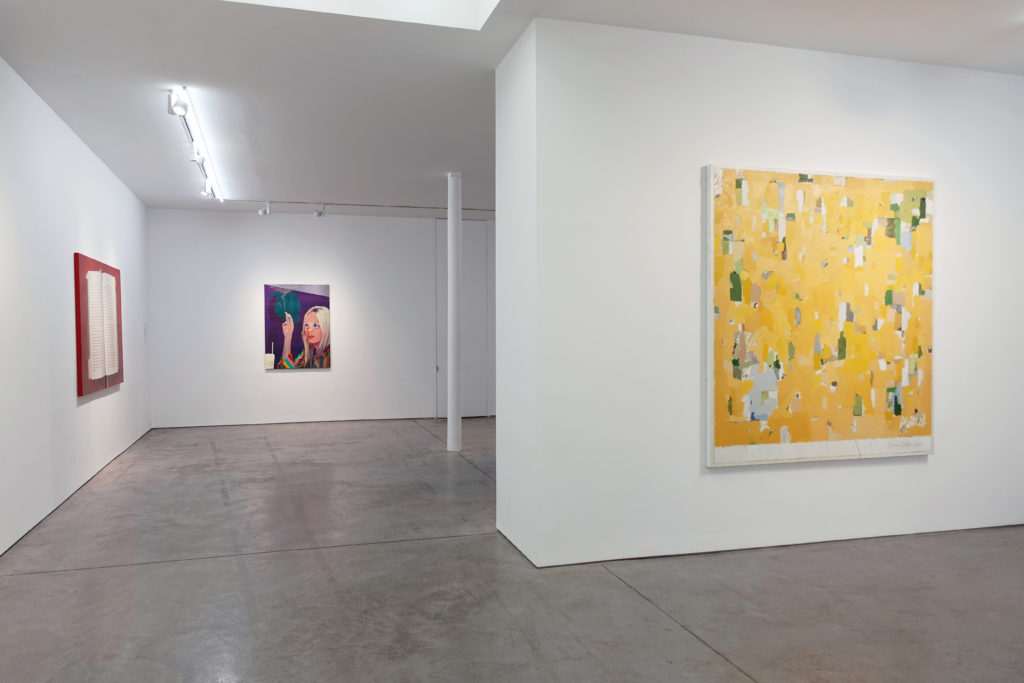
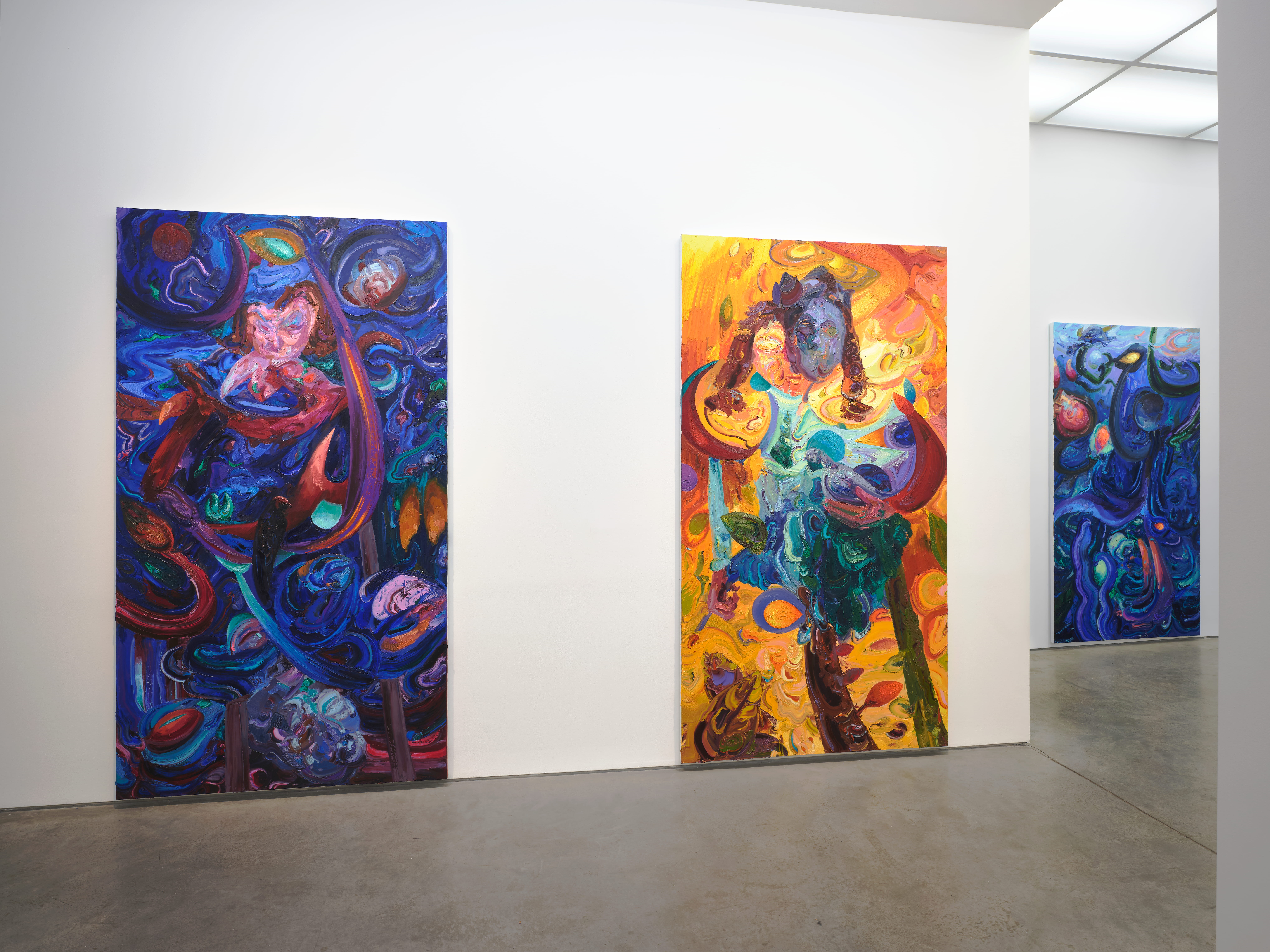
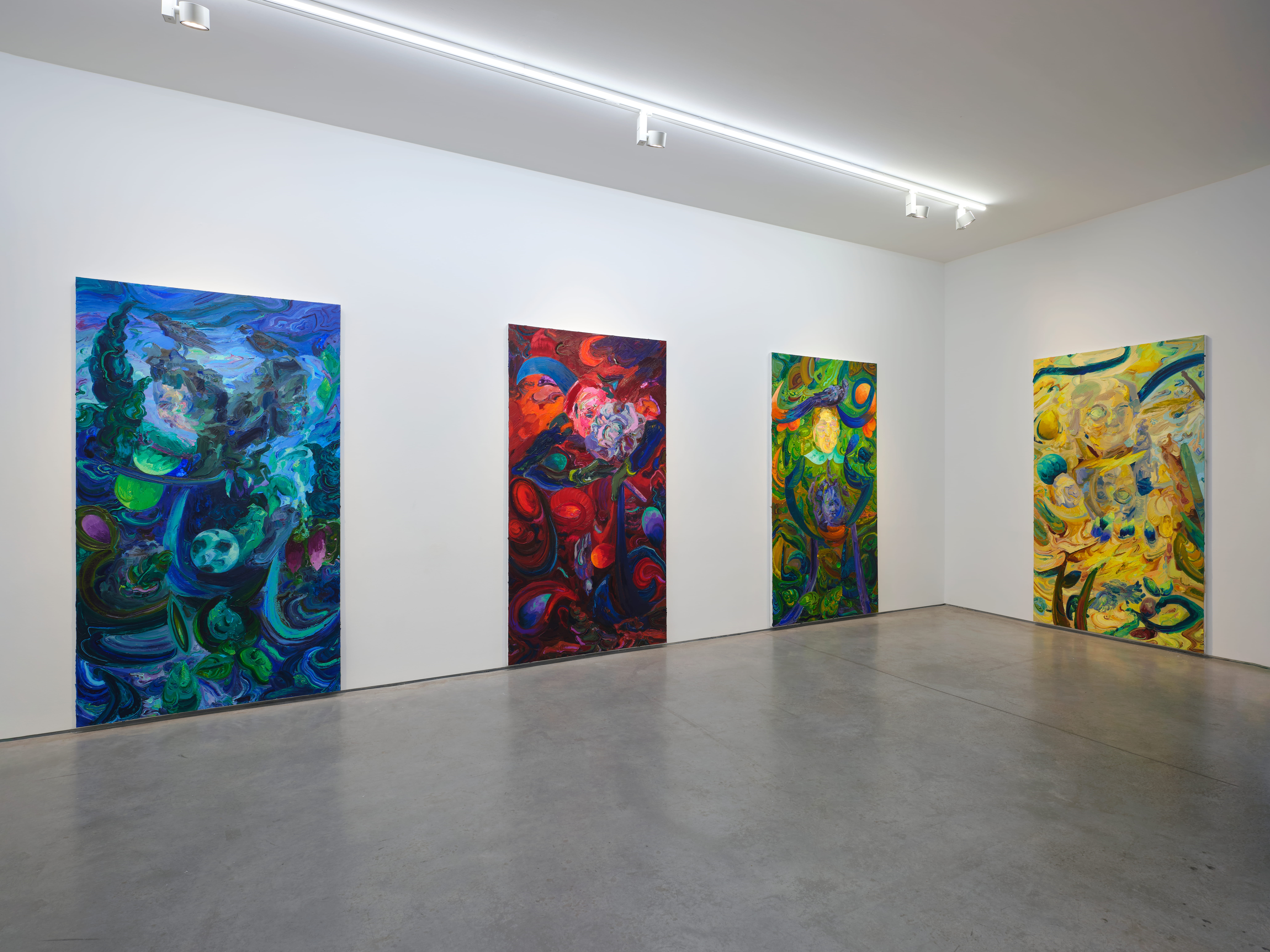
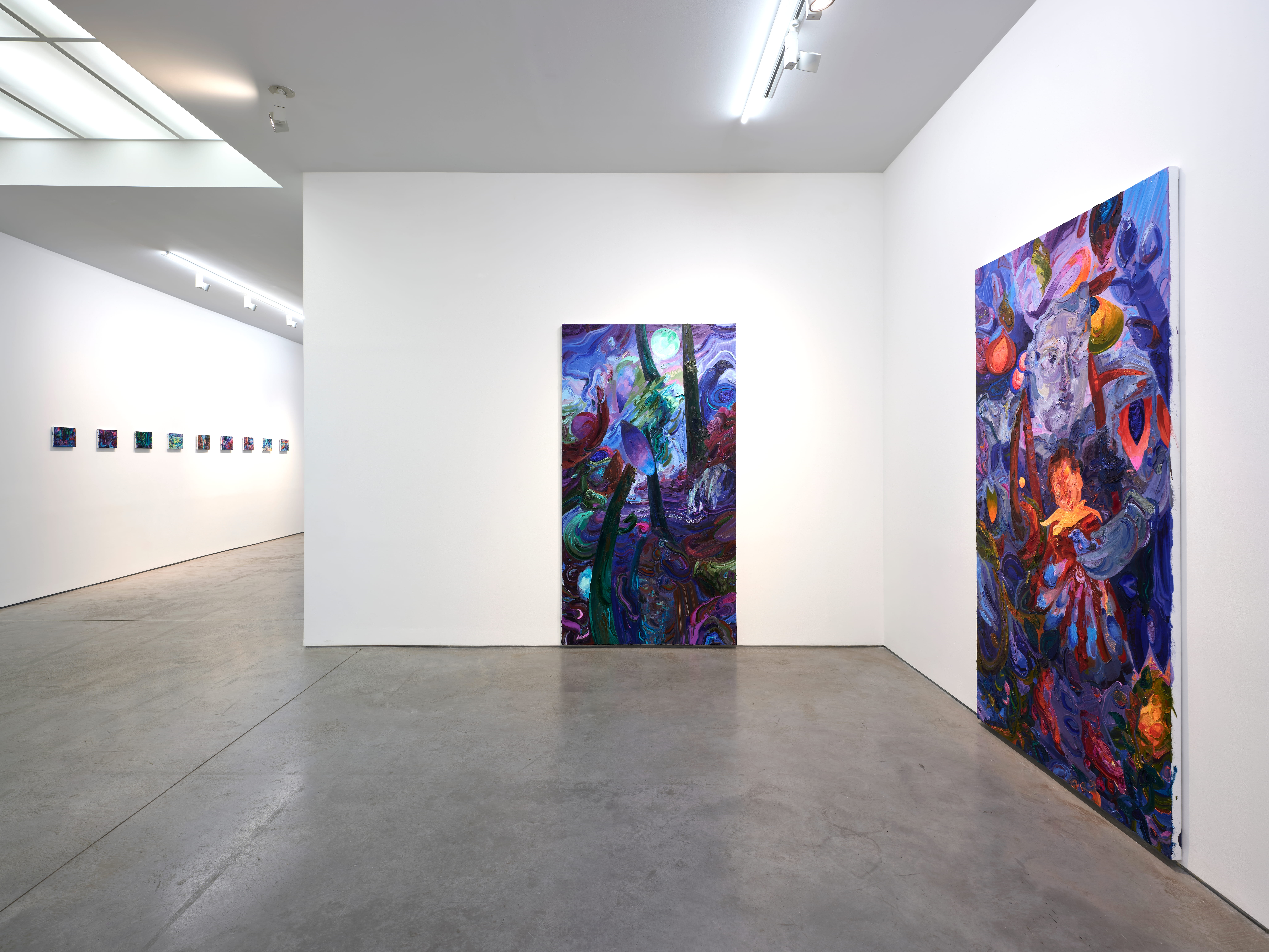
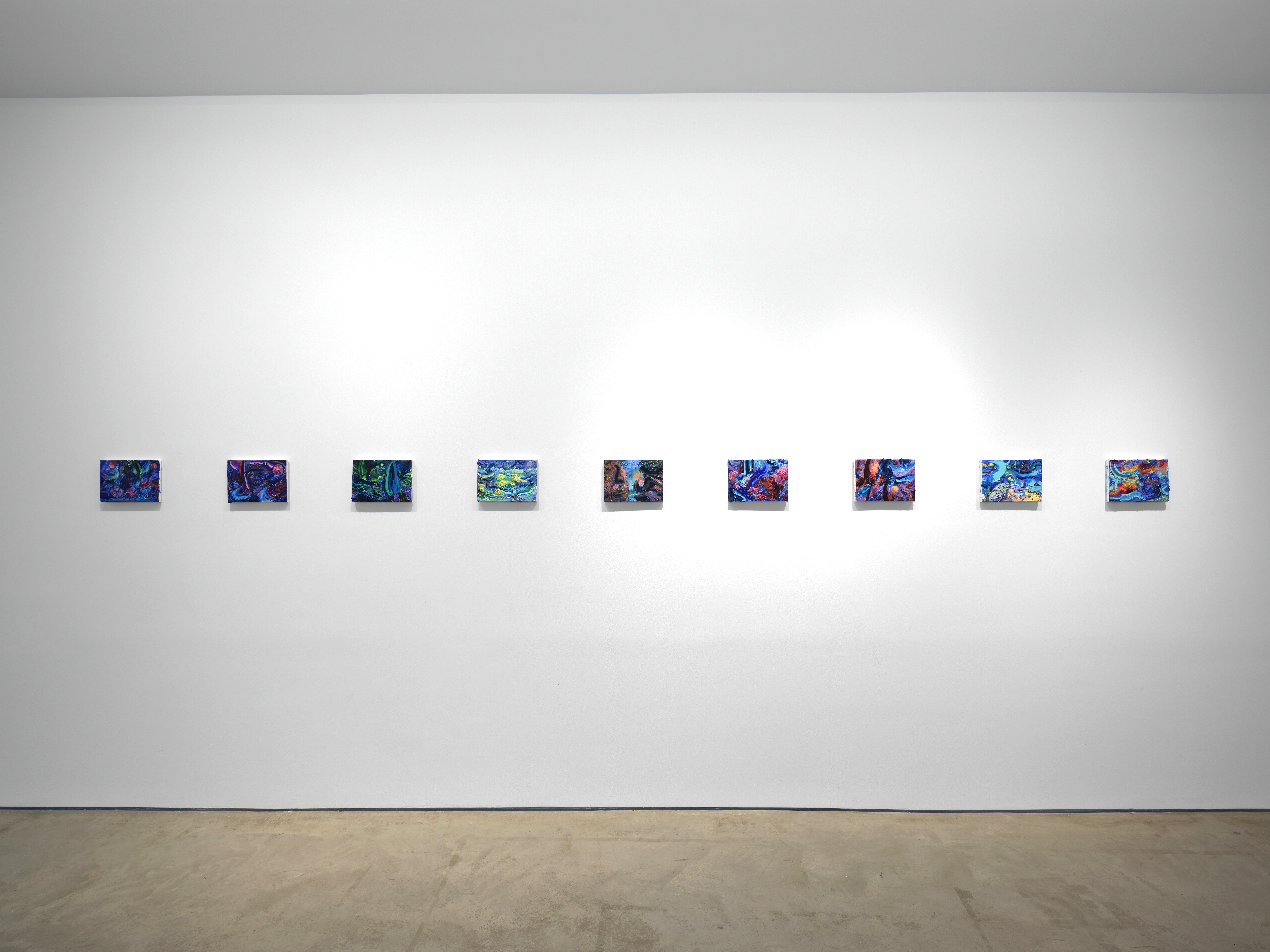
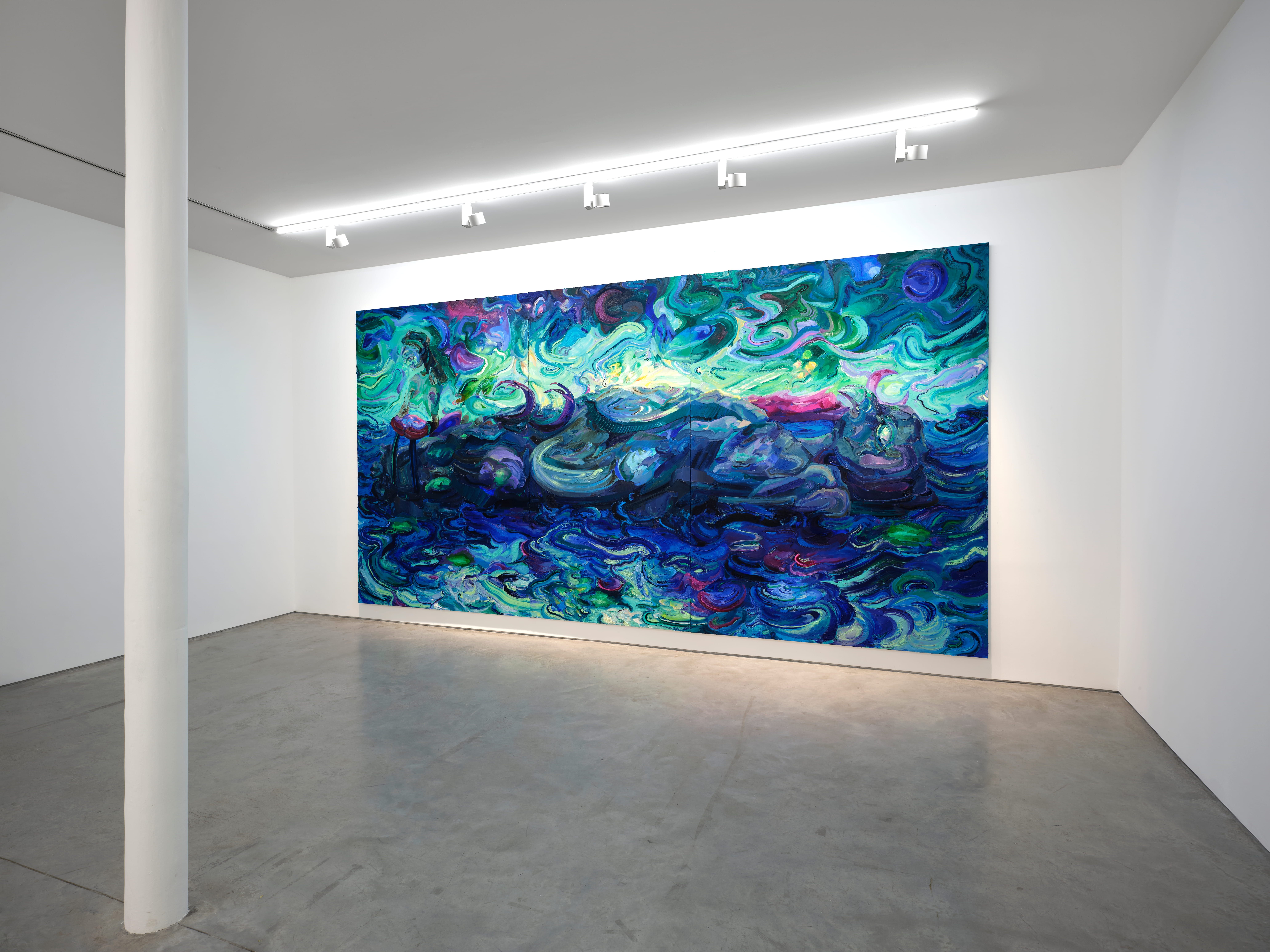
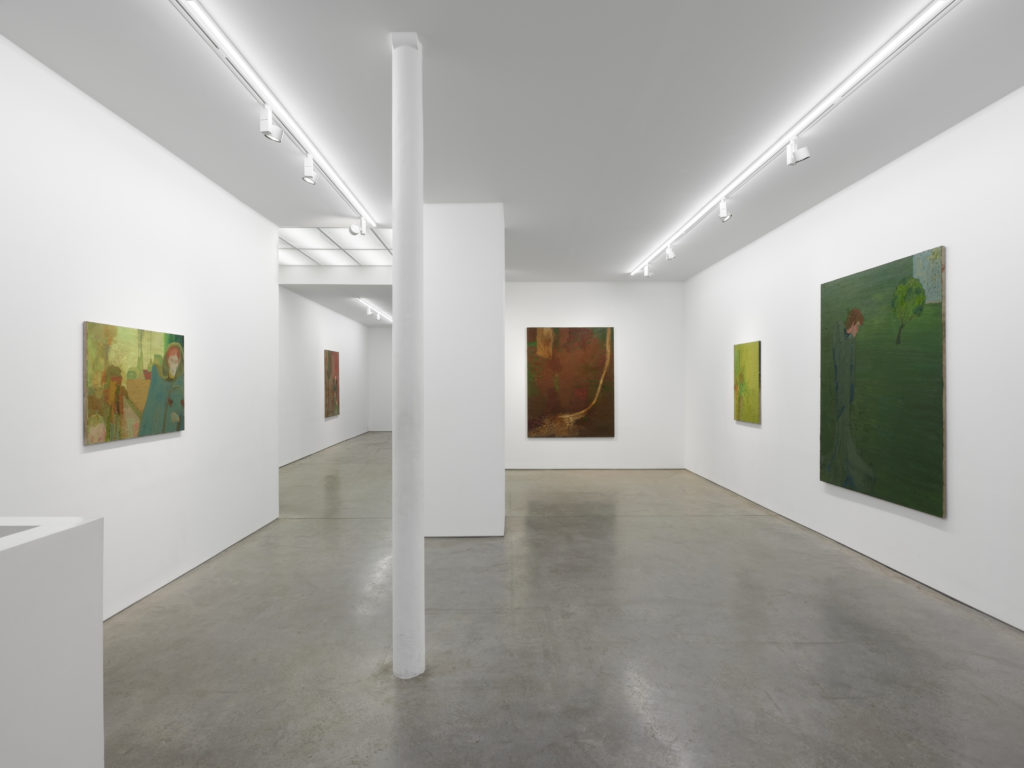
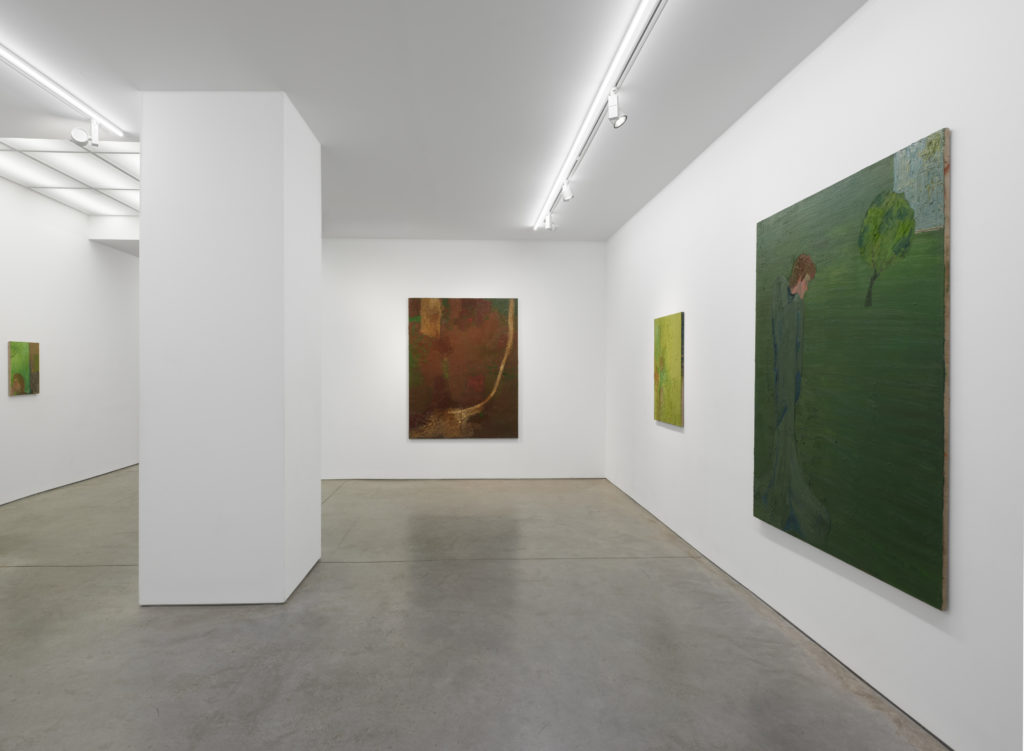
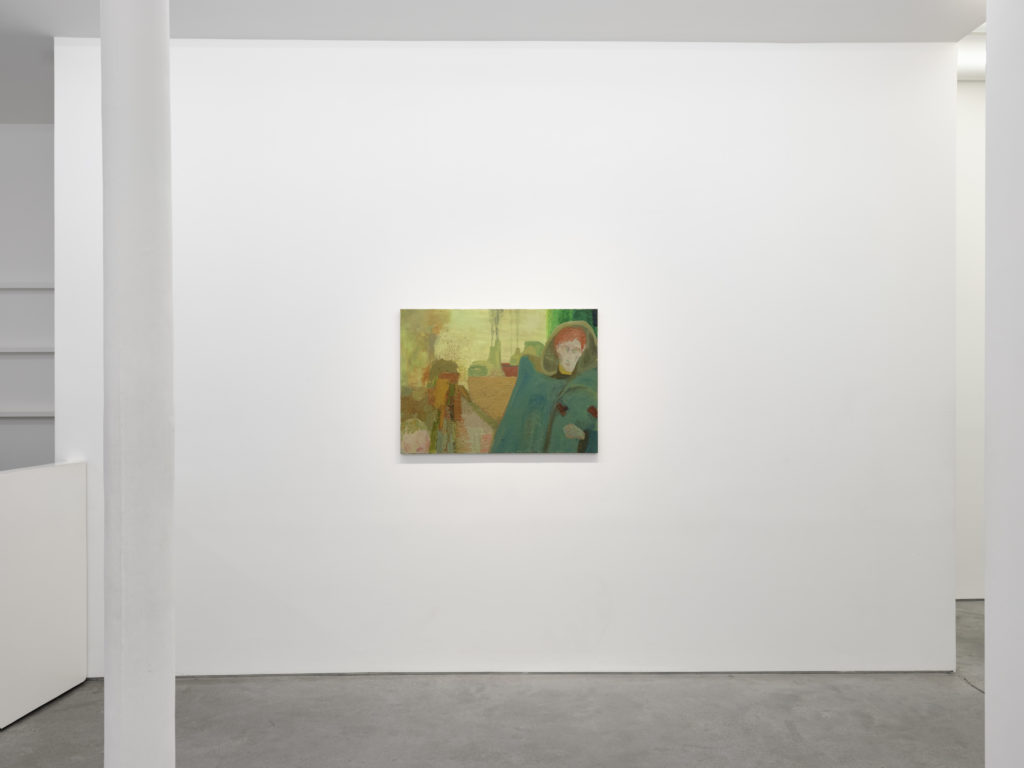
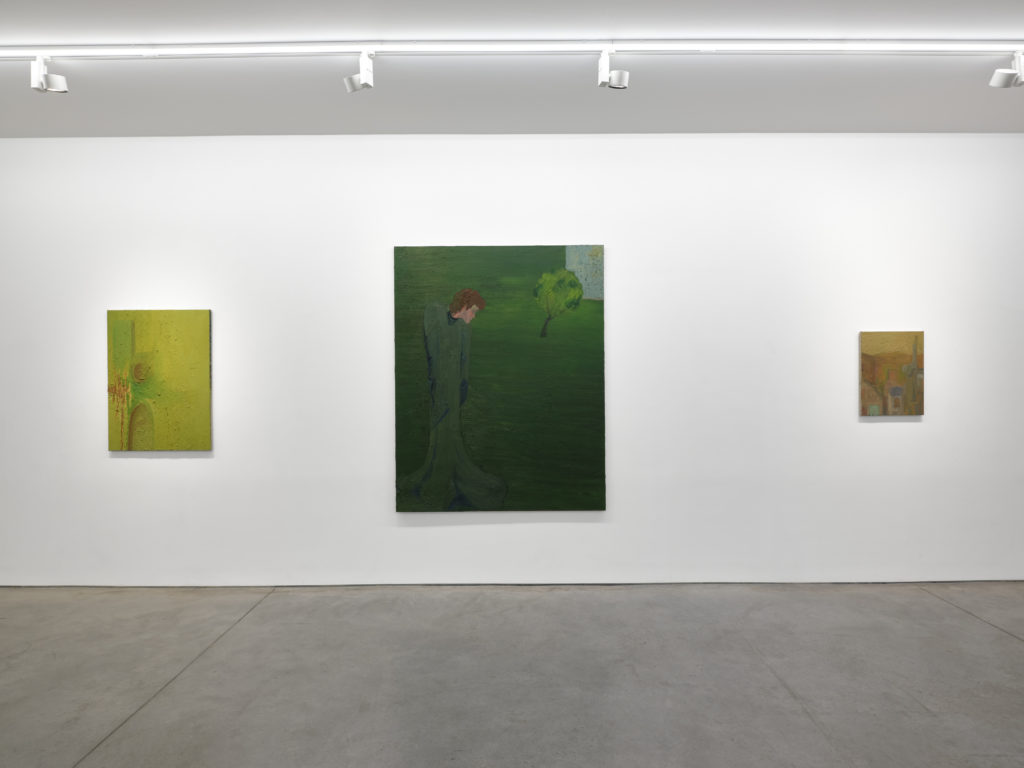
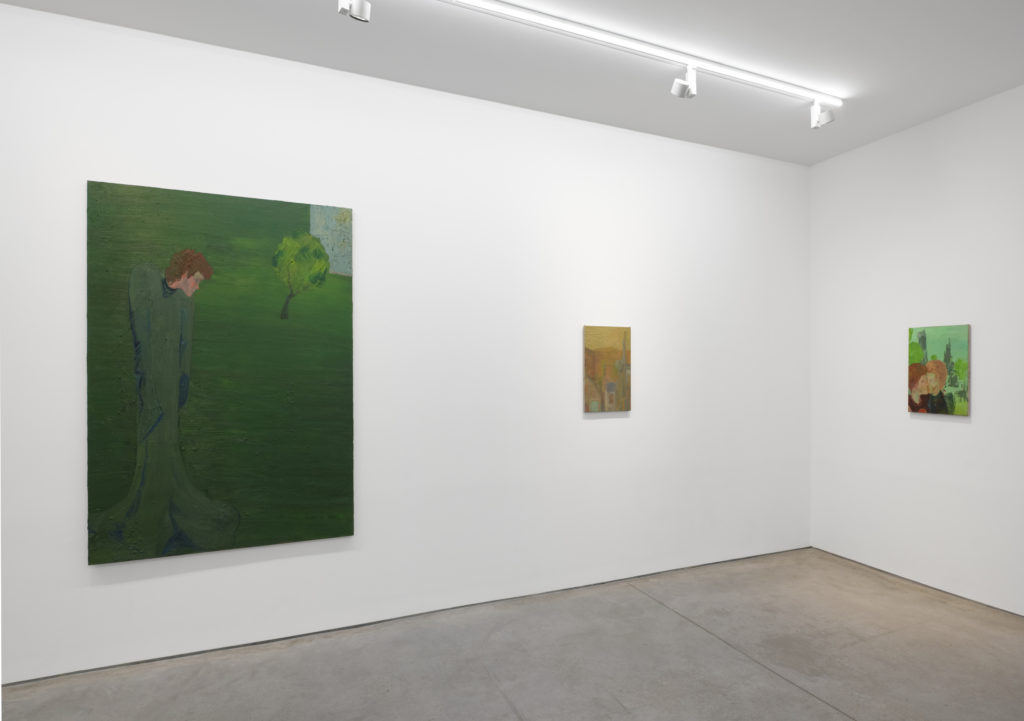
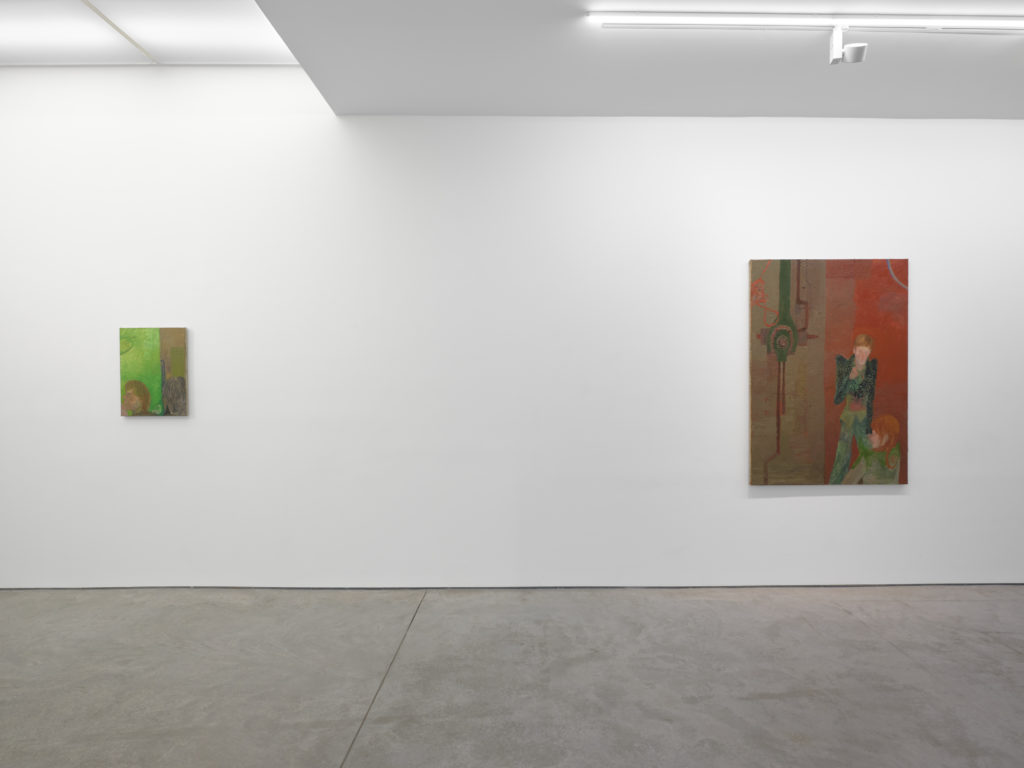
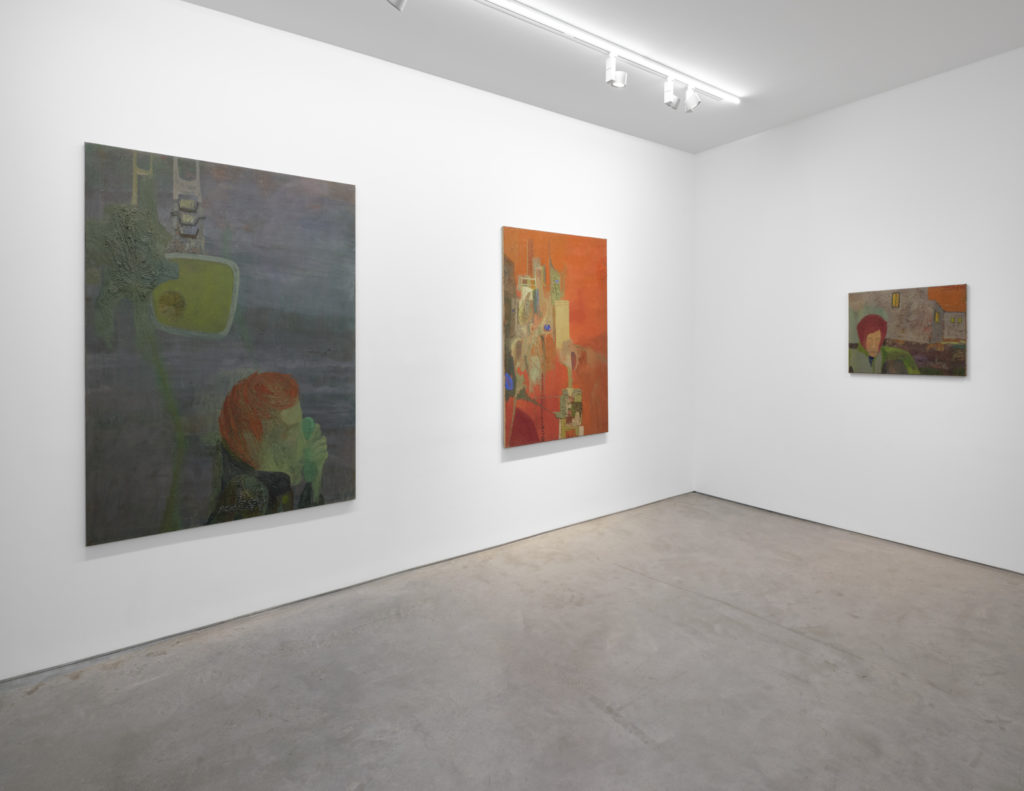
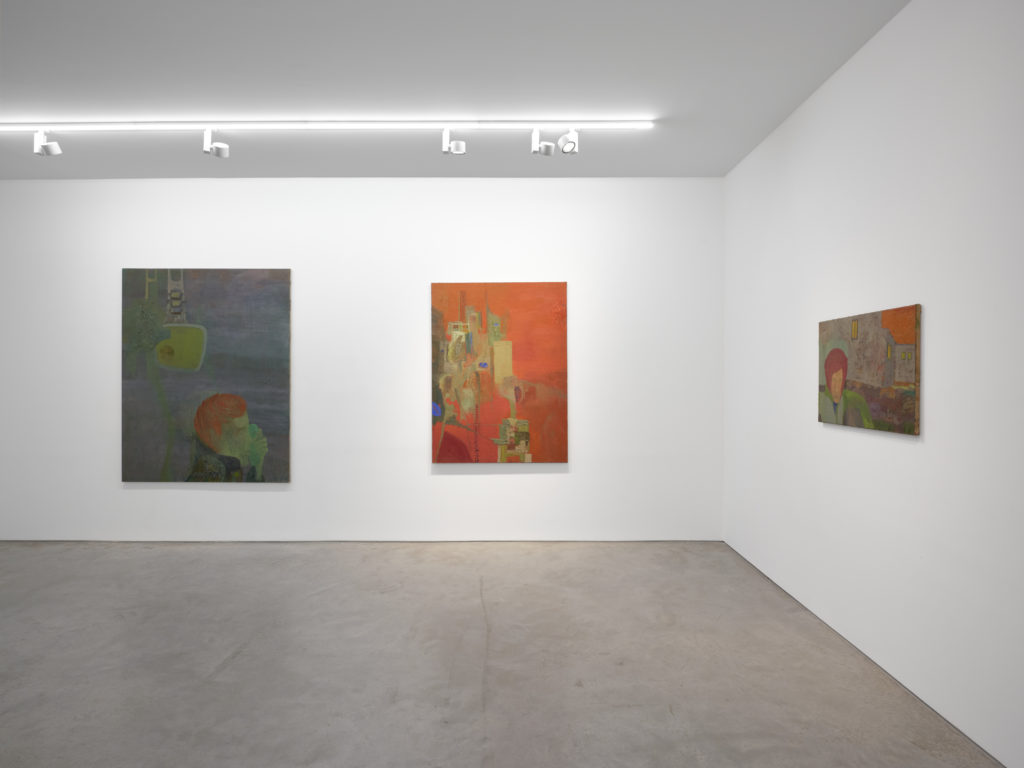
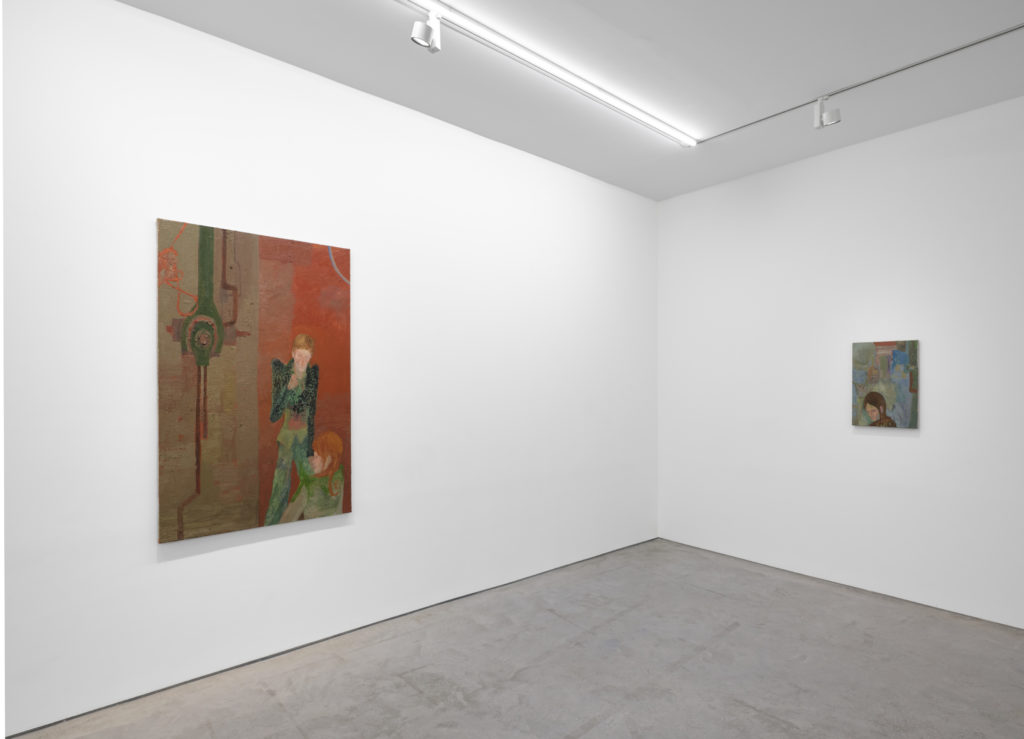
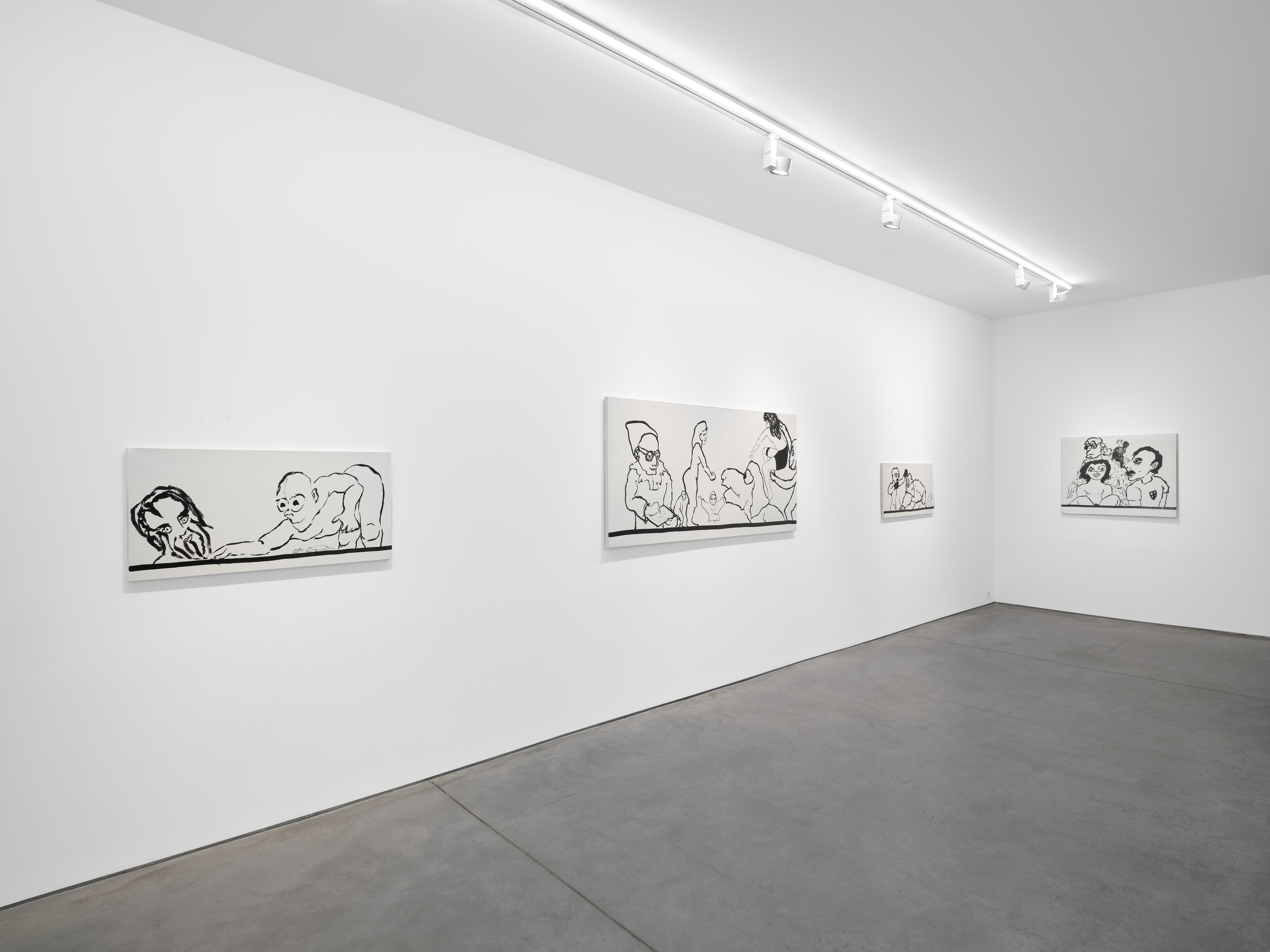
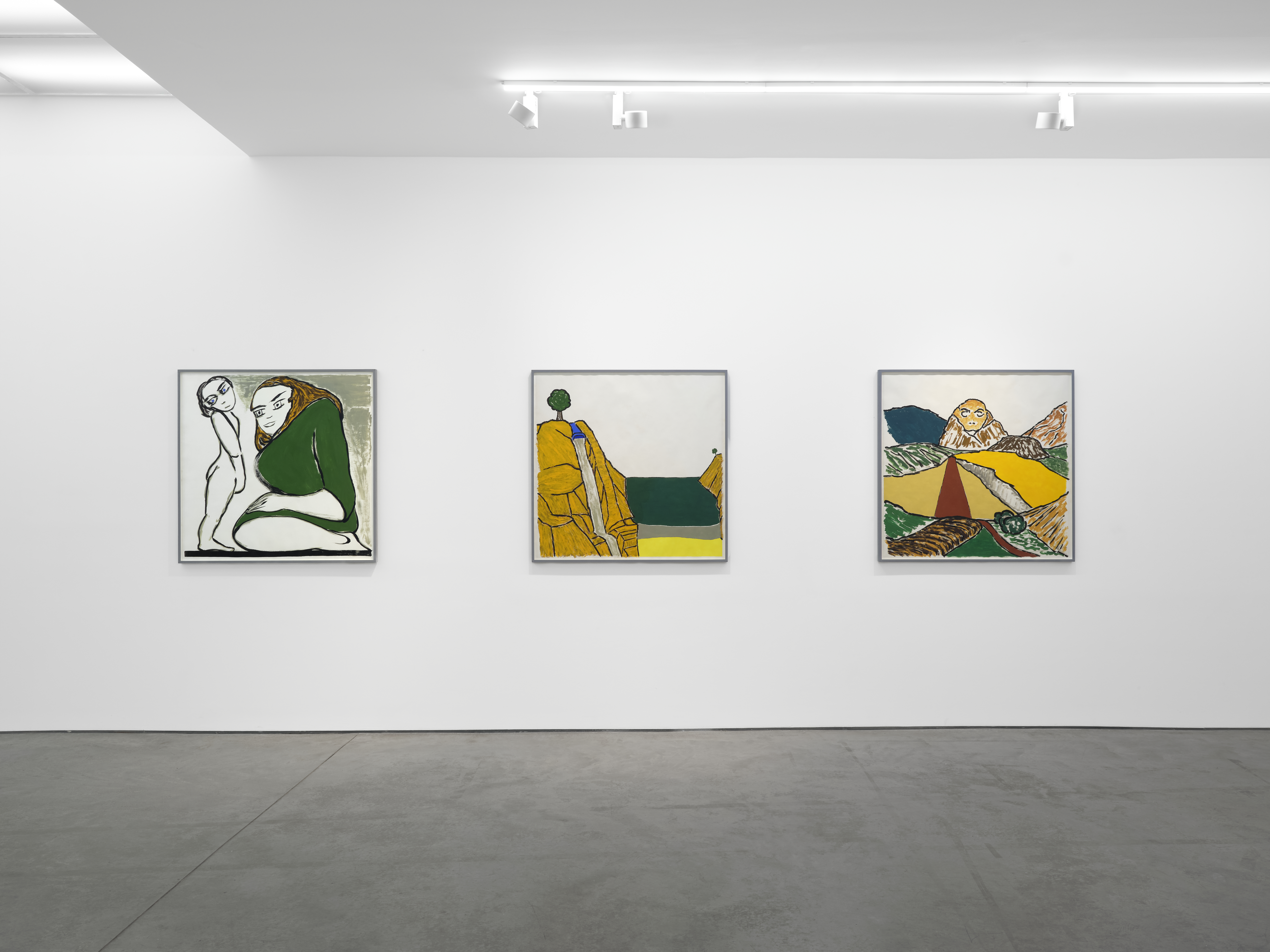
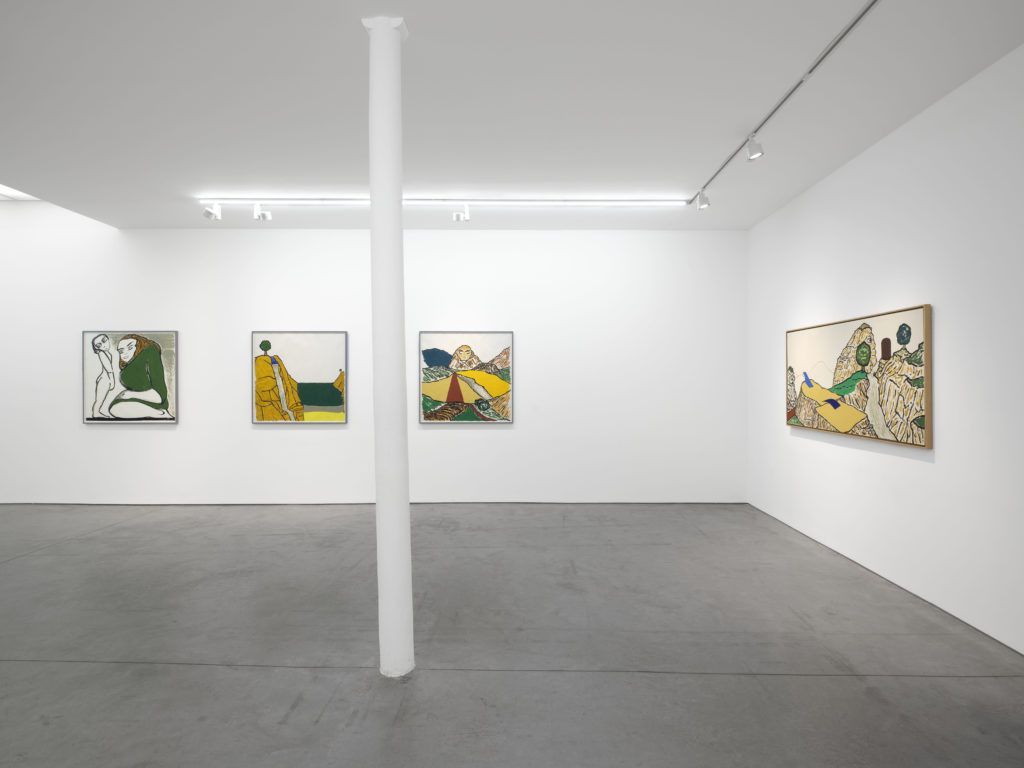
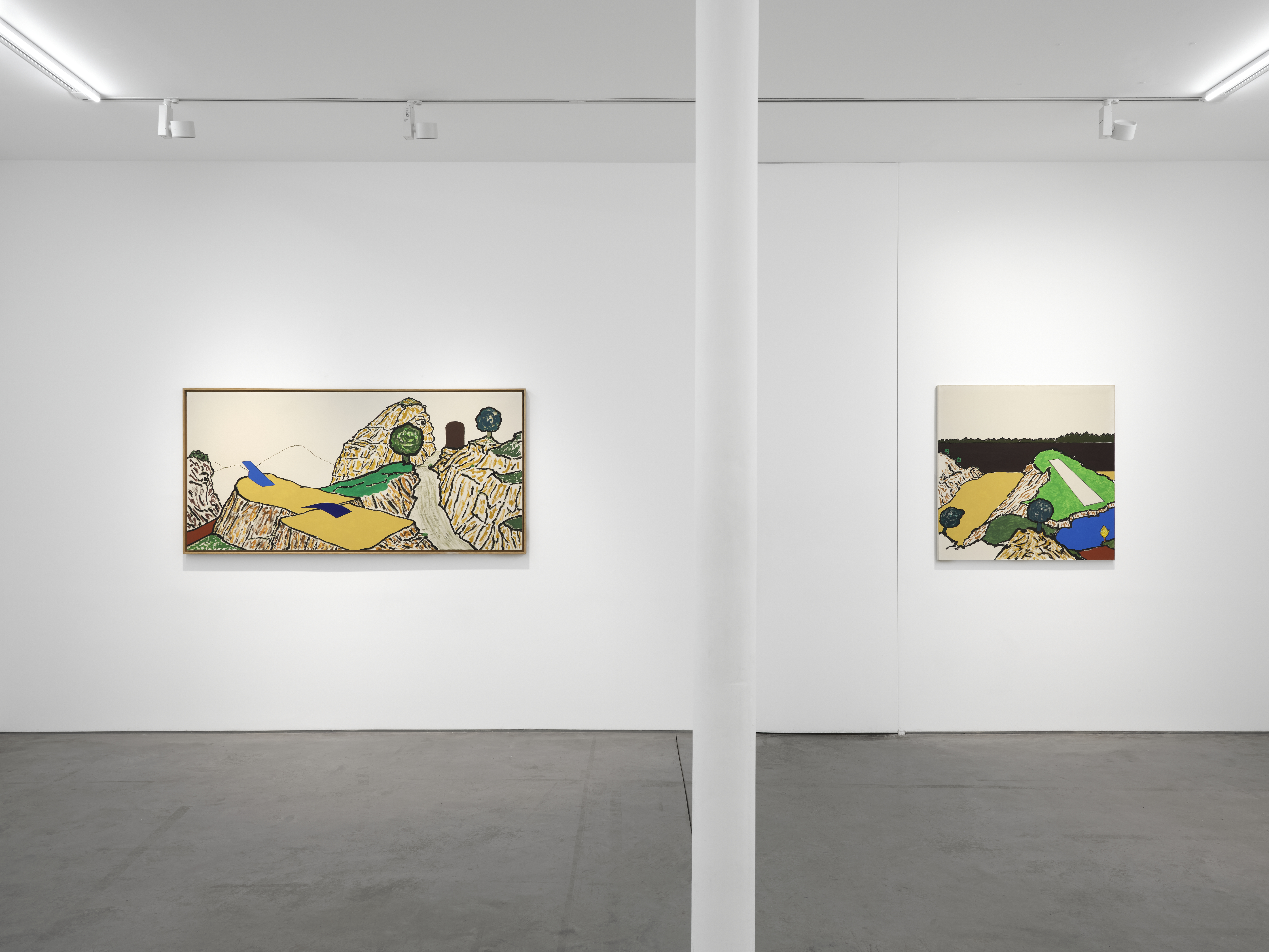
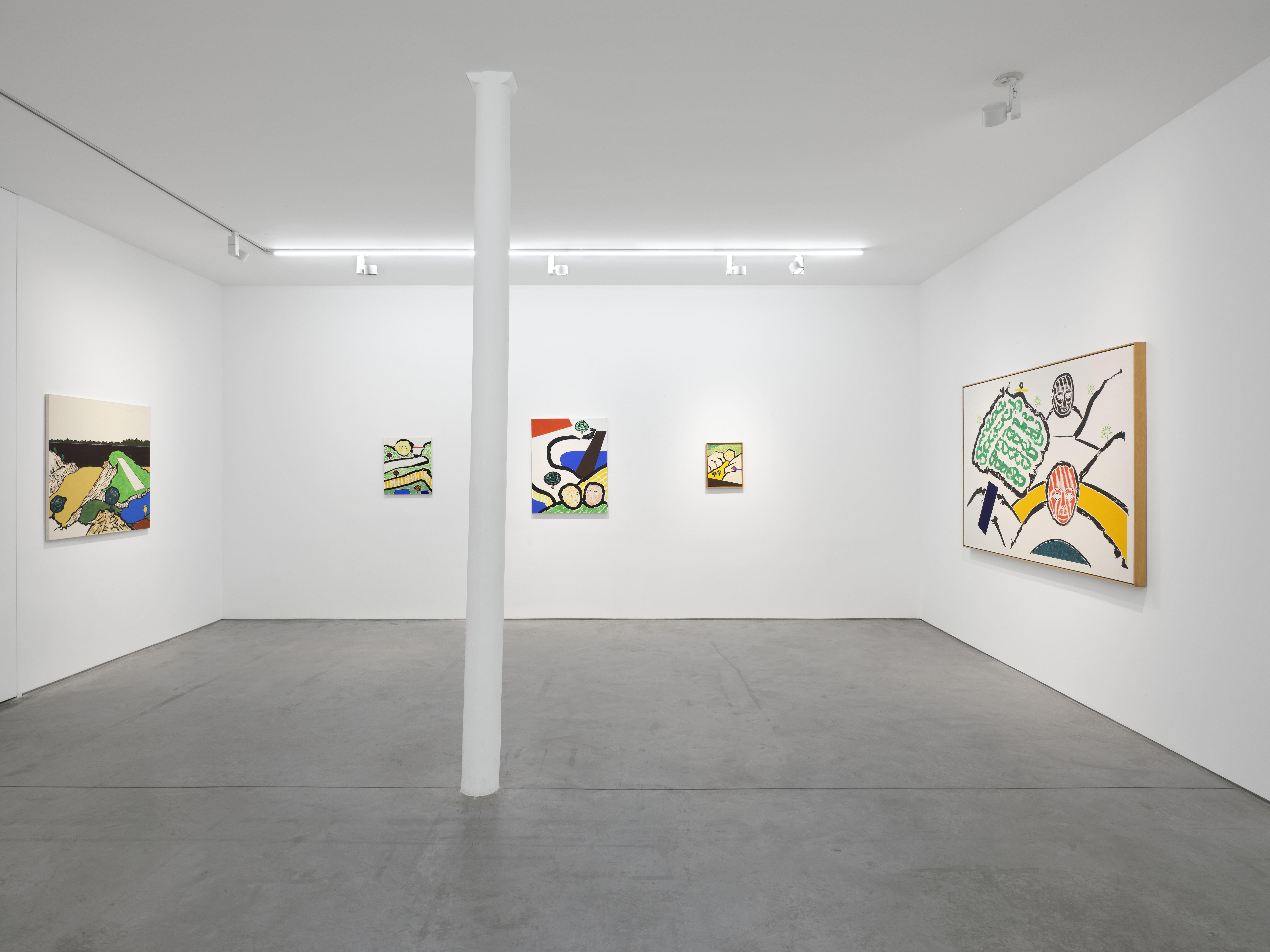
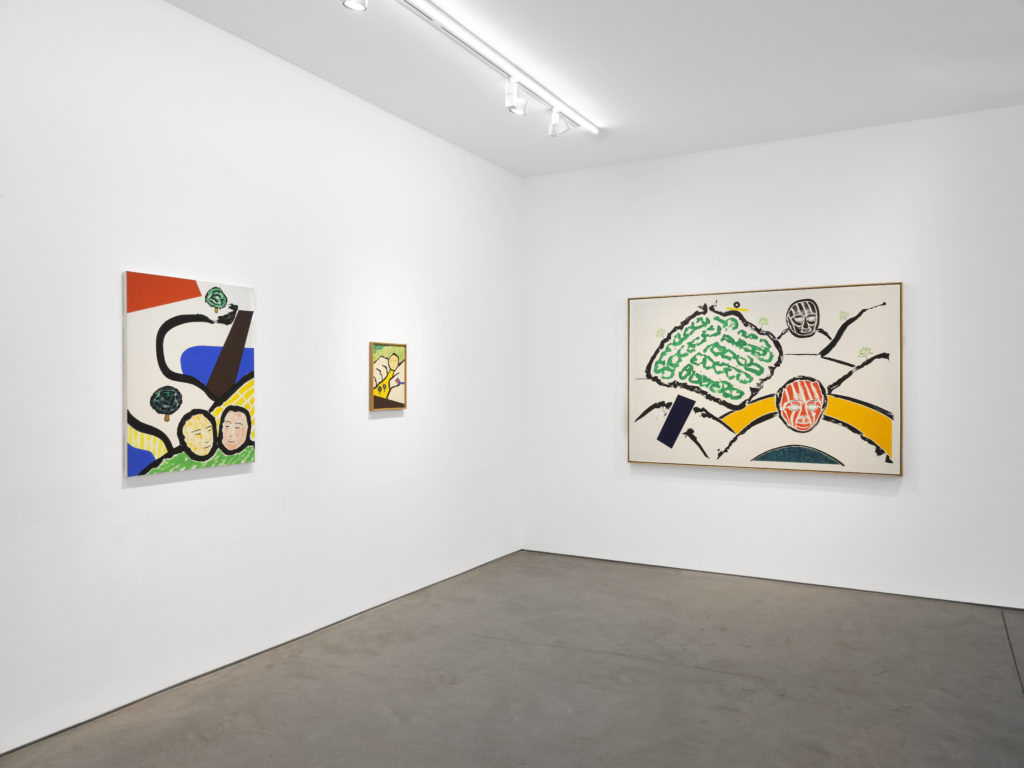
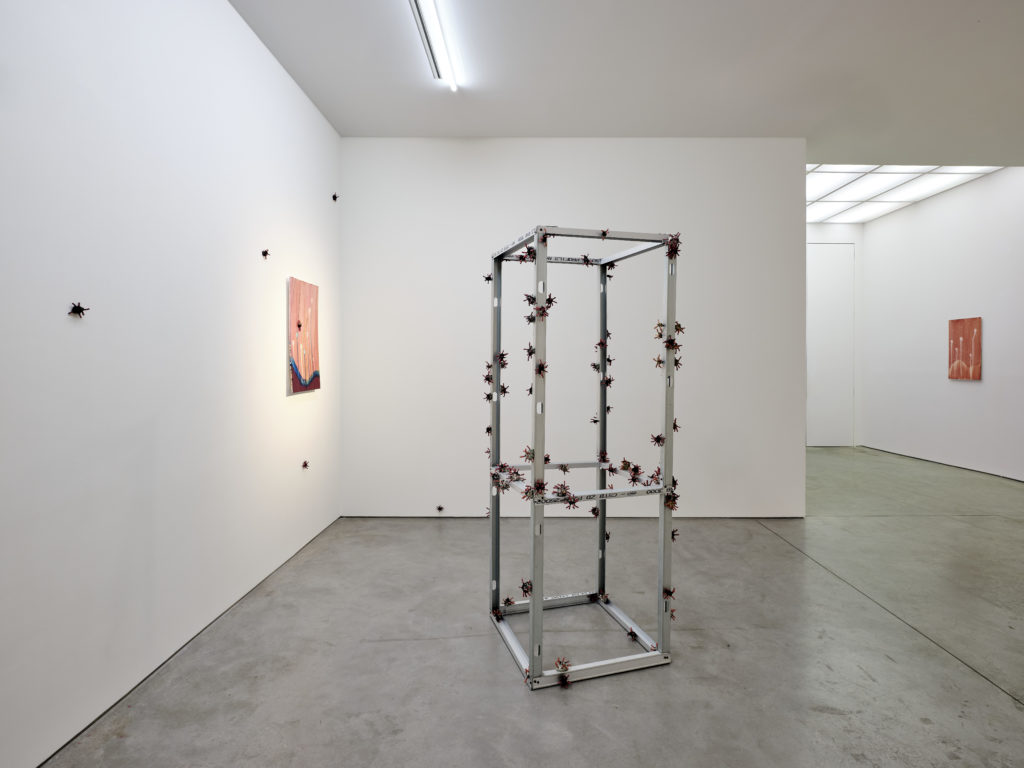
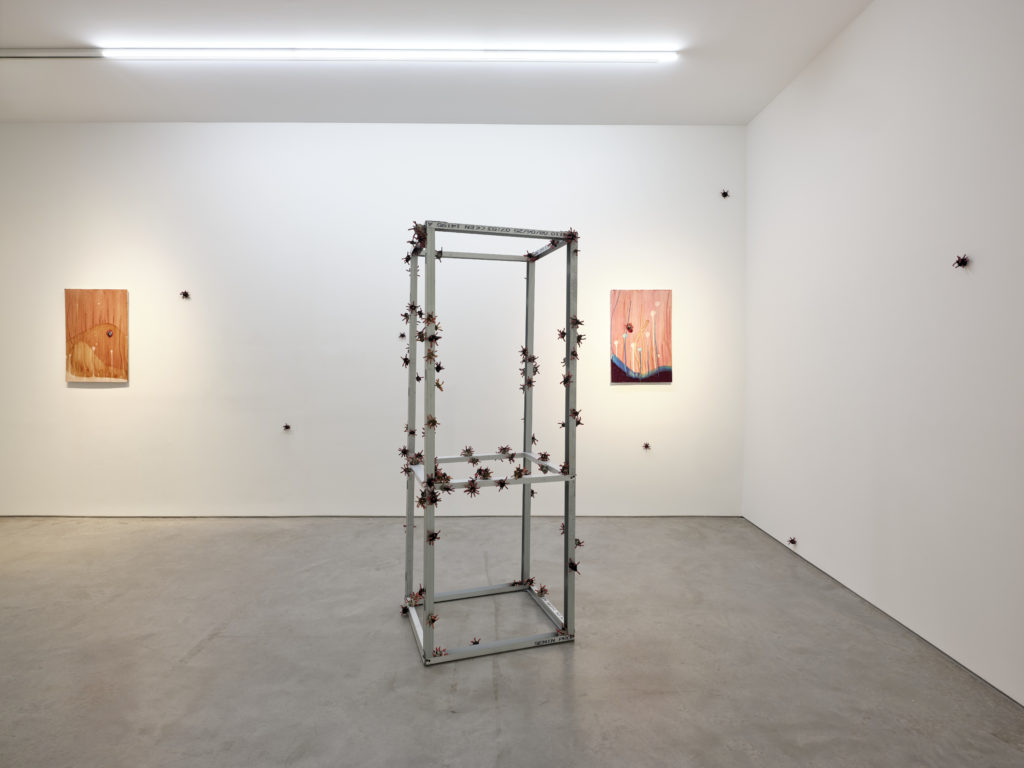
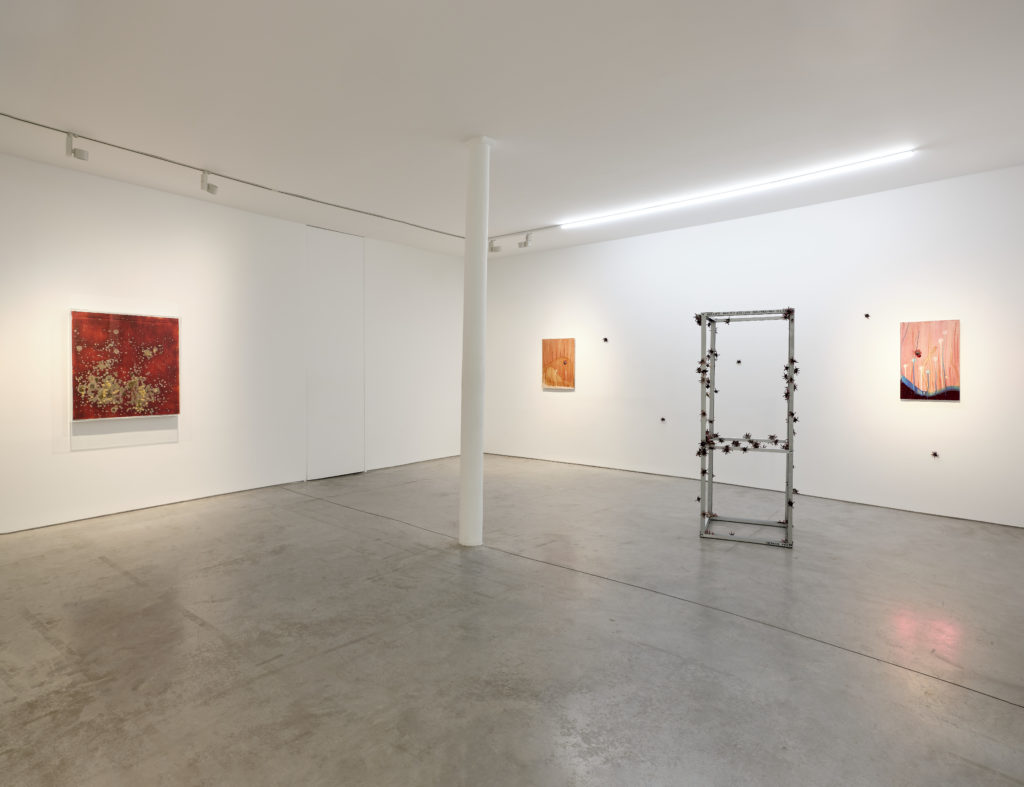
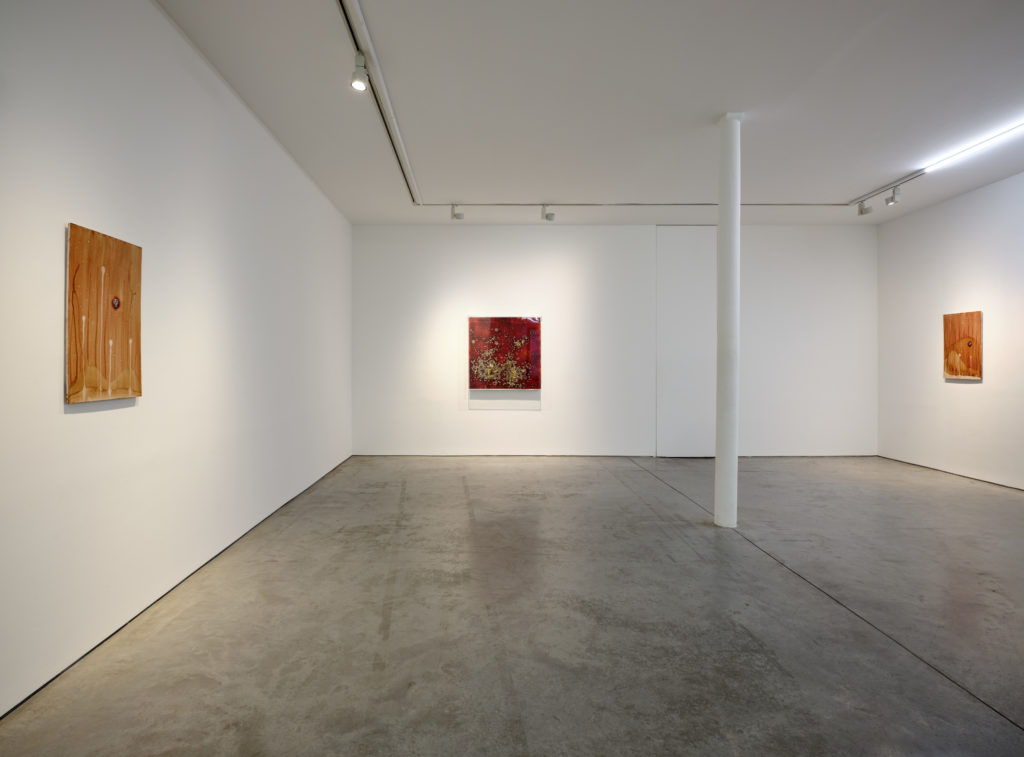
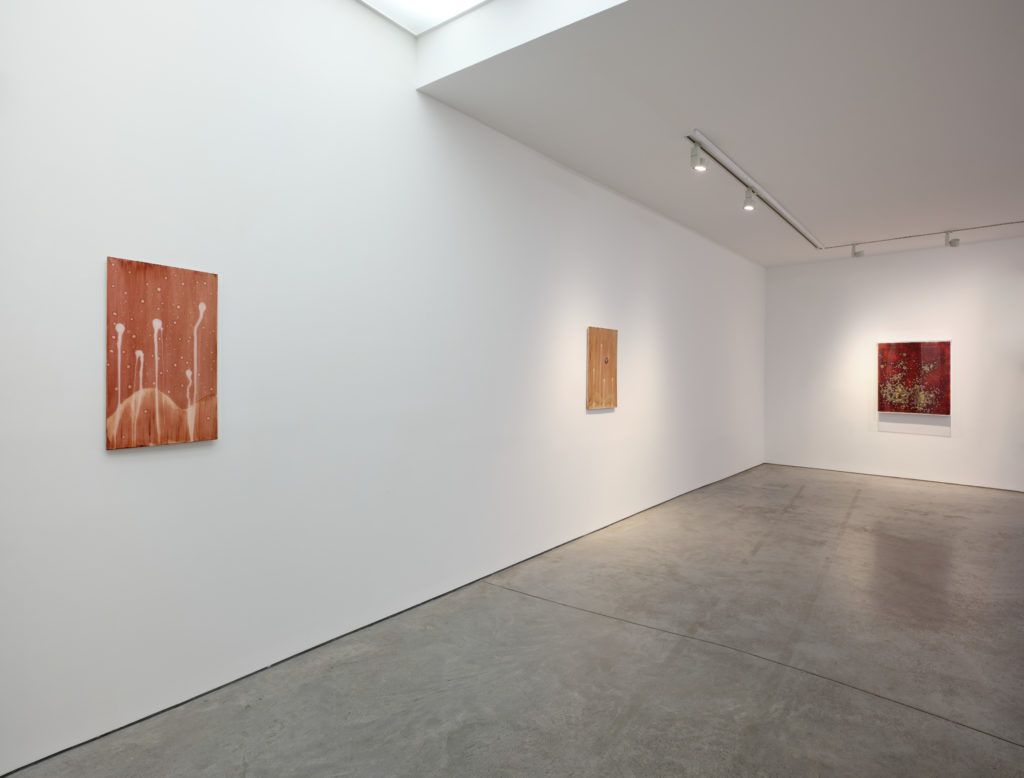
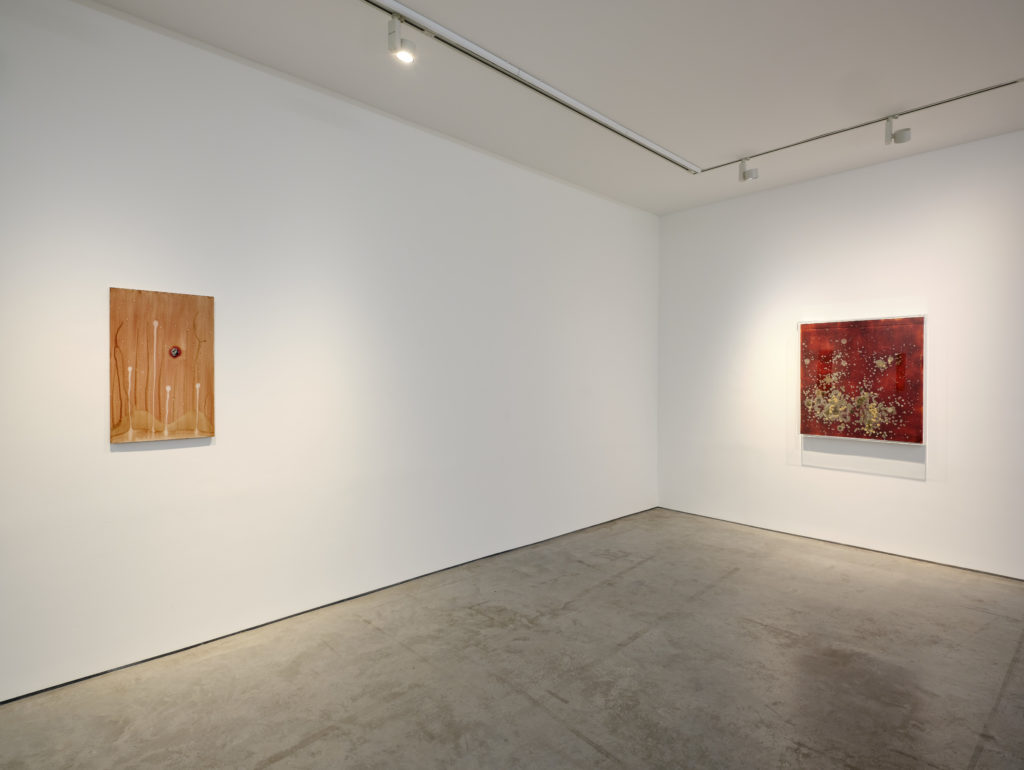
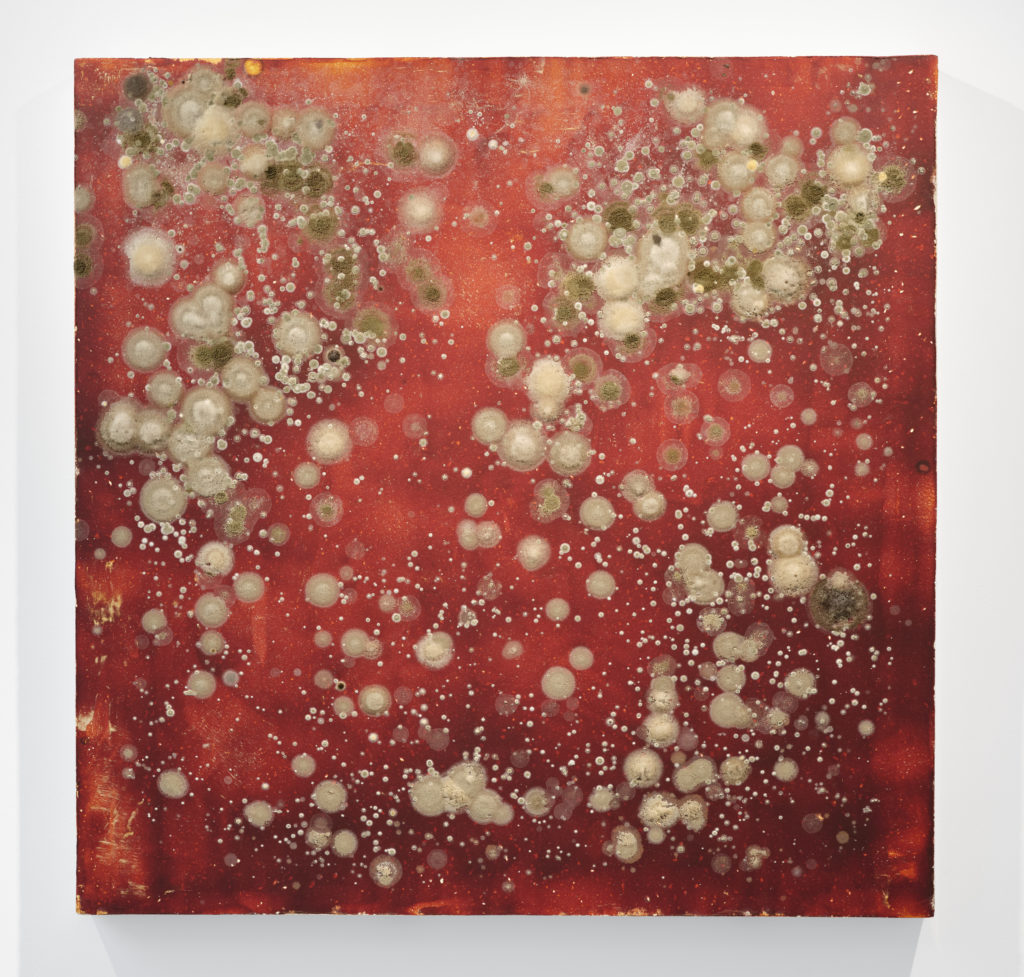
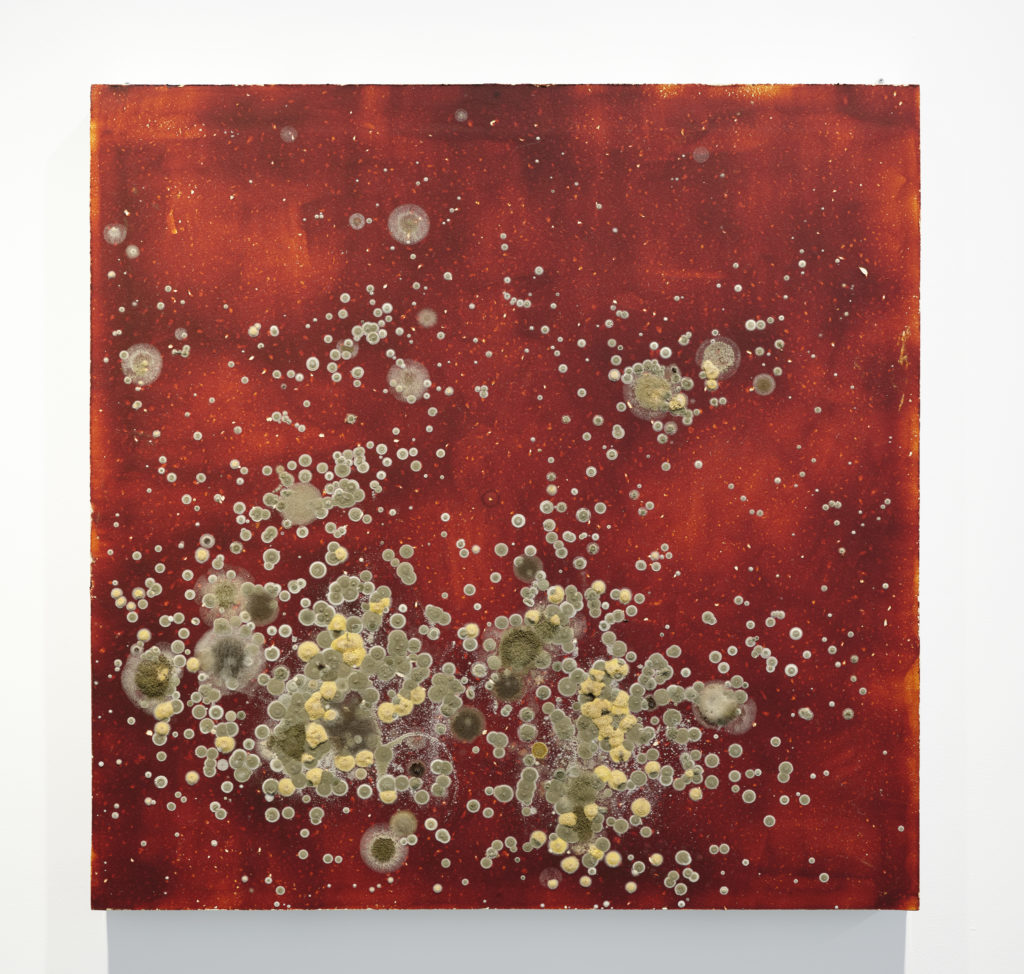
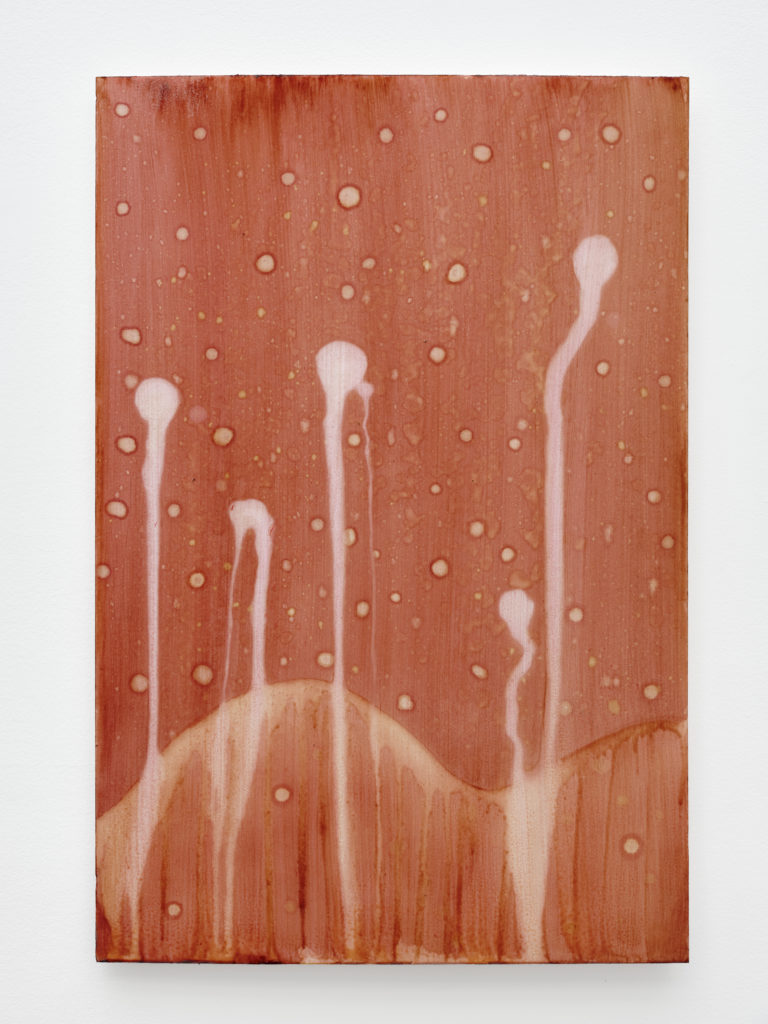
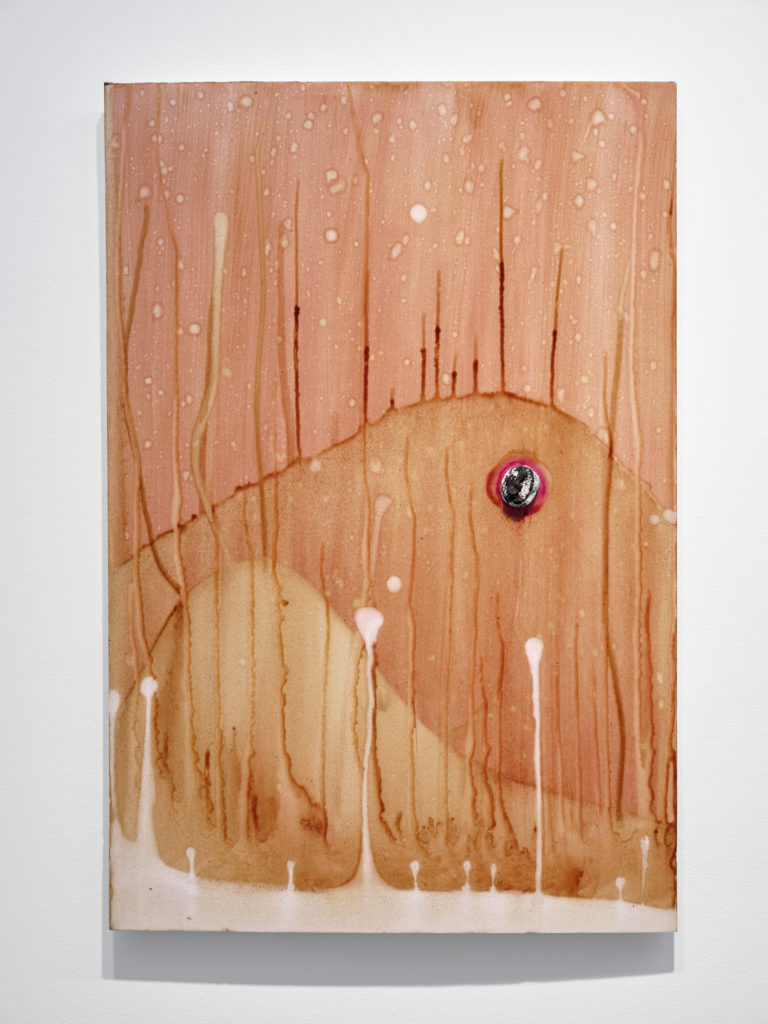
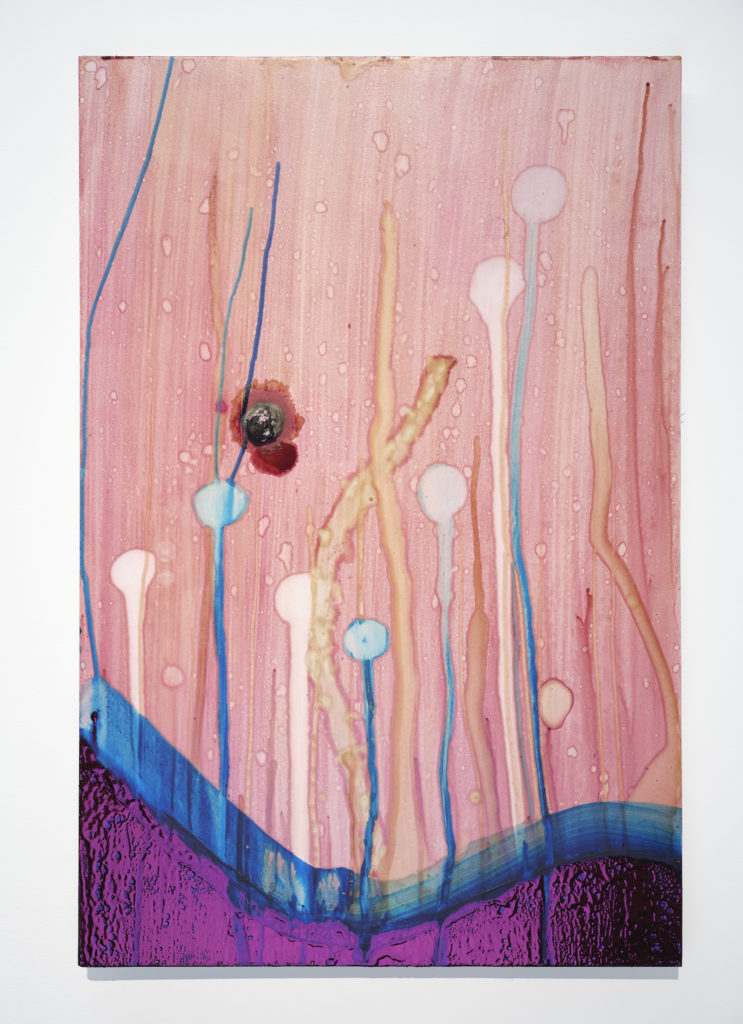
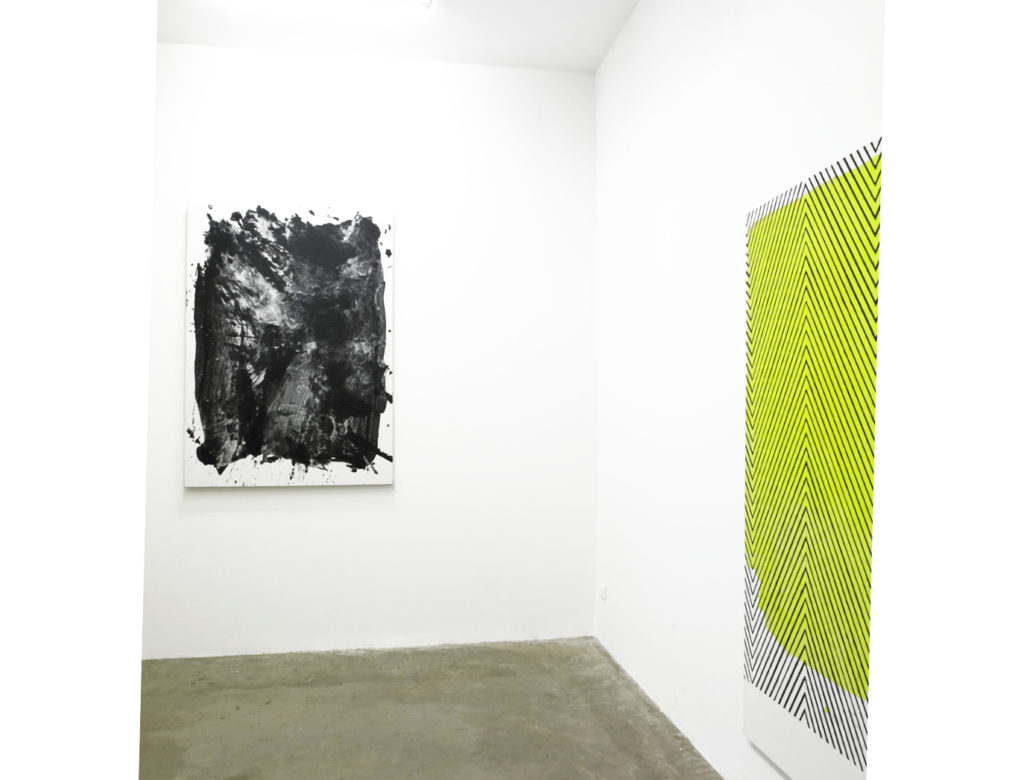
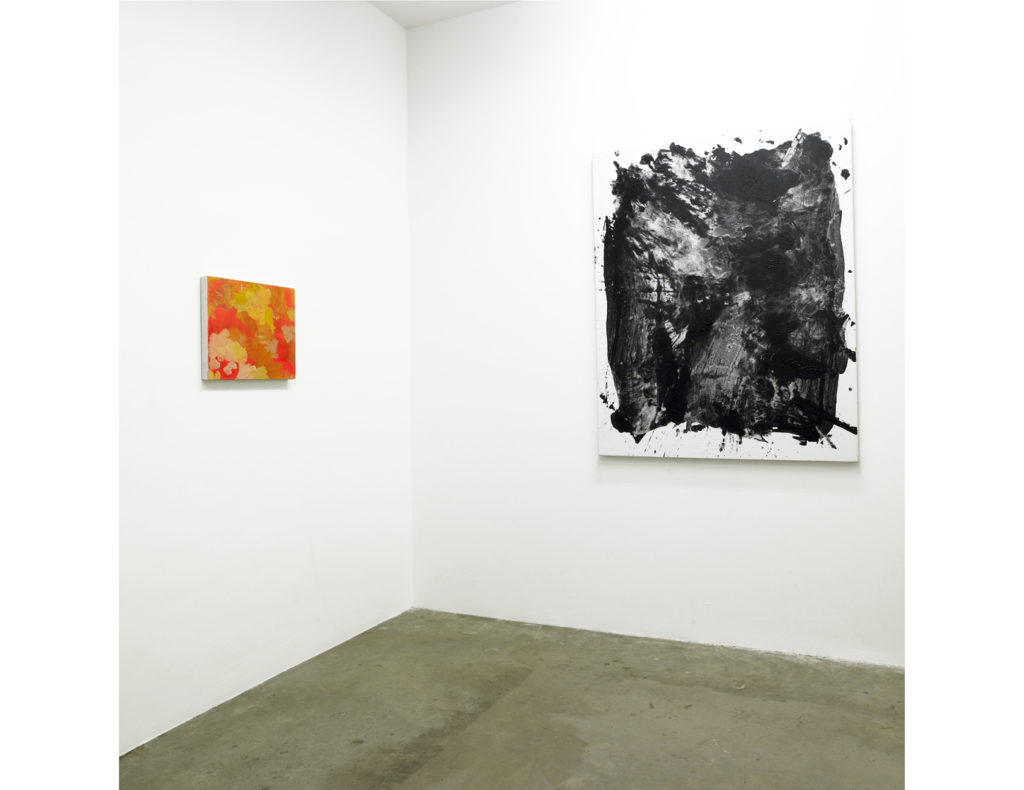
Pierre Bellot, Sans titre, 2026. Huile sur toile / Oil on canvas. 26 × 27 cm (10 ¼ × 10 ⅝ inches). Courtesy the Artist and Art : Concept, Paris. Photo : Romain Darnaud
For this exhibition, I wanted to immerse myself entirely in abstraction—setting aside any notion of subject or image as a starting point for the painting. The aim was to lose myself in the painting itself: its surface, its color, the way tones play against one another.
Everything here begins with instinct—a gesture, a first chaotic sketch. What I’m after is a certain vibration, a specific texture, something matte and chalky. Through layer upon layer, I want the painting to arrive at a kind of harmony, a balance, a feeling. I’m chasing the accident, the unplanned moment.
This is slow work—studio time. Paintings can sit unresolved for weeks, caught between one state and the next. Some of the canvases are older pieces, years old, that I’ve gone back and painted over. They build up like geological strata. Where traces of earlier layers show through—the pentimenti—the painting lays bare its own history, its false starts and changes of direction.
What emerges are archipelagos of form: works that read like miniature landscapes, fragments of cities, unfinished maps, or pieces of a wall. And somewhere along the way, an image appears unbidden—the trace of a place, a memory. That’s what ends up naming the painting.
—Pierre Bellot, 2026
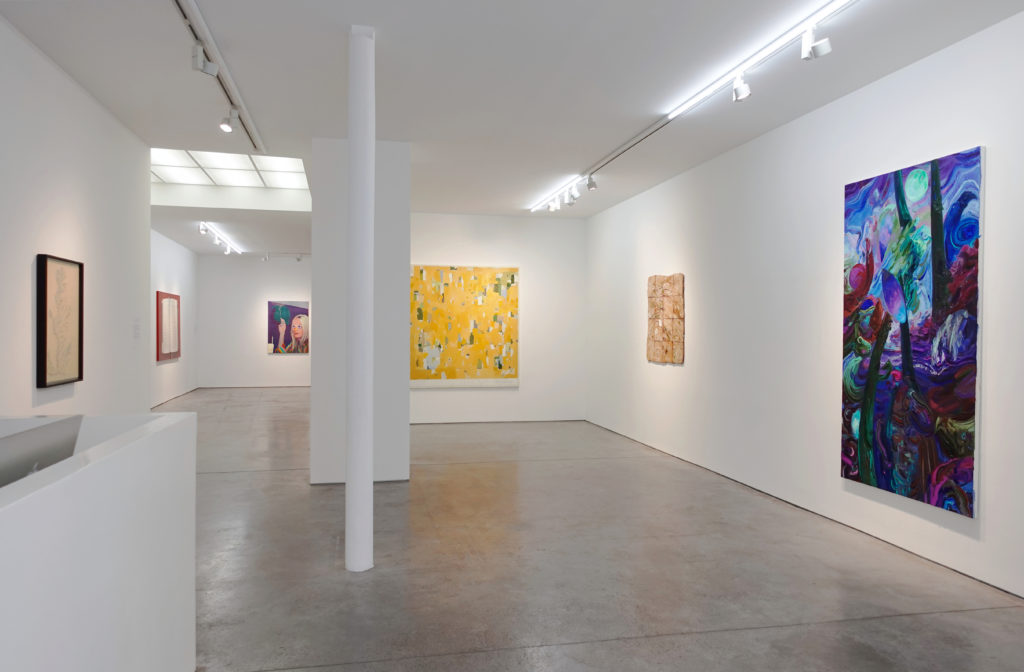
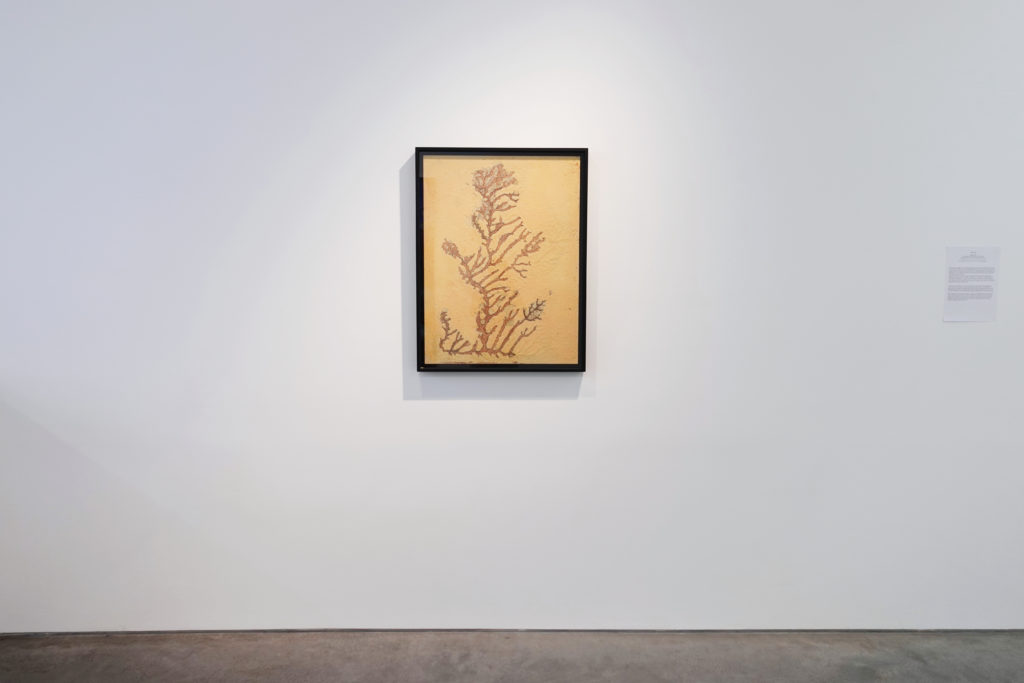
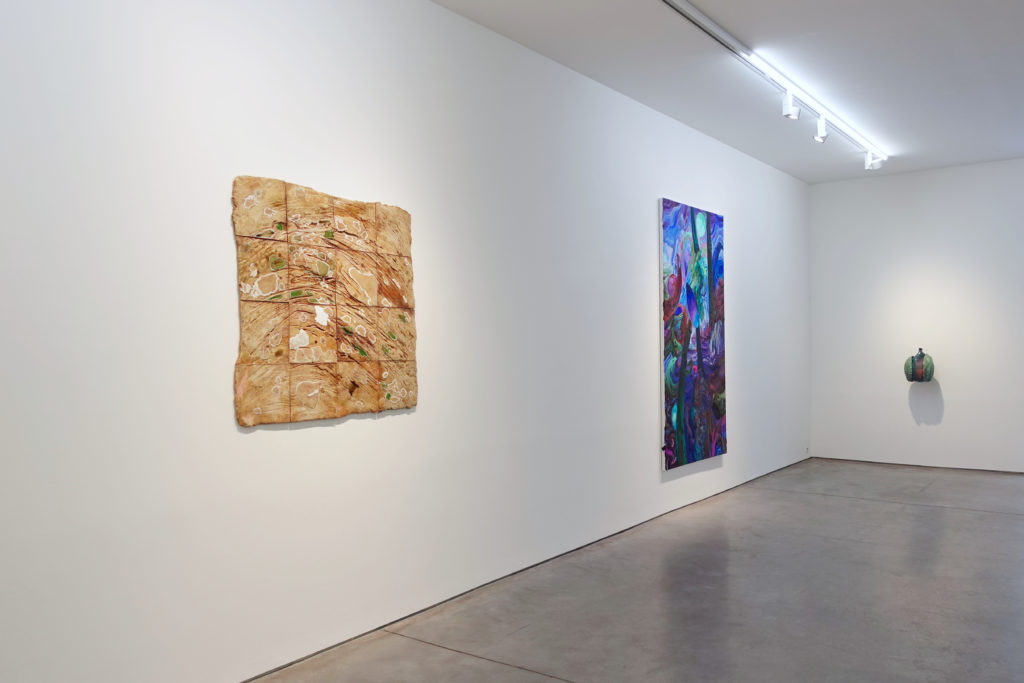
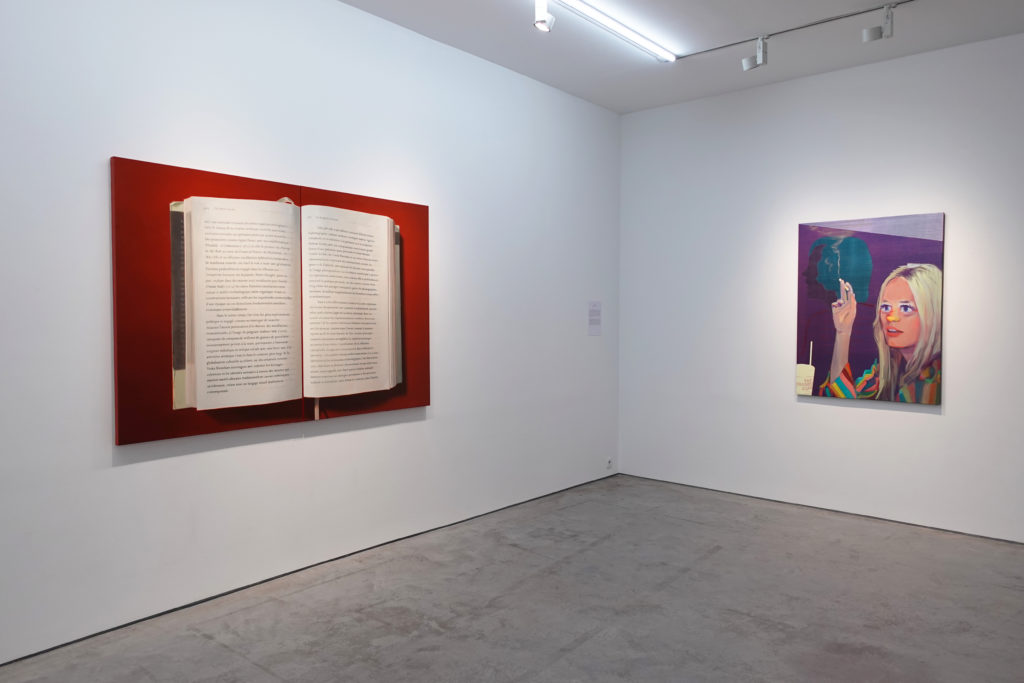
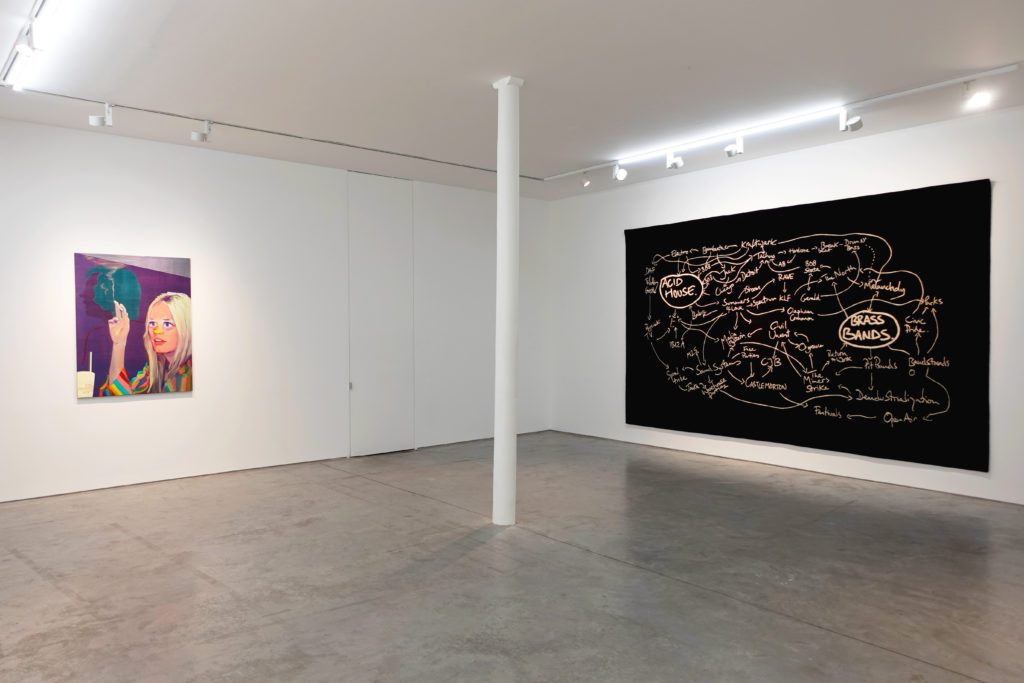
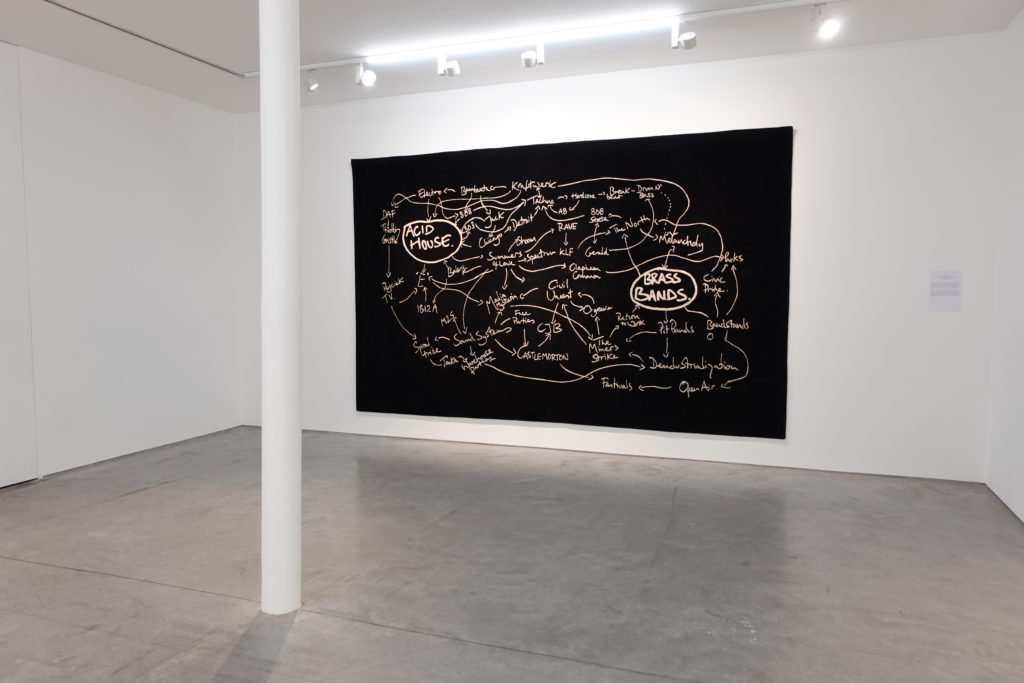
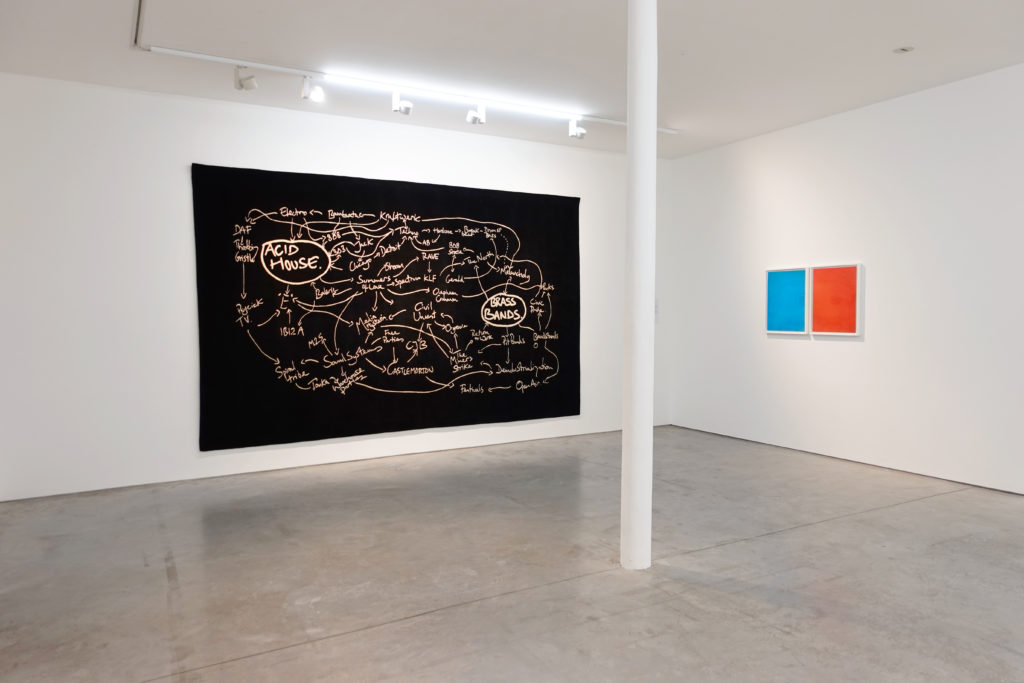
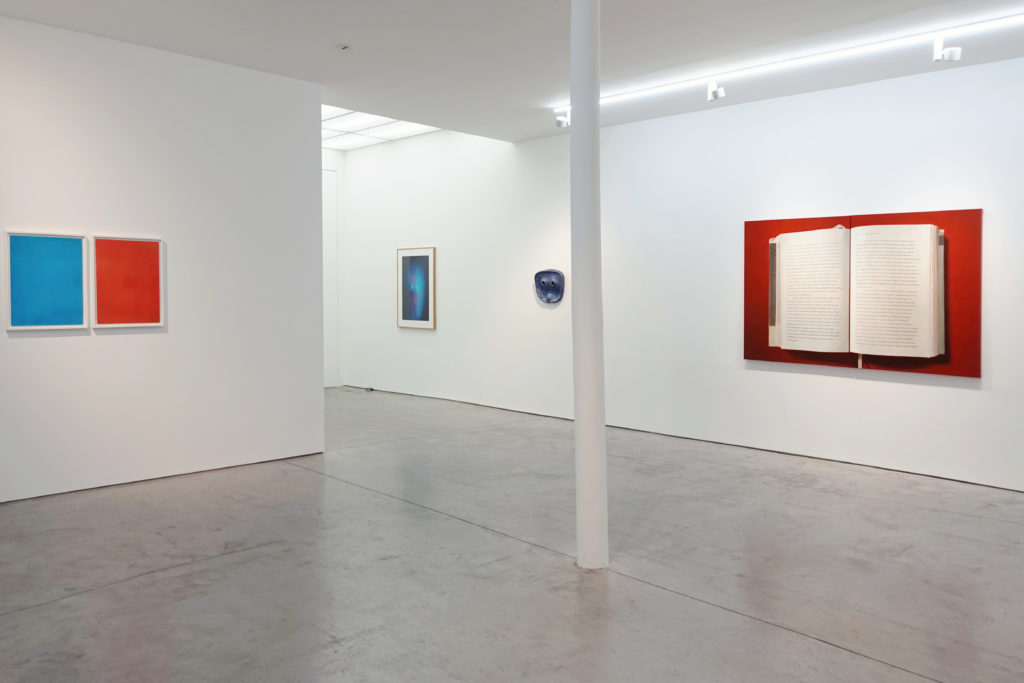
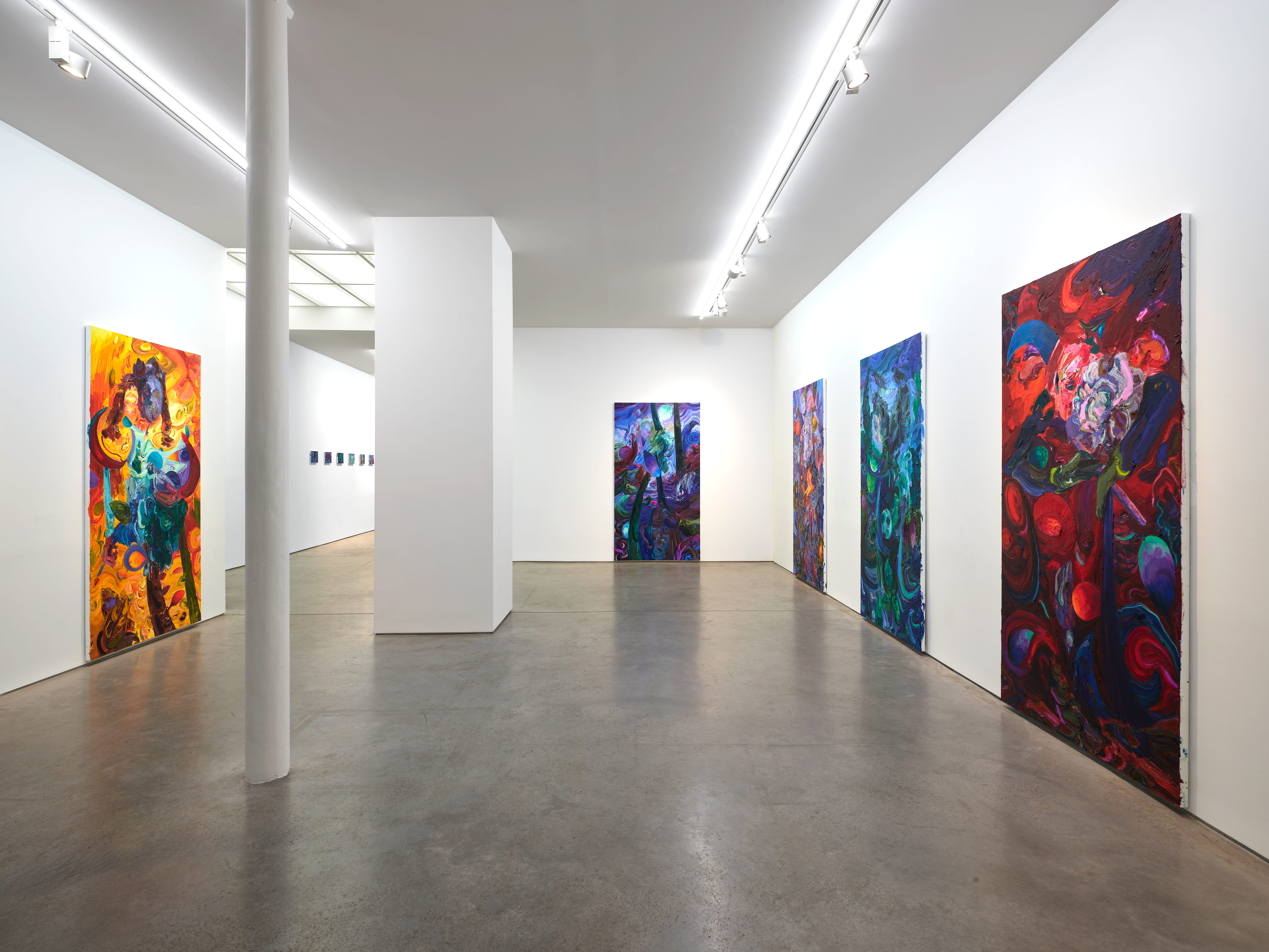
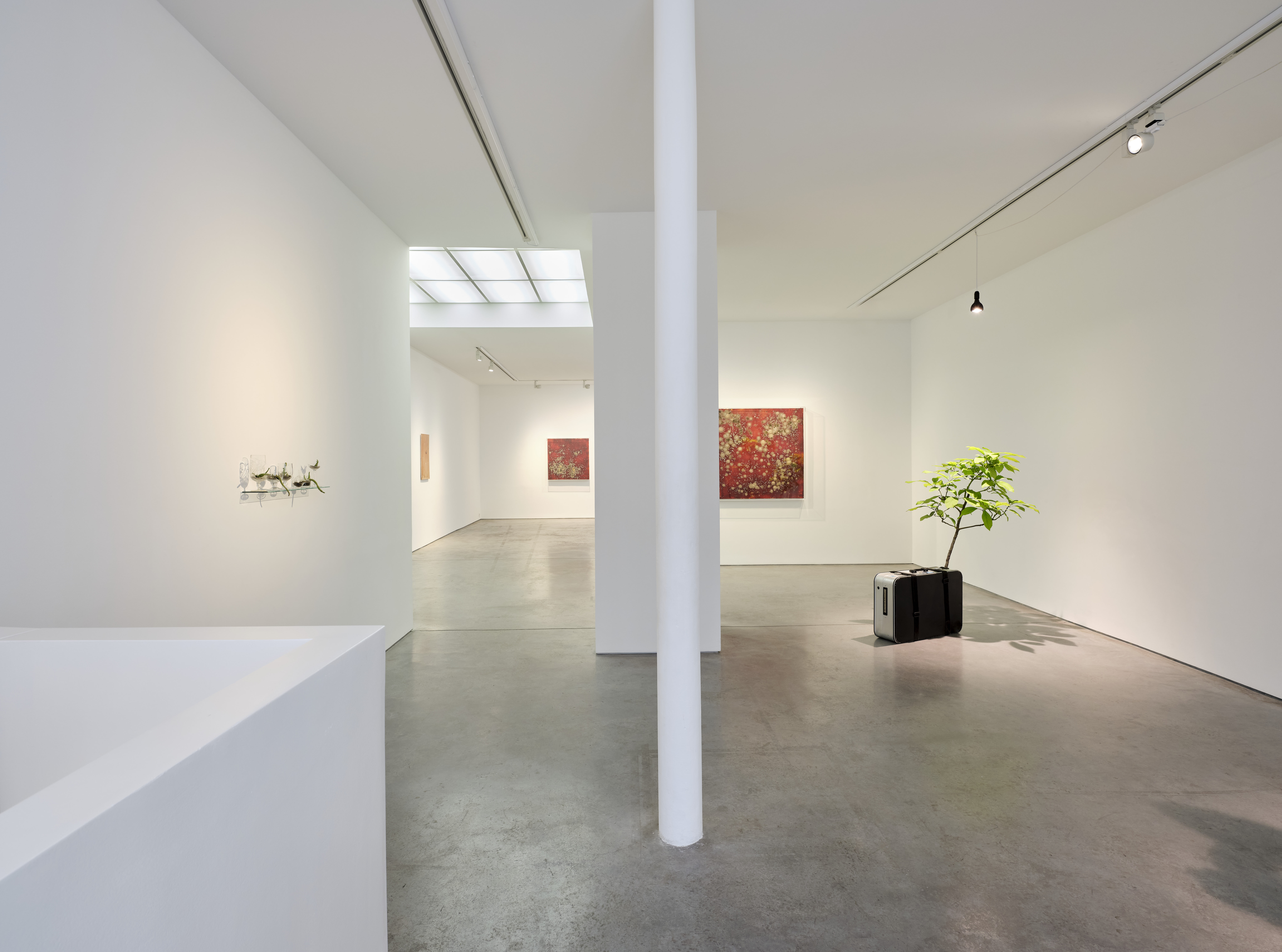
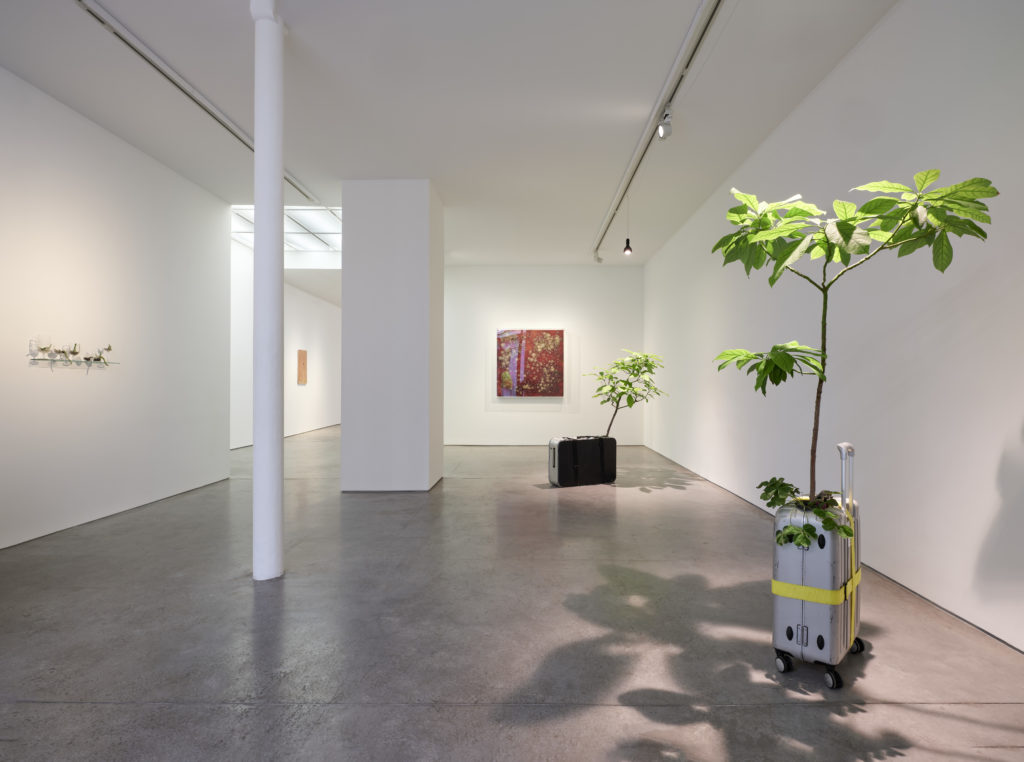
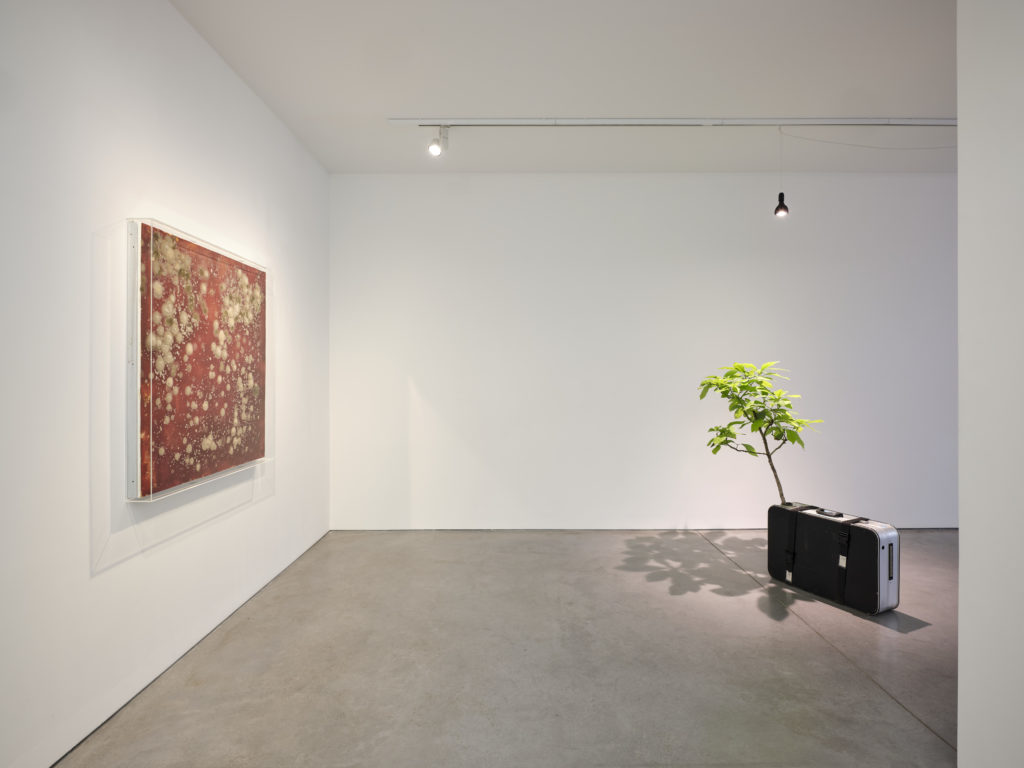
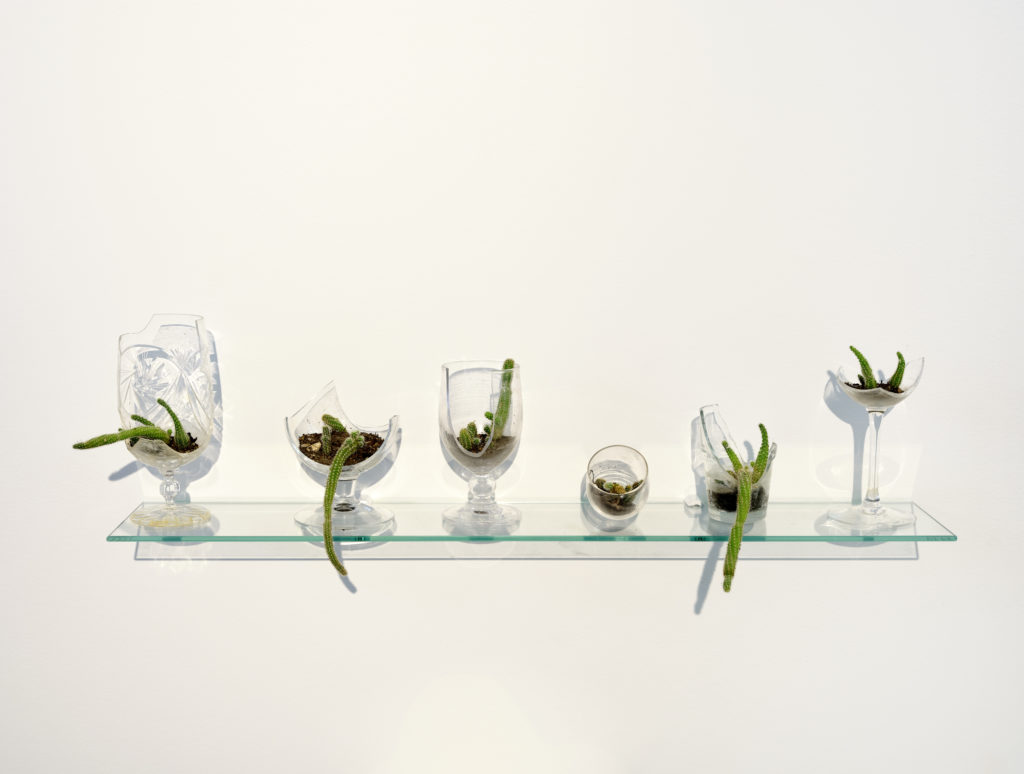
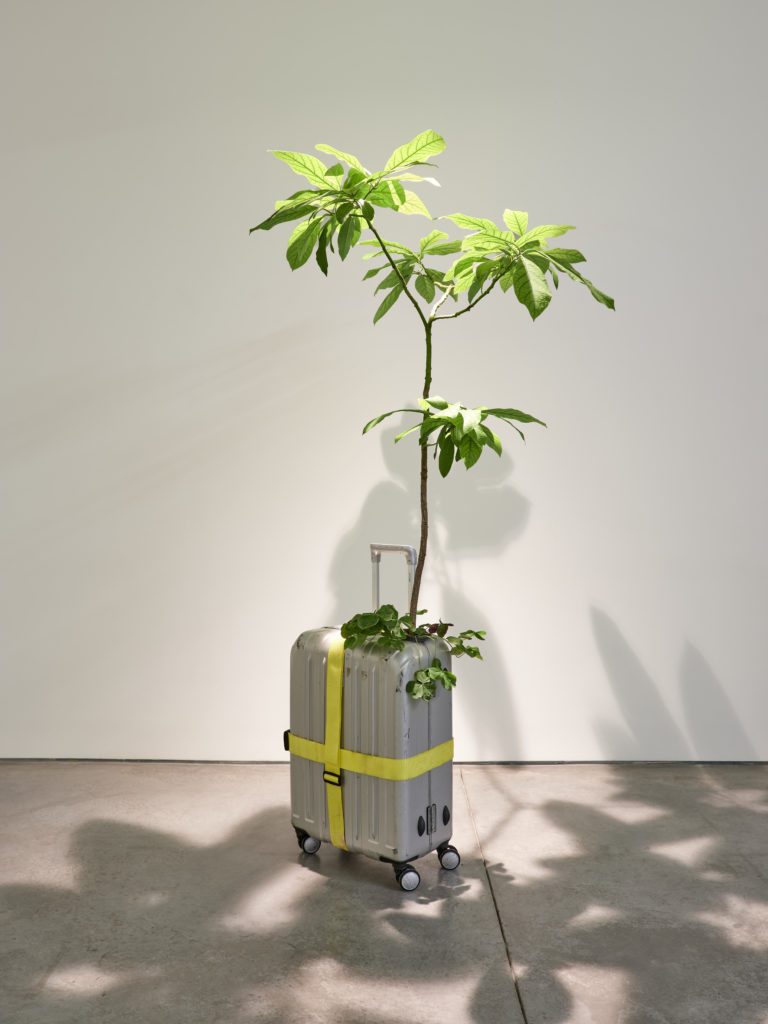
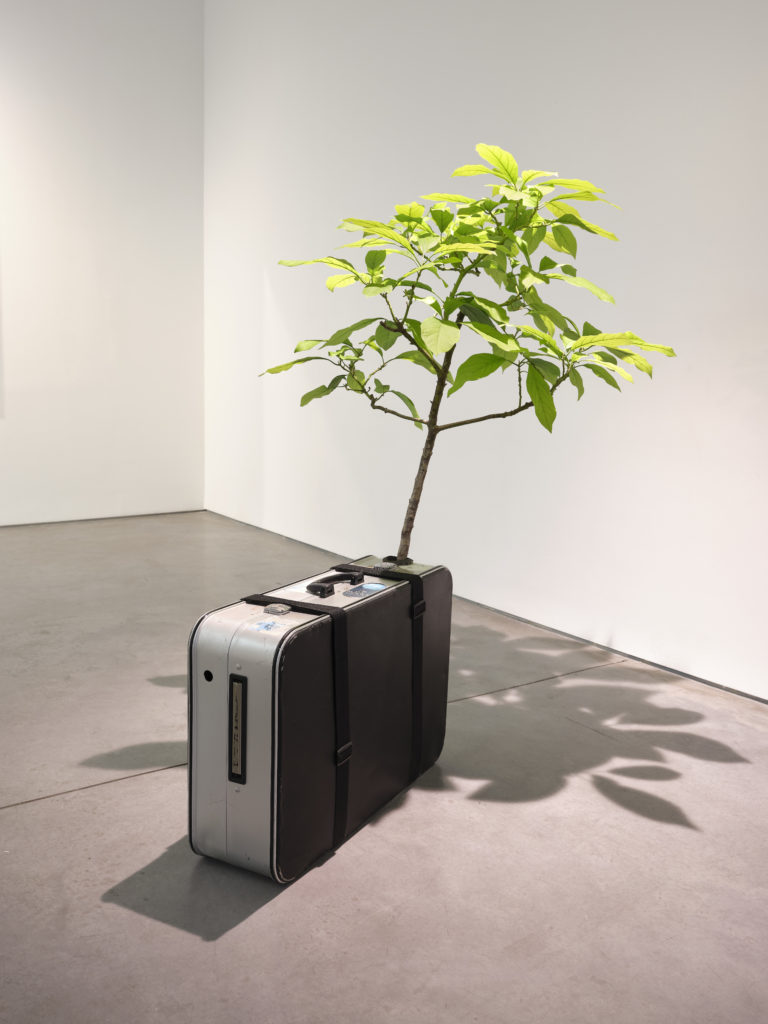
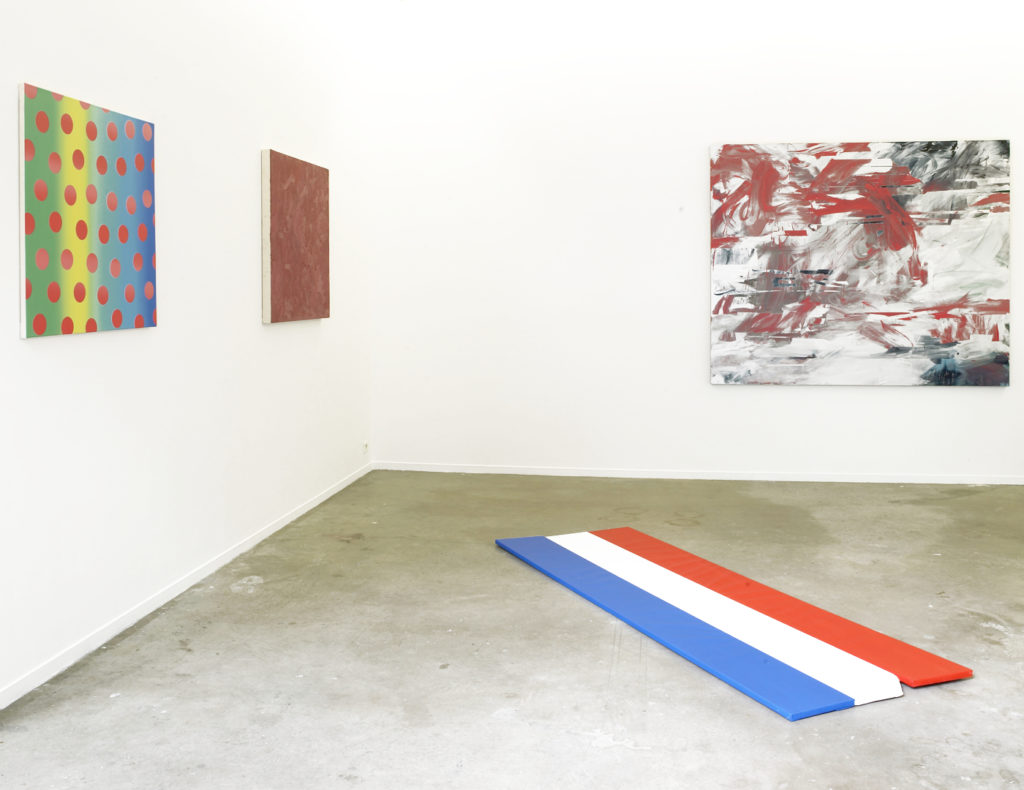
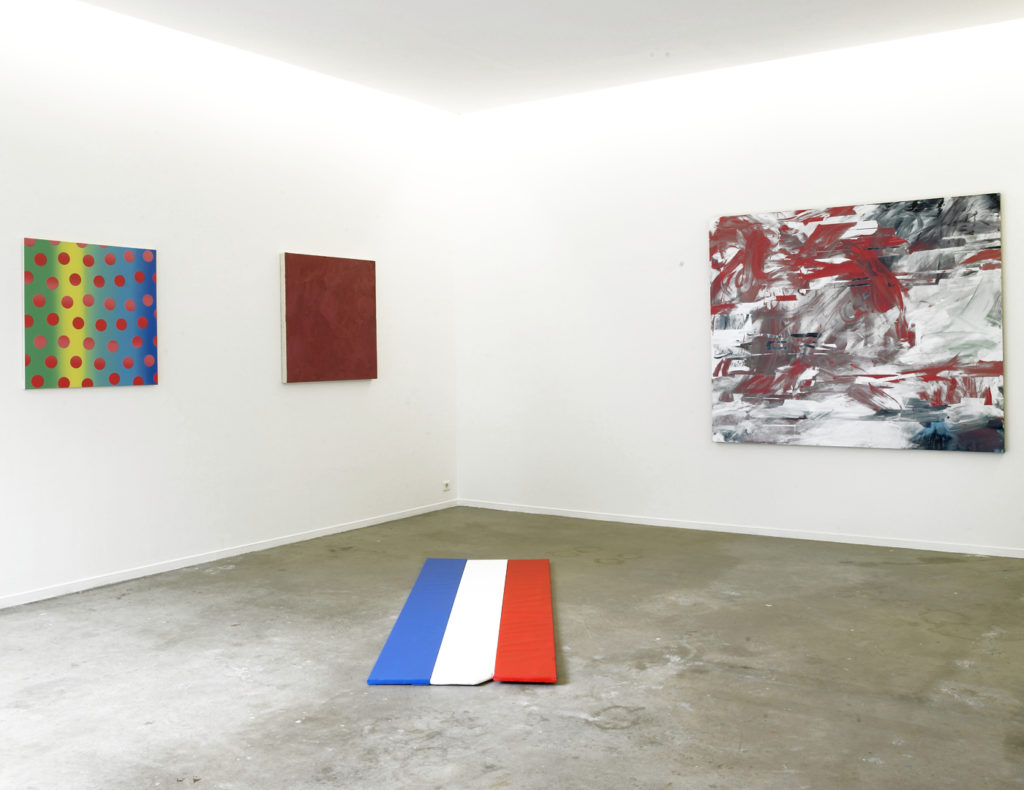
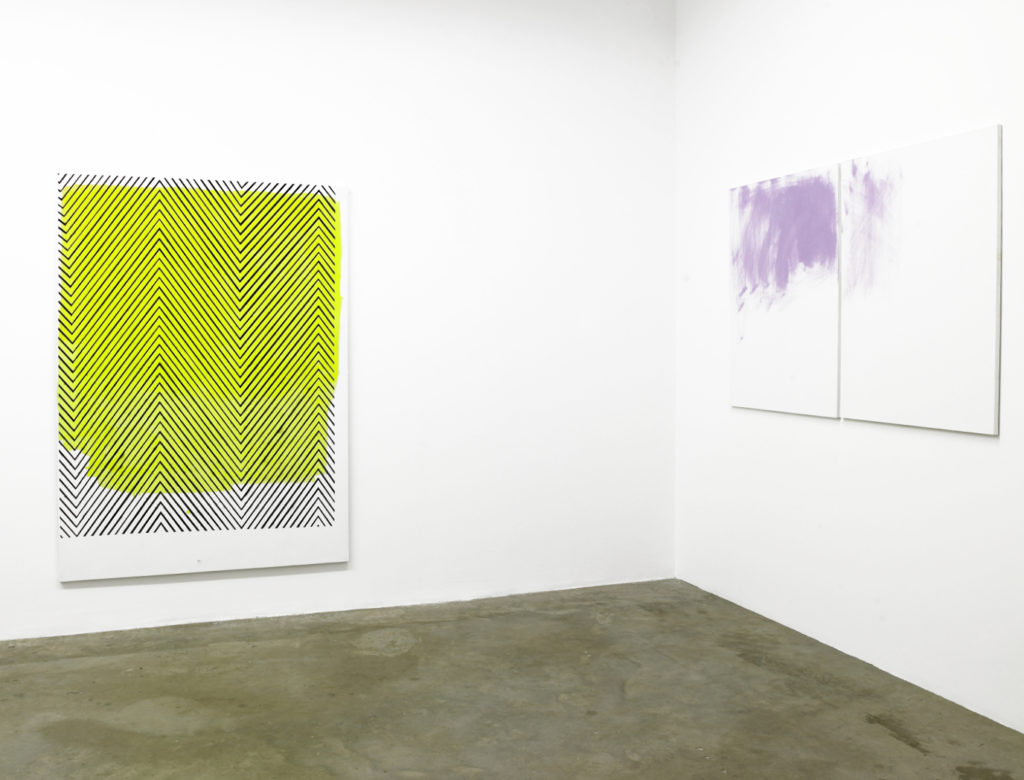
Vue d’exposition / Installation view Summer show, 2026 Art : Concept, Paris/FR. Courtesy the Artists and Art : Concept, ParisVue d’exposition / Installation view Summer show, 2026 Art : Concept, Paris/FR. Courtesy the Artists and Art : Concept, ParisVue d’exposition / Installation view Summer show, 2026 Art : Concept, Paris/FR. Courtesy the Artists and Art : Concept, ParisVue d’exposition / Installation view Summer show, 2026 Art : Concept, Paris/FR. Courtesy the Artists and Art : Concept, ParisVue d’exposition / Installation view Summer show, 2026 Art : Concept, Paris/FR. Courtesy the Artists and Art : Concept, ParisVue d’exposition / Installation view Summer show, 2026 Art : Concept, Paris/FR. Courtesy the Artists and Art : Concept, ParisVue d’exposition / Installation view Summer show, 2026 Art : Concept, Paris/FR. Courtesy the Artists and Art : Concept, ParisVue d’exposition / Installation view Summer show, 2026 Art : Concept, Paris/FR. Courtesy the Artists and Art : Concept, ParisVue d’exposition / Installation view Summer show, 2026 Art : Concept, Paris/FR. Courtesy the Artists and Art : Concept, ParisVue d’exposition / Installation view Summer show, 2026 Art : Concept, Paris/FR. Courtesy the Artists and Art : Concept, Paris
With works by:
Caroline Achaintre Julien Audebert Pierre Bellot Michel Blazy Nina Childress Jeremy Deller Michel François Corentin Grossmann Miryam Haddad Kate Newby Tania Pérez Córdova Roman Signer
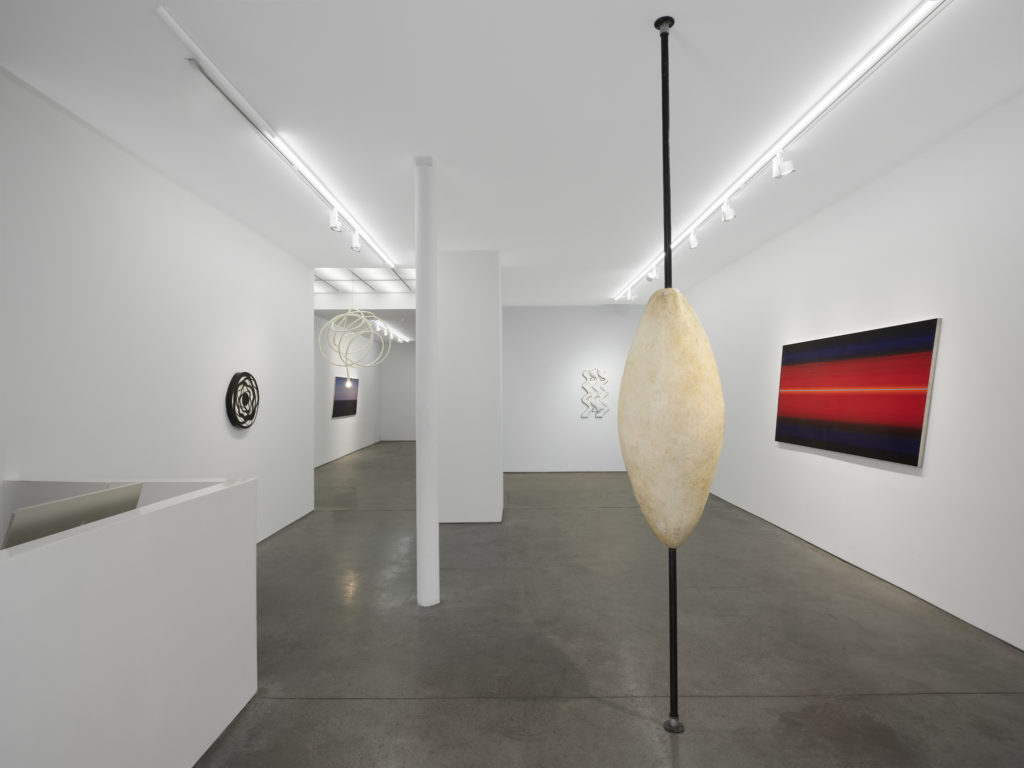
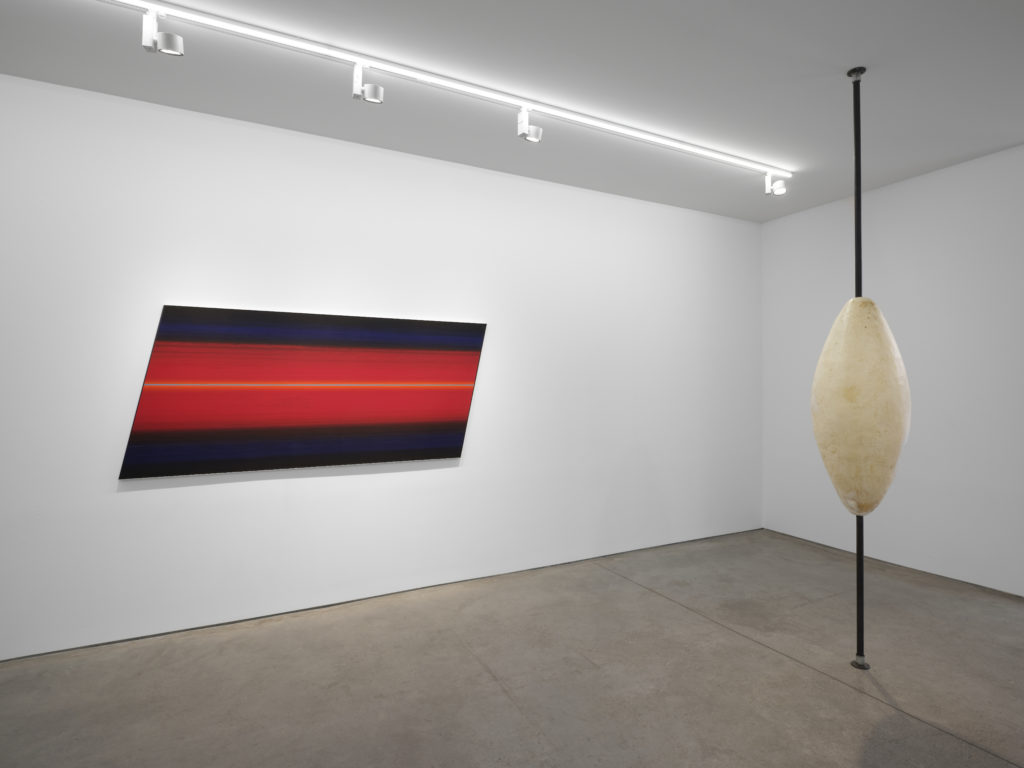
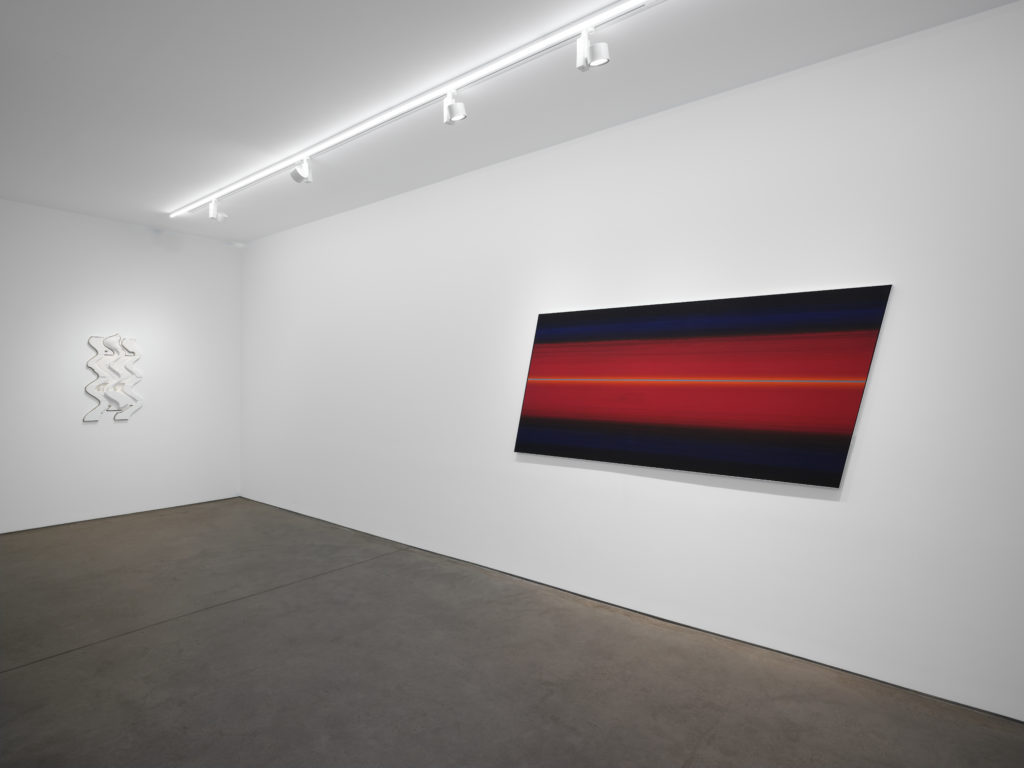
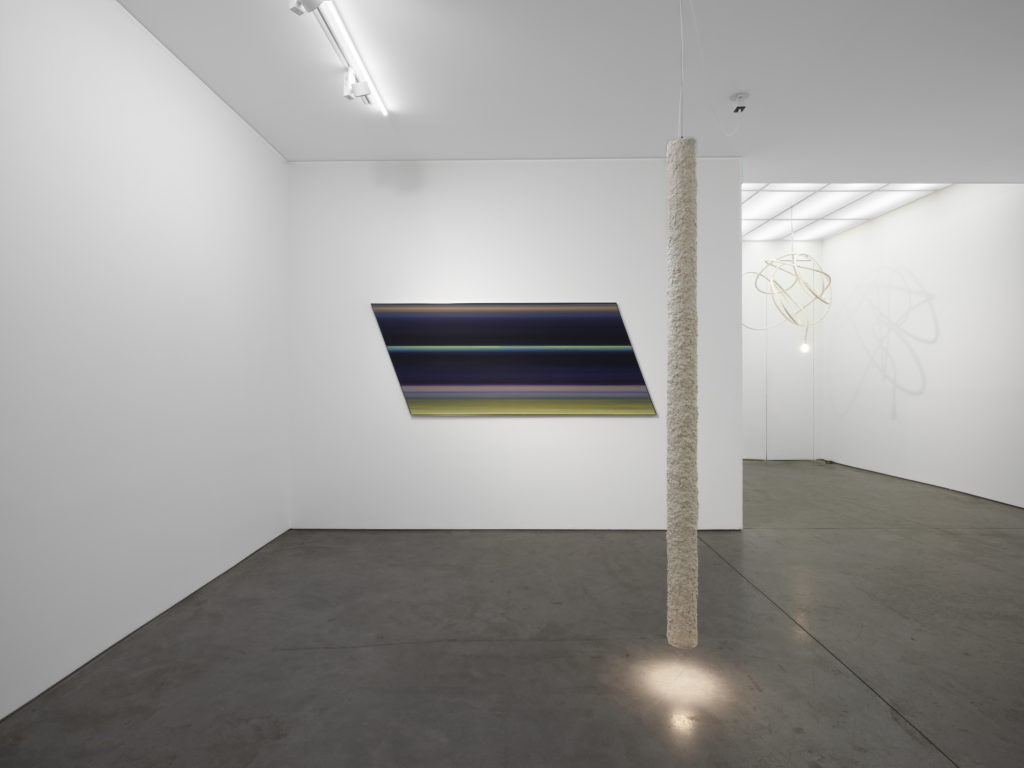
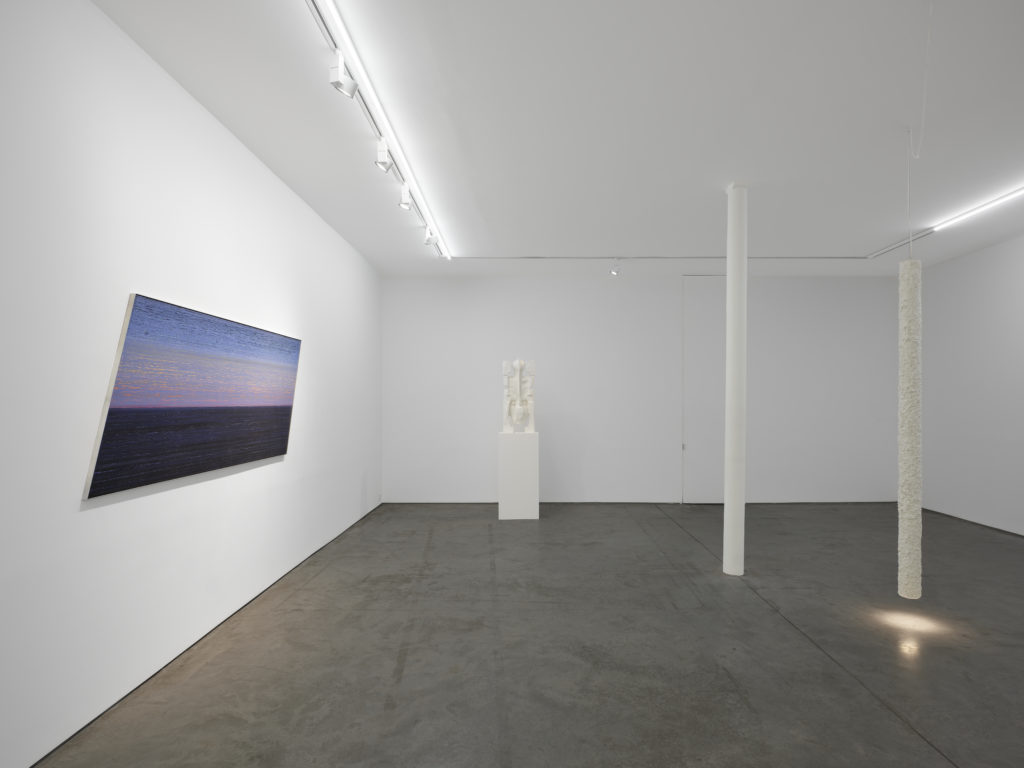
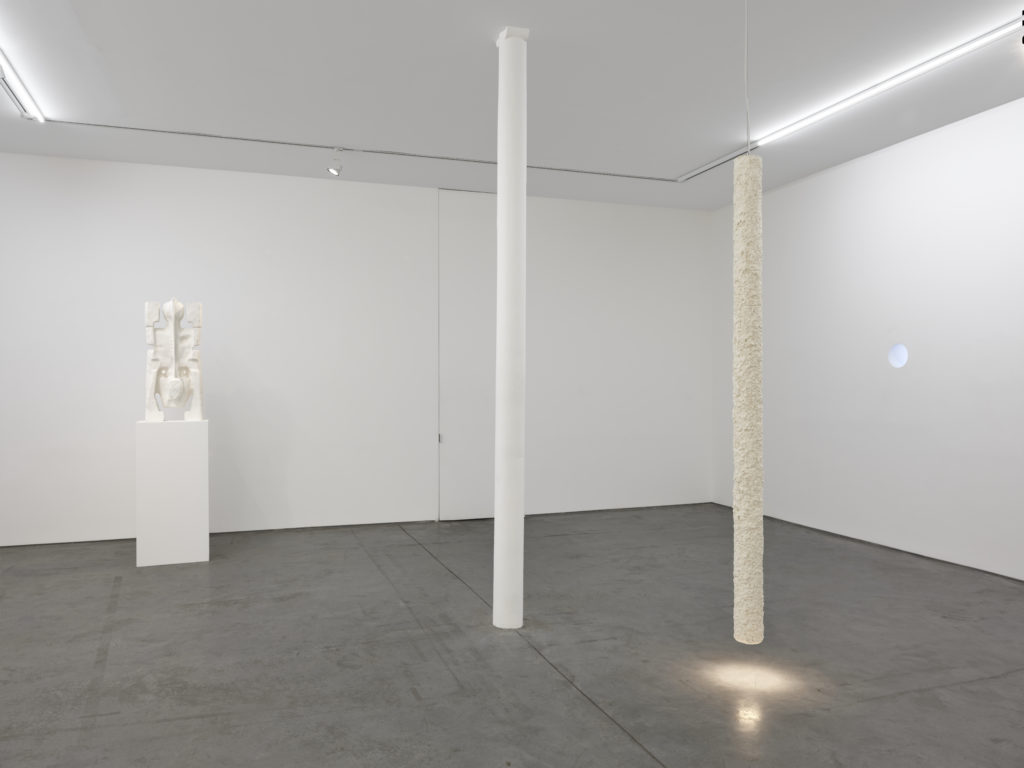
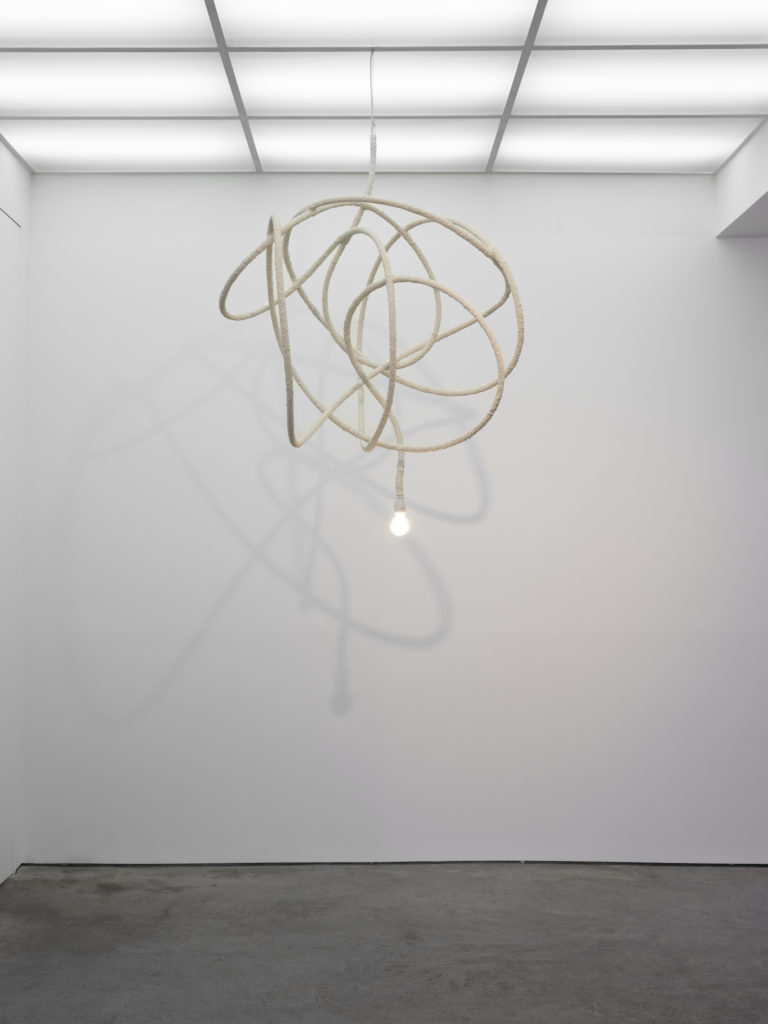
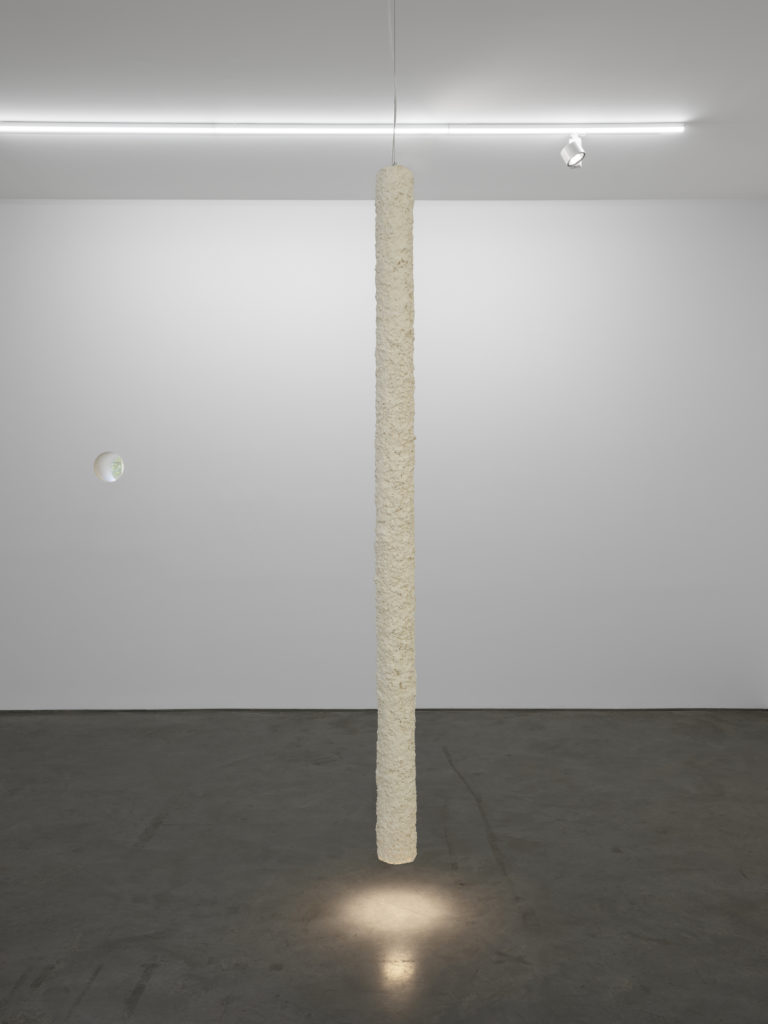
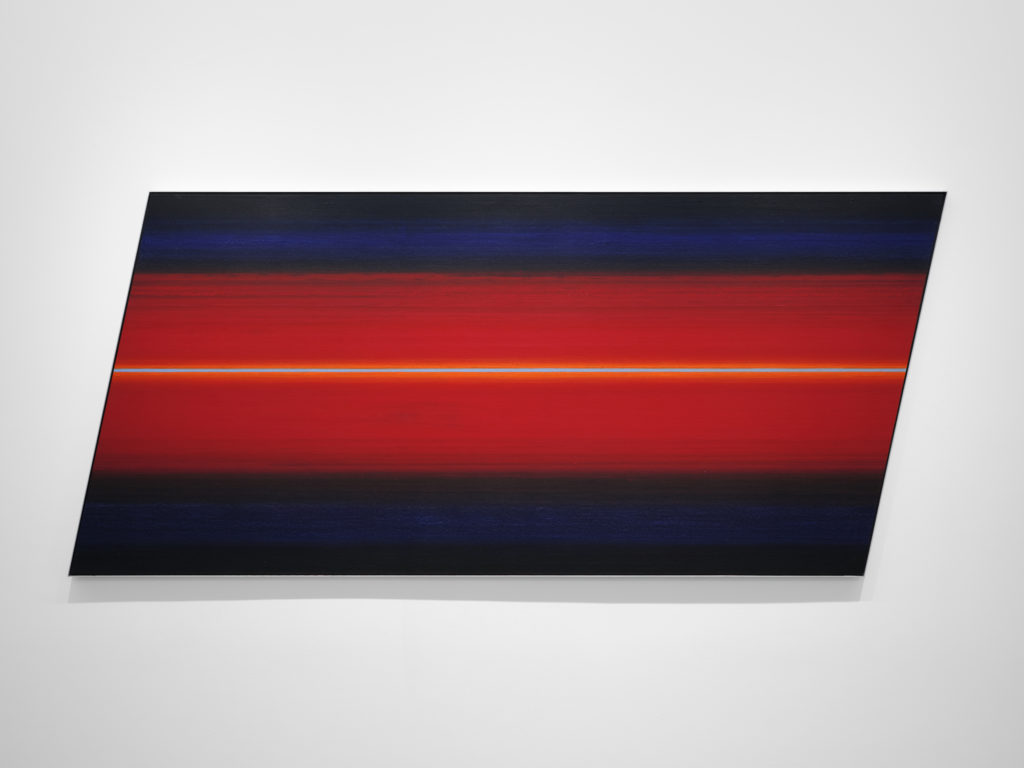
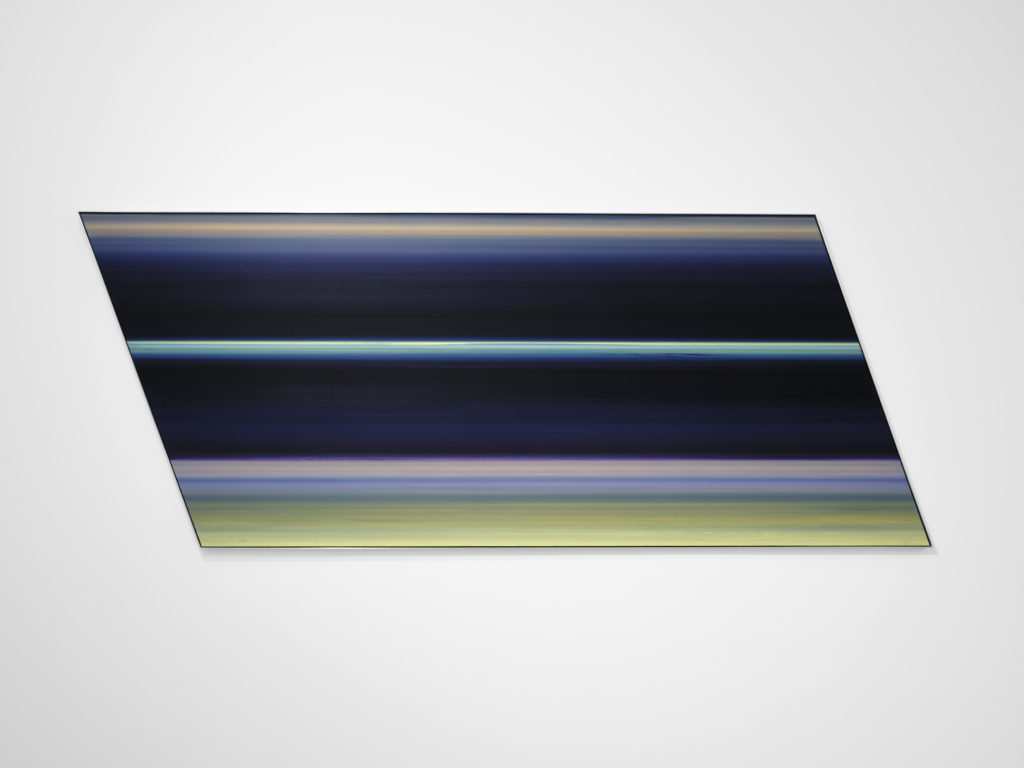
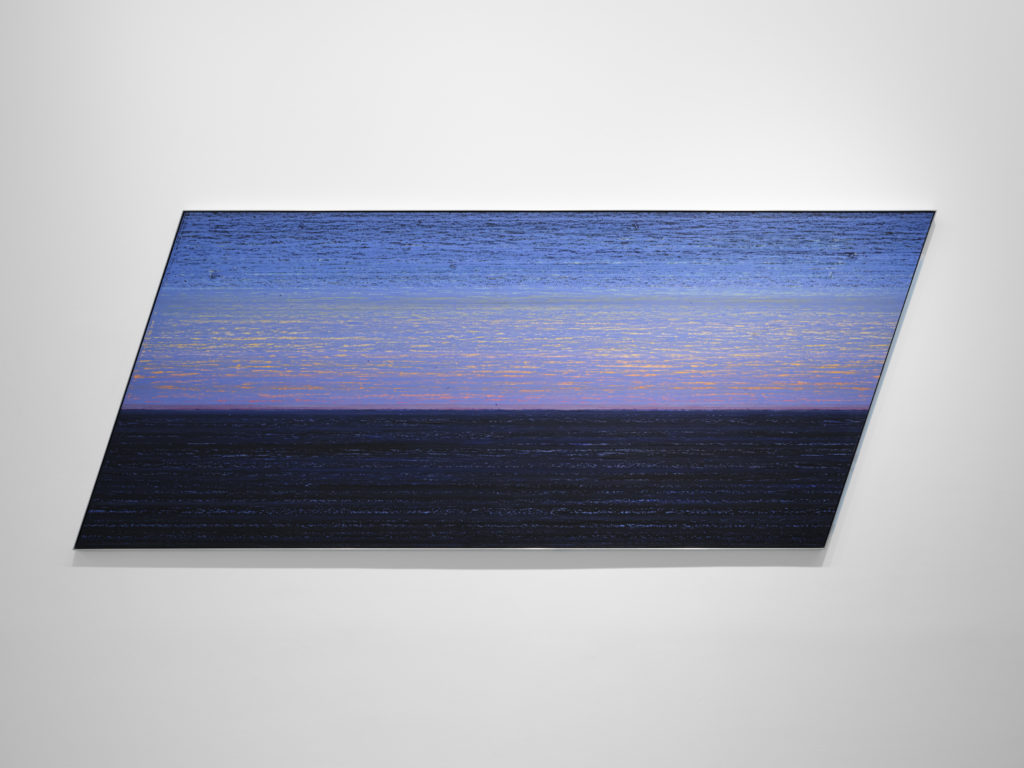
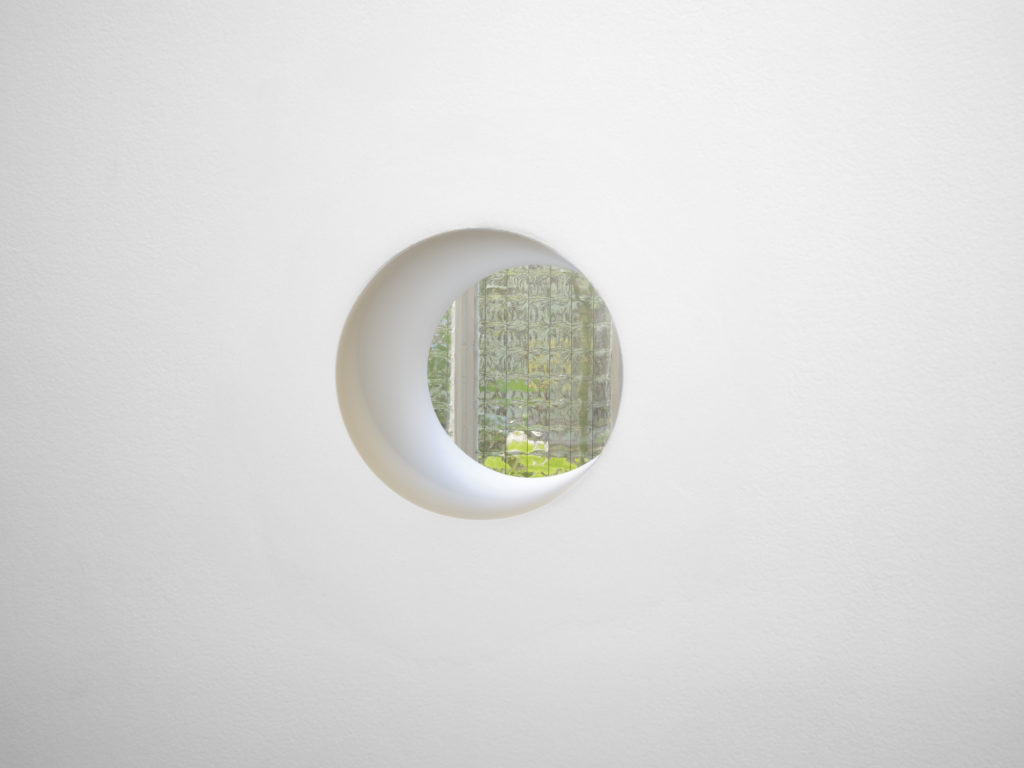
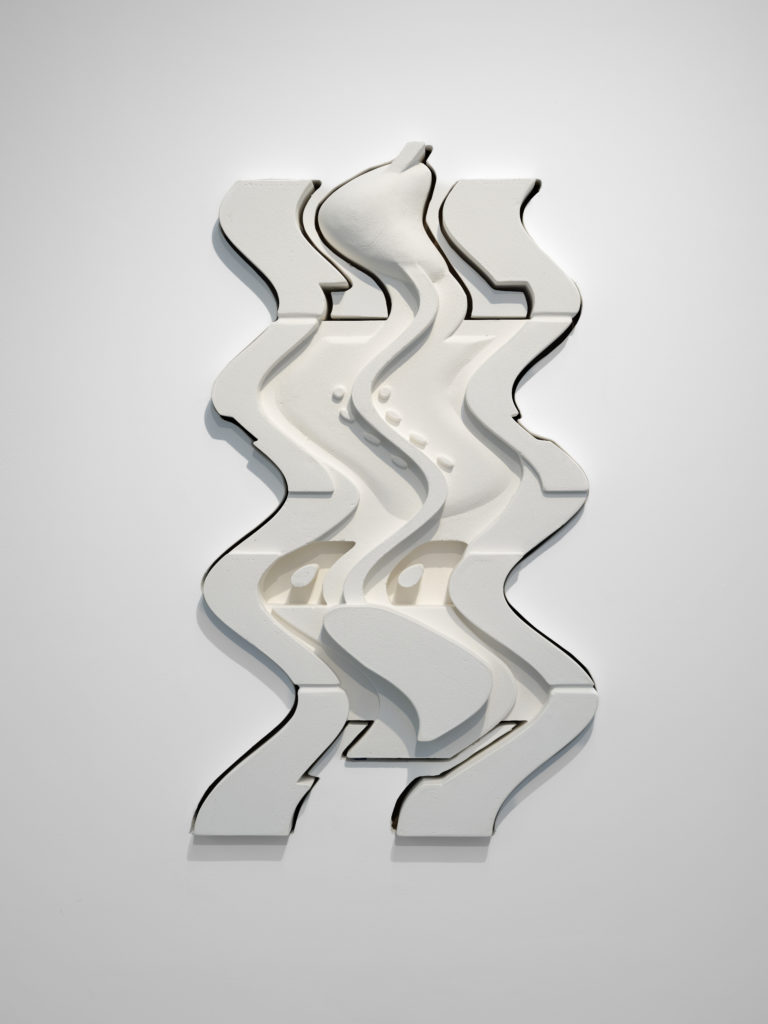
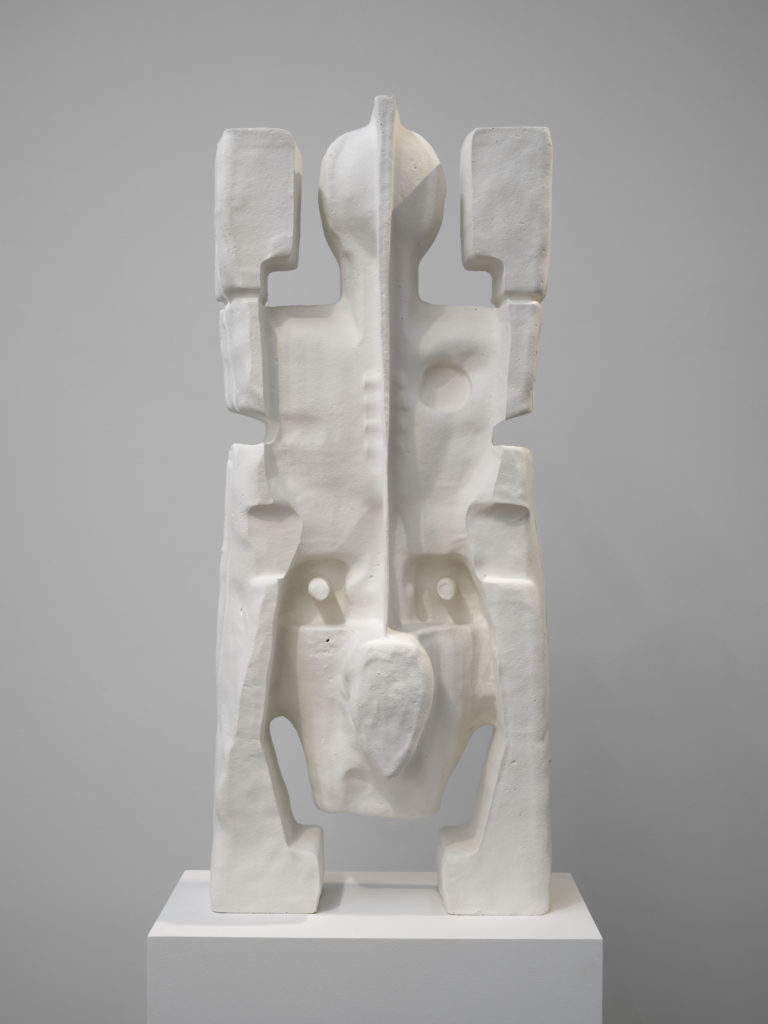
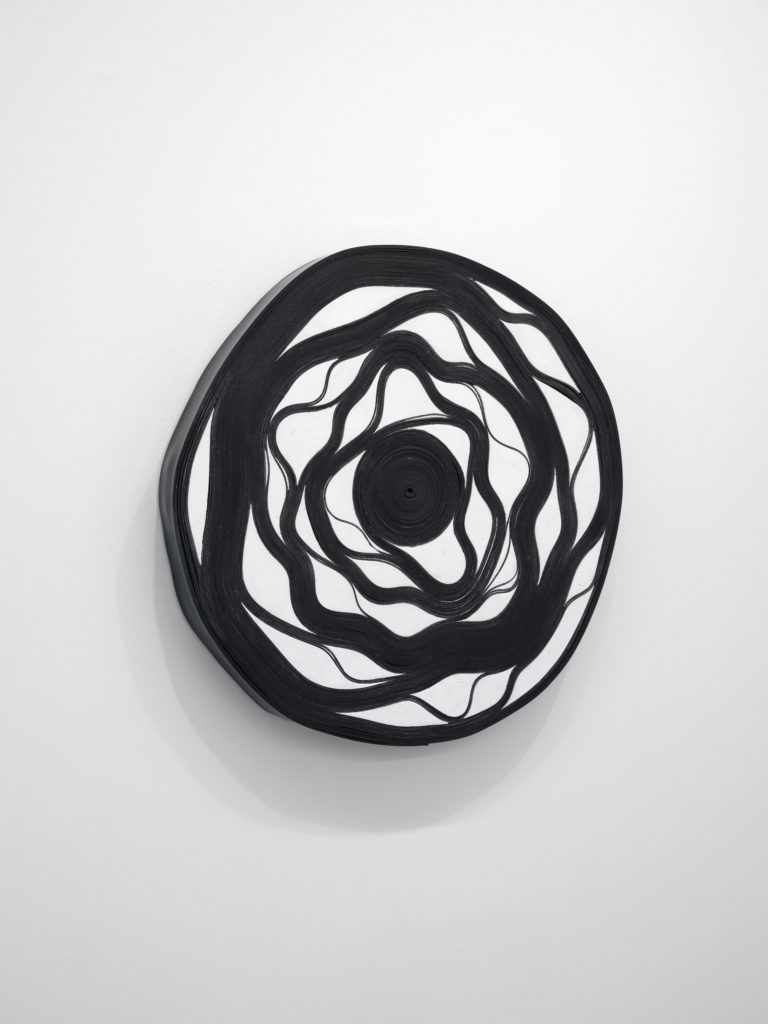
Vue d’exposition / Installation view: Michel François, 2026, Art : Concept, Paris/FR. Courtesy the Artist and Art : Concept, Paris. Photo Objets pointusVue d’exposition / Installation view: Michel François, 2026, Art : Concept, Paris/FR. Courtesy the Artist and Art : Concept, Paris. Photo Objets pointusVue d’exposition / Installation view: Michel François, 2026, Art : Concept, Paris/FR. Courtesy the Artist and Art : Concept, Paris. Photo Objets pointusVue d’exposition / Installation view: Michel François, 2026, Art : Concept, Paris/FR. Courtesy the Artist and Art : Concept, Paris. Photo Objets pointusVue d’exposition / Installation view: Michel François, 2026, Art : Concept, Paris/FR. Courtesy the Artist and Art : Concept, Paris. Photo Objets pointusVue d’exposition / Installation view: Michel François, 2026, Art : Concept, Paris/FR. Courtesy the Artist and Art : Concept, Paris. Photo Objets pointusMichel François Scribble lamp, 2026. Jesmonite, câblage électrique, ampoule 130 × 120 × 140 cm (51 ⅛ × 47 ¼ × 55 ⅛ inches) / jesmonite, electrical wiring, light bulb.Courtesy the Artist and Art : Concept, Paris. Photo : Objets pointusMichel François Luminaire tube, 2026 Plâtre, métal, câblage électrique, lampe 220 × 14 × 14 cm (86 ⅝ × 5 ½ × 5 ½ inches) / Plaster, metal, electrical wiring, lamp.Courtesy the Artist and Art : Concept, Paris. Photo : Objets pointusMichel François Peinture d’usure / Rotopainting, 2026. Papier abrasif, huile, encre de chine 240 × 97 × 2,5 cm (94 ½ × 38 ¼ × 1 inches) / Plaster, metal, electrical wiring, lamp. Courtesy the Artist and Art : Concept, Paris. Photo : Objets pointusMichel François Peinture d’usure / Rotopainting, 2025. Papier abrasif, huile, encre de chine 240 × 97 × 2,5 cm (94 ½ × 38 ¼ × 1 inches) / Plaster, metal, electrical wiring, lamp. Courtesy the Artist and Art : Concept, Paris. Photo : Objets pointusMichel François Peinture d’usure / Rotopainting, 2025. Papier abrasif, huile, encre de chine 240 × 97 × 2,5 cm (94 ½ × 38 ¼ × 1 inches) / Plaster, metal, electrical wiring, lamp. Courtesy the Artist and Art : Concept, Paris. Photo : Objets pointusUn trou dans le mur, 2000-2026. Dimensions variables.Courtesy the Artist and Art : Concept, Paris. Photo : Objets pointusMichel François Autoportrait 3D, 2026. Plâtre 90 × 40 × 12 cm (35 ⅜ × 15 ¾ × 4 ¾ inches) / Plaster.Courtesy the Artist and Art : Concept, Paris. Photo : Objets pointusMichel François Autoportrait sablé, 2026. Plâtre 94 × 53 × 11 cm (37 × 20 ⅞ × 4 ⅜ inches) Plaster. Courtesy the Artist and Art : Concept, Paris. Photo : Objets pointusMichel François Enroulement, 2026 Plâtre et néoprène 57 × 57 × 5,5 cm (22 ½ × 22 ½ × 2 ⅛ inches) / Plaster and neoprene. Courtesy the Artist and Art : Concept, Paris. Photo : Objets pointus
Vue d’exposition / Installation view: Michel François, 2026, Art : Concept, Paris/FR. Courtesy the Artist and Art : Concept, Paris. Photo Objets pointus
Art : Concept is pleased to welcome Michel François to the gallery’s roster of artists.
Born in Sint-Truiden (Belgium) in 1956, Michel François lives and works in Brussels. Since the 1980s, he has developed a body of work in which sculpture serves as a structuring practice, inspiring photography, video, art installations, performance, curatorial projects, and, more recently, painting. This freedom in the choice of medium is matched by a rigorous reflection on space, matter, volume, and the conditions under which forms appear and disappear.
Vue d’exposition / Installation views: Miryam Haddad, Le sel d’un songe, 2026, Art : Concept, Paris/FR. Courtesy the Artist and Art : Concept, Paris. Photo Objets pointusVue d’exposition / Installation views: Miryam Haddad, Le sel d’un songe, 2026, Art : Concept, Paris/FR. Courtesy the Artist and Art : Concept, Paris. Photo Objets pointusVue d’exposition / Installation views: Miryam Haddad, Le sel d’un songe, 2026, Art : Concept, Paris/FR. Courtesy the Artist and Art : Concept, Paris. Photo Objets pointusVue d’exposition / Installation views: Miryam Haddad, Le sel d’un songe, 2026, Art : Concept, Paris/FR. Courtesy the Artist and Art : Concept, Paris. Photo Objets pointusVue d’exposition / Installation views: Miryam Haddad, Le sel d’un songe, 2026, Art : Concept, Paris/FR. Courtesy the Artist and Art : Concept, Paris. Photo Objets pointusVue d’exposition / Installation views: Miryam Haddad, Le sel d’un songe, 2026, Art : Concept, Paris/FR. Courtesy the Artist and Art : Concept, Paris. Photo Objets pointusVue d’exposition / Installation views: Miryam Haddad, Le sel d’un songe, 2026, Art : Concept, Paris/FR. Courtesy the Artist and Art : Concept, Paris. Photo Objets pointusVue d’exposition / Installation views: Miryam Haddad, Le sel d’un songe, 2026, Art : Concept, Paris/FR. Courtesy the Artist and Art : Concept, Paris. Photo Objets pointusVue d’exposition / Installation views: Miryam Haddad, Le sel d’un songe, 2026, Art : Concept, Paris/FR. Courtesy the Artist and Art : Concept, Paris. Photo Objets pointus
In Miryam Haddad’s painting, the multiplicity of sensory interactions unsettles us and offers no promise of comfort. We hallucinate—this almost troubling materiality tested by figures that haunt it, these resemblances altered by gestures that write across the surface without spelling it out. The conflicts of the real world, and those that live within us, rise again on the ground of painting. It pulls us free from the automatisms of memory and emotion, eyes wide open. A war rages against me and within me… Stranger.
Excerpt from the press release by Marie Muracciole
Vue d’exposition | Installation view Jan Eustachy Wolski — Powłoka, Ménage à Trois avec | with Neue Alte Brücke, Art : Concept, Paris, 2026. Courtesy the Artist; Neue Alte Brücke, Frankfurt am Main; Art : Concept, Paris. Photo: Objets pointusVue d’exposition | Installation view Jan Eustachy Wolski — Powłoka, Ménage à Trois avec | with Neue Alte Brücke, Art : Concept, Paris, 2026. Courtesy the Artist; Neue Alte Brücke, Frankfurt am Main; Art : Concept, Paris. Photo: Objets pointusVue d’exposition | Installation view Jan Eustachy Wolski — Powłoka, Ménage à Trois avec | with Neue Alte Brücke, Art : Concept, Paris, 2026. Courtesy the Artist; Neue Alte Brücke, Frankfurt am Main; Art : Concept, Paris. Photo: Objets pointusVue d’exposition | Installation view Jan Eustachy Wolski — Powłoka, Ménage à Trois avec | with Neue Alte Brücke, Art : Concept, Paris, 2026. Courtesy the Artist; Neue Alte Brücke, Frankfurt am Main; Art : Concept, Paris. Photo: Objets pointusVue d’exposition | Installation view Jan Eustachy Wolski — Powłoka, Ménage à Trois avec | with Neue Alte Brücke, Art : Concept, Paris, 2026. Courtesy the Artist; Neue Alte Brücke, Frankfurt am Main; Art : Concept, Paris. Photo: Objets pointusVue d’exposition | Installation view Jan Eustachy Wolski — Powłoka, Ménage à Trois avec | with Neue Alte Brücke, Art : Concept, Paris, 2026. Courtesy the Artist; Neue Alte Brücke, Frankfurt am Main; Art : Concept, Paris. Photo: Objets pointusVue d’exposition | Installation view Jan Eustachy Wolski — Powłoka, Ménage à Trois avec | with Neue Alte Brücke, Art : Concept, Paris, 2026. Courtesy the Artist; Neue Alte Brücke, Frankfurt am Main; Art : Concept, Paris. Photo: Objets pointusVue d’exposition | Installation view Jan Eustachy Wolski — Powłoka, Ménage à Trois avec | with Neue Alte Brücke, Art : Concept, Paris, 2026. Courtesy the Artist; Neue Alte Brücke, Frankfurt am Main; Art : Concept, Paris. Photo: Objets pointusVue d’exposition | Installation view Jan Eustachy Wolski — Powłoka, Ménage à Trois avec | with Neue Alte Brücke, Art : Concept, Paris, 2026. Courtesy the Artist; Neue Alte Brücke, Frankfurt am Main; Art : Concept, Paris. Photo: Objets pointus
In 2026, Art : Concept launches Ménage à Trois, a new exhibition cycle dedicated to presenting, for the first time in France, the work of artists in collaboration with the galleries that represent them.
To inaugurate this new cycle, Art : Concept is pleased to present a solo exhibition by Jan Eustachy Wolski, in collaboration with Neue Alte Brücke. Titled after the Polish amalgam Powłoka, the exhibition takes its name from a term that does not fully yield itself to translation. Its semantic field spans notions of membrane, paint covering, film, and any surface that shelters from view, filters perception, or selectively reveals.
Unlike in prior works, the series veers from abstraction to figuration in a way that it grants near-equal weight. At times, solitary figures are paired with disorienting, chromatic fields; elsewhere, cityscapes get corrupted into congested, loose paint patches. While hinting at a post-industrialized world, the narrative aspects of the works engineer a decisive incompleteness as the figuration does not give way to resolved narratives, adumbrating the works with sustained ambiguity.
Wolski’s handling of texture with protruding paint, heavy impasto, and sweeping gestural strokes heightens the immediacy of the physical presence of paint. Anchored in bold colors, his painterly strategies relate an intentional tendency to sink the viewer into these worlds. Through a calculated interplay of fogged narratives, scrutiny of texture, and the unresolved duality of abstraction and figuration, Wolski foregrounds the skin of the painting as a physical and symbolic membrane through which the image and its meaning hesitate.
Wolski’s practice rests on a form of dystopian worldbuilding, marked by ambiguous representations that navigate early twentieth-century expression, superfuture aesthetics, and the legacy of abstract art, where narrative coalesces with painterly components in densely textured surfaces.
Jan Eustachy Wolski (b. 1997, Cracow, PL) lives and works in Cracow. He studied at the university of Applied arts in Vienna and the Academy of Fine Arts in Cracow. Recent solo exhibitions were presented at Neue Alte Brücke, Frankfurt, and Piktogram, Warsaw. He has exhibited his works in group exhibitions at Contemporary Art Center Vilnius, Modern Art, Paris, Piktogram, Warsaw, Zachęta National Gallery of Art, Warsaw, Stefan Gierowski Foundation, Warsaw, and Museum of Modern Art, Warsaw, among other spaces.
Vue d’exposition / Installation view: Jean-Michel Sanejouand. Espaces réels, espaces imaginaires, Art : Concept, Paris, 2025 – 2026. Courtesy Succession Sanejouand et Art : Concept, Paris. Photo Objets PointusVue d’exposition / Installation view: Jean-Michel Sanejouand. Espaces réels, espaces imaginaires, Art : Concept, Paris, 2025 – 2026. Courtesy Succession Sanejouand et Art : Concept, Paris. Photo Objets PointusVue d’exposition / Installation view: Jean-Michel Sanejouand. Espaces réels, espaces imaginaires, Art : Concept, Paris, 2025 – 2026. Courtesy Succession Sanejouand et Art : Concept, Paris. Photo Objets PointusVue d’exposition / Installation view: Jean-Michel Sanejouand. Espaces réels, espaces imaginaires, Art : Concept, Paris, 2025 – 2026. Courtesy Succession Sanejouand et Art : Concept, Paris. Photo Objets PointusVue d’exposition / Installation view: Jean-Michel Sanejouand. Espaces réels, espaces imaginaires, Art : Concept, Paris, 2025 – 2026. Courtesy Succession Sanejouand et Art : Concept, Paris. Photo Objets PointusVue d’exposition / Installation view: Jean-Michel Sanejouand. Espaces réels, espaces imaginaires, Art : Concept, Paris, 2025 – 2026. Courtesy Succession Sanejouand et Art : Concept, Paris. Photo Objets PointusVue d’exposition / Installation view: Jean-Michel Sanejouand. Espaces réels, espaces imaginaires, Art : Concept, Paris, 2025 – 2026. Courtesy Succession Sanejouand et Art : Concept, Paris. Photo Objets PointusVue d’exposition / Installation view: Jean-Michel Sanejouand. Espaces réels, espaces imaginaires, Art : Concept, Paris, 2025 – 2026. Courtesy Succession Sanejouand et Art : Concept, Paris. Photo Objets Pointus
Ten years after the artist’s first exhibition at the gallery, Jean-Michel Sanejouand: Real Spaces, Imaginary Spaces brings together two major bodies of his work, Calligraphies d’humeur [1968-1978] and Espaces-Peintures [1978-1986]. Some of the works shown on this occasion were presented at the artist’s retrospective exhibitions at the Palais des Beaux-Arts in Lyon in 1986 and at the Centre Pompidou in Paris in 1995. These two events provided decisive institutional recognition for a career governed by an internal logic in which each series paves the way for the next and allows it to be reborn in a new form.
While highlighting the seminal role of this period [1968-1986], the exhibition at Art: Concept also sheds light on the transitions, ruptures, and continuities that mark Jean-Michel Sanejouand’s thinking and practice. Sanejouand has constantly reinvented the terms of his relationship with space (real or imaginary), questioning its definition as well as its “organization” through various media. His “spatial techniques,” in which painting occupies the foreground, function as revelations of places whose boundaries we sometimes struggle to perceive, engaging not only our consciousness but our entire bodies.
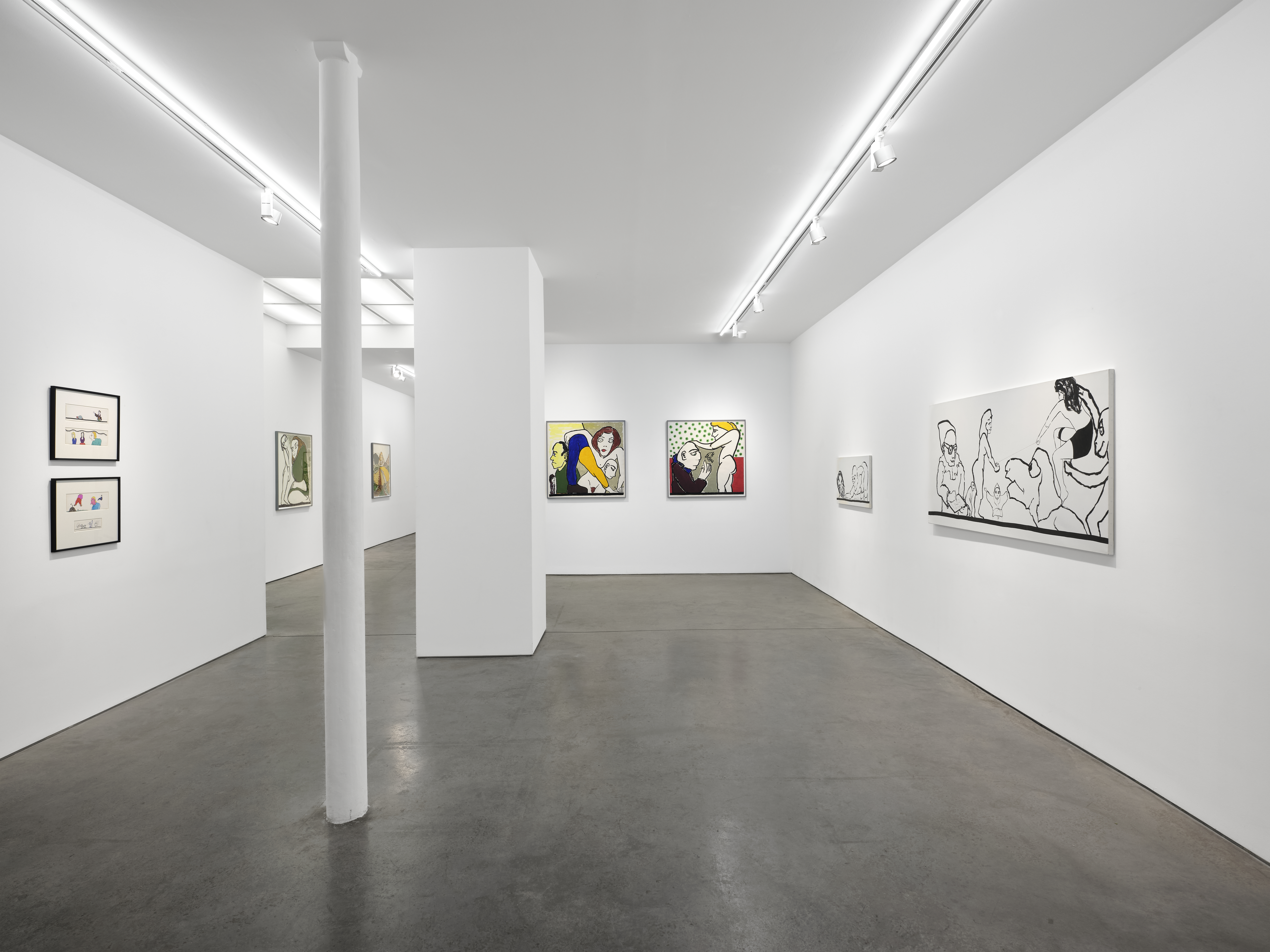
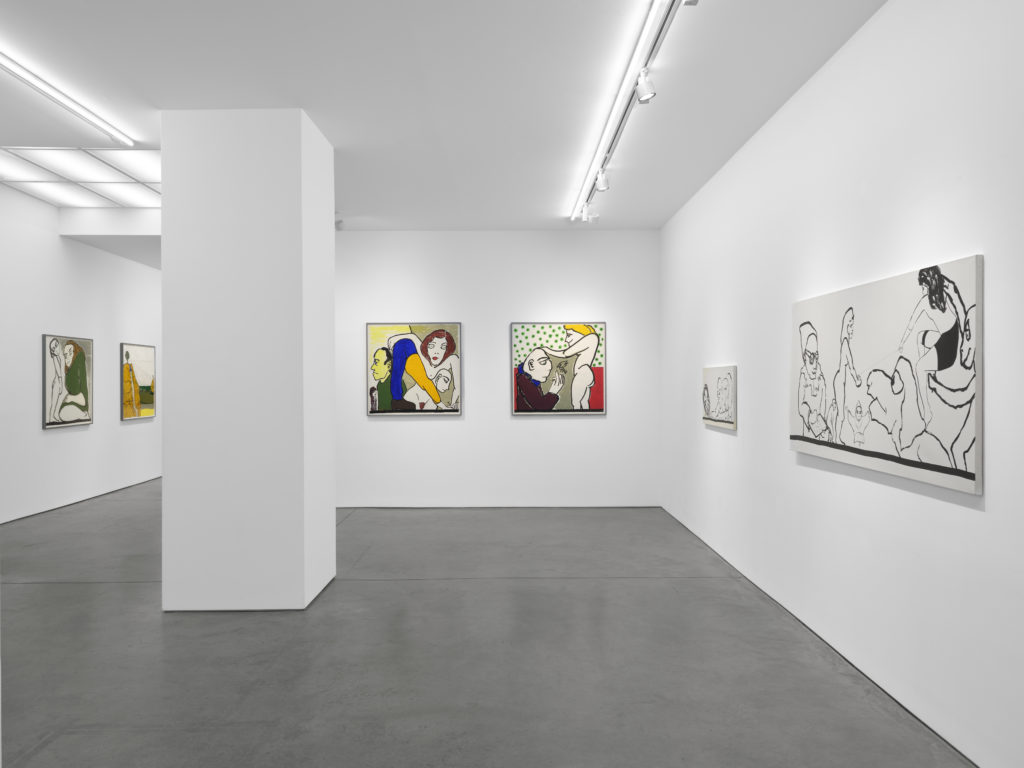
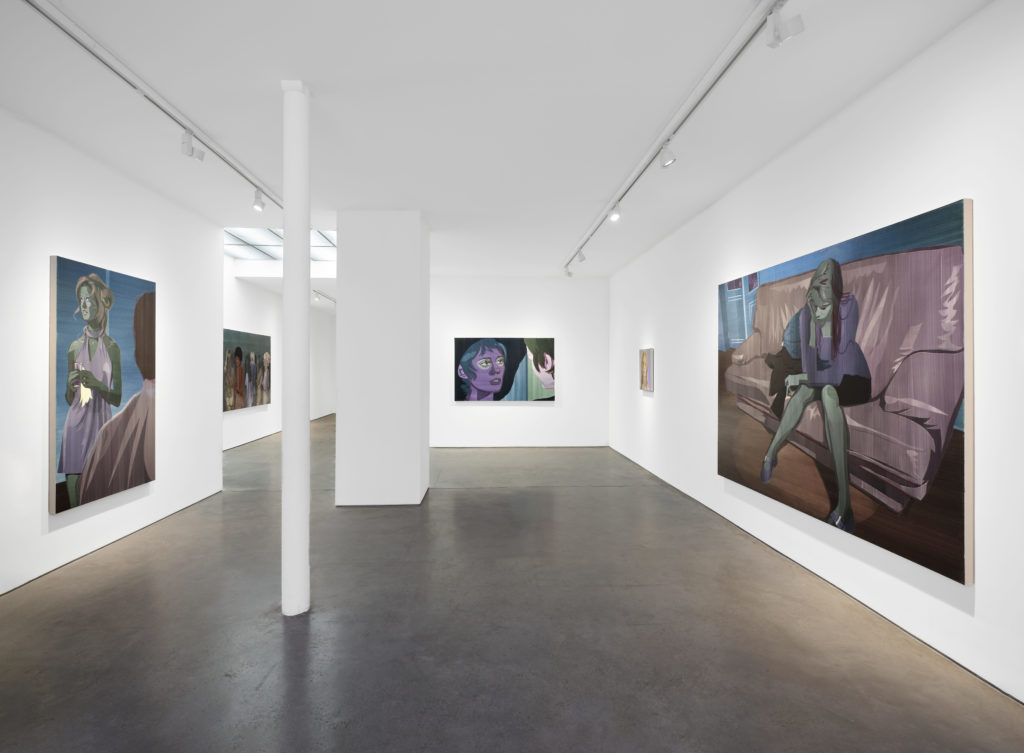
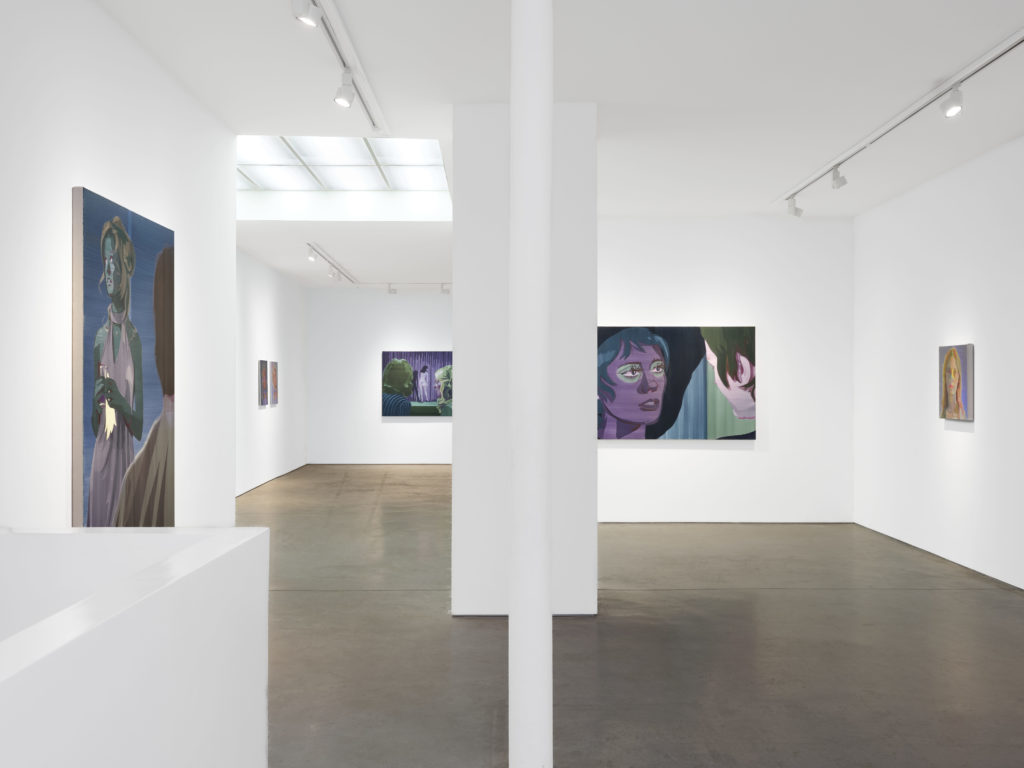
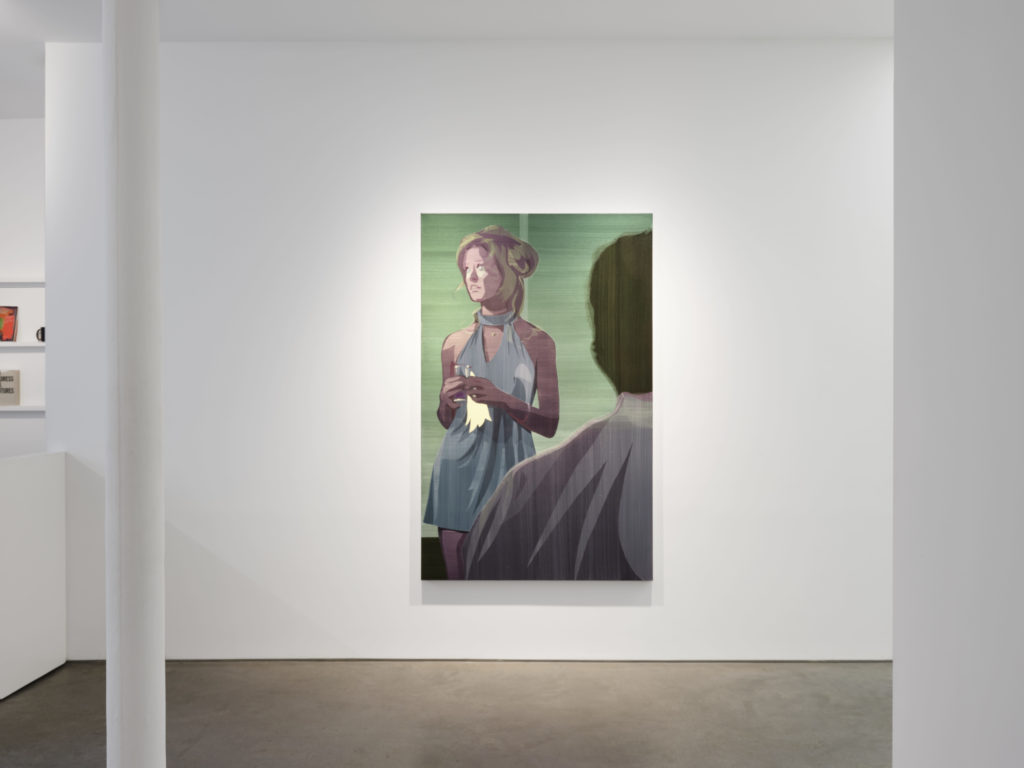
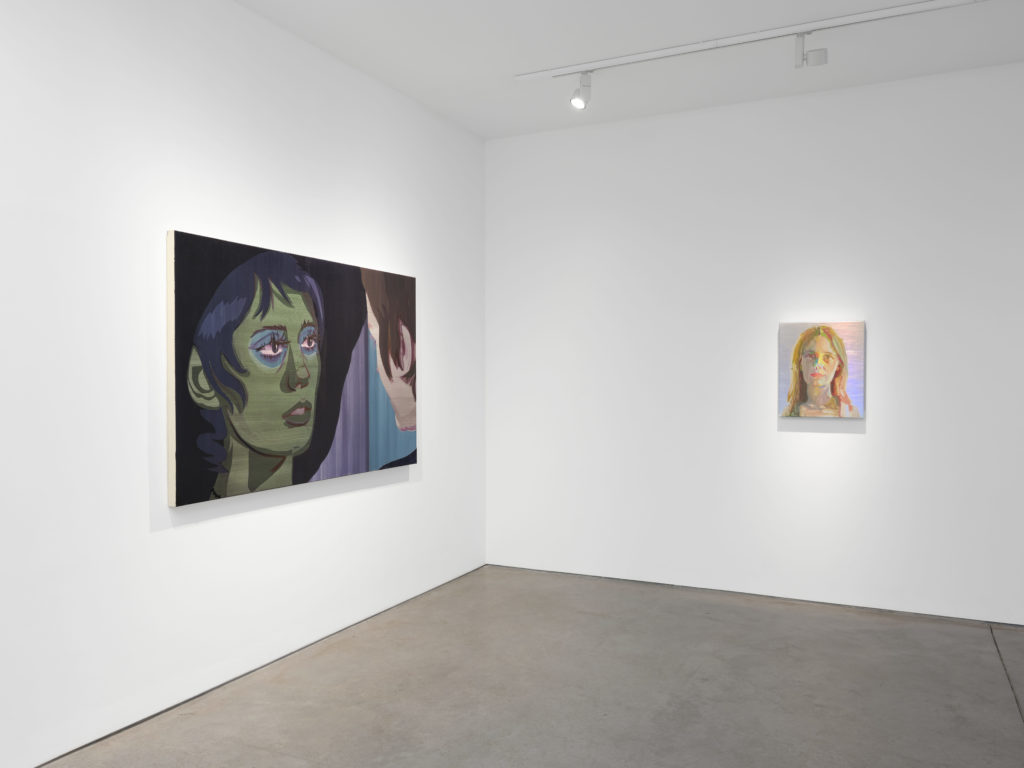
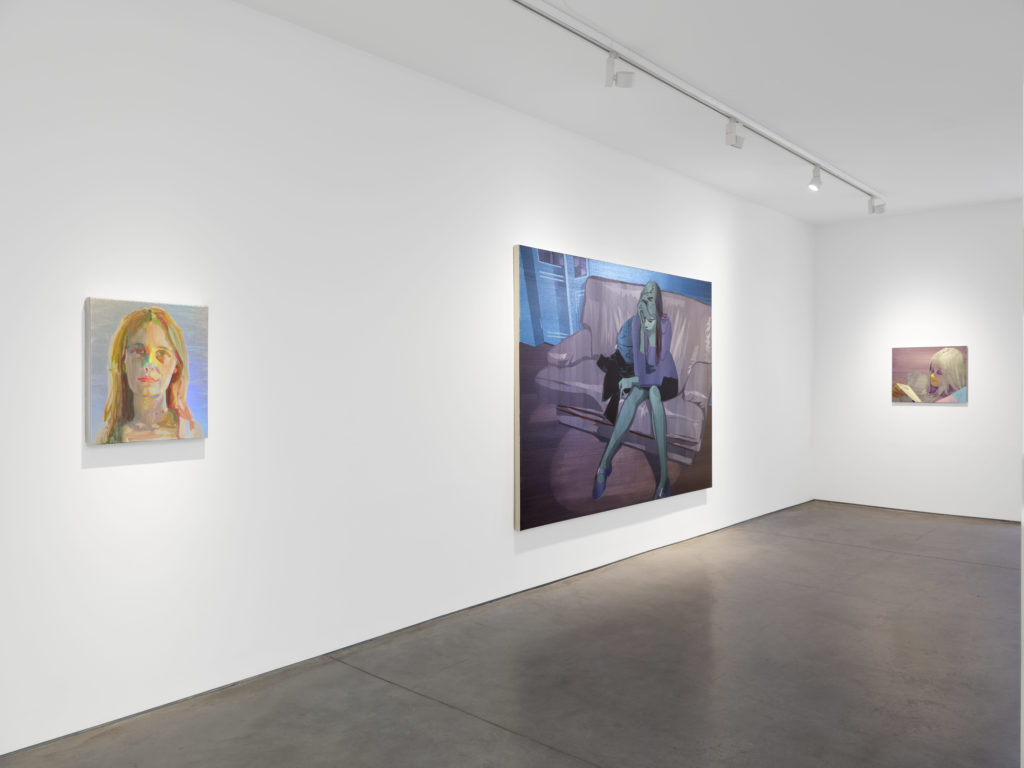
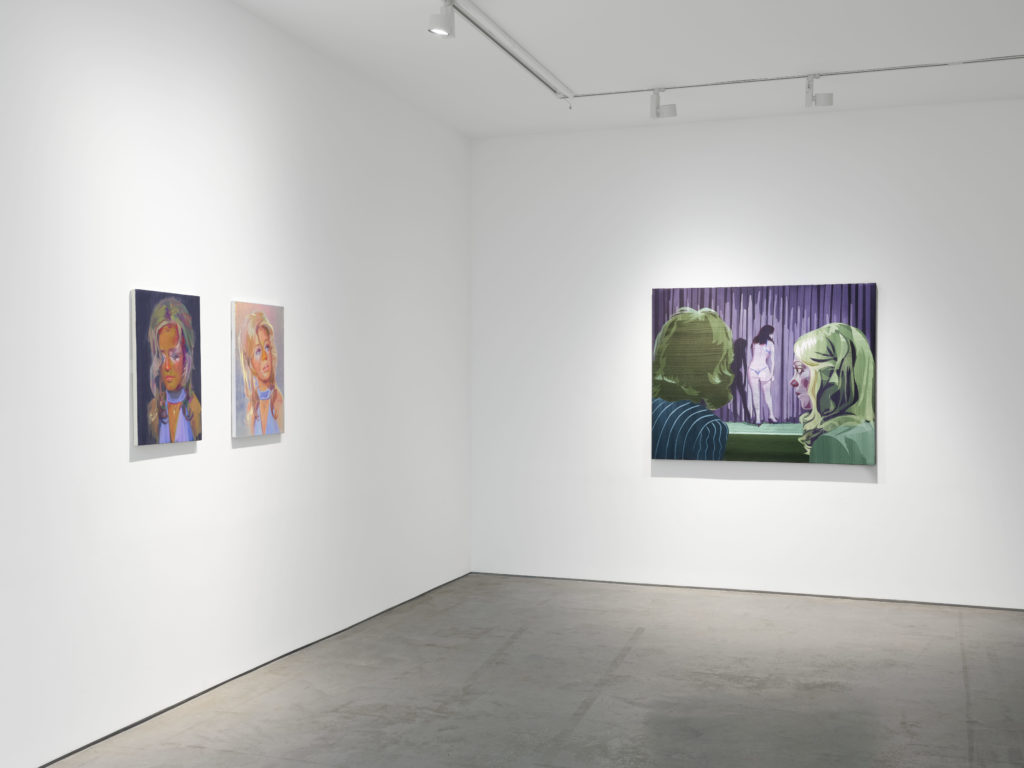
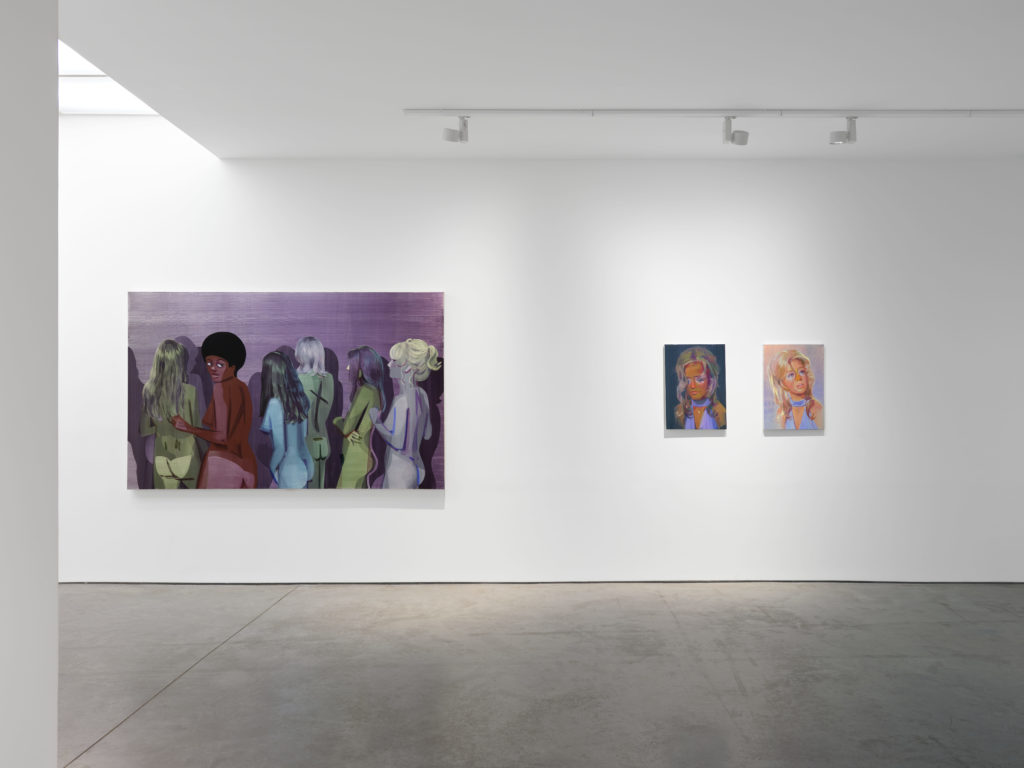
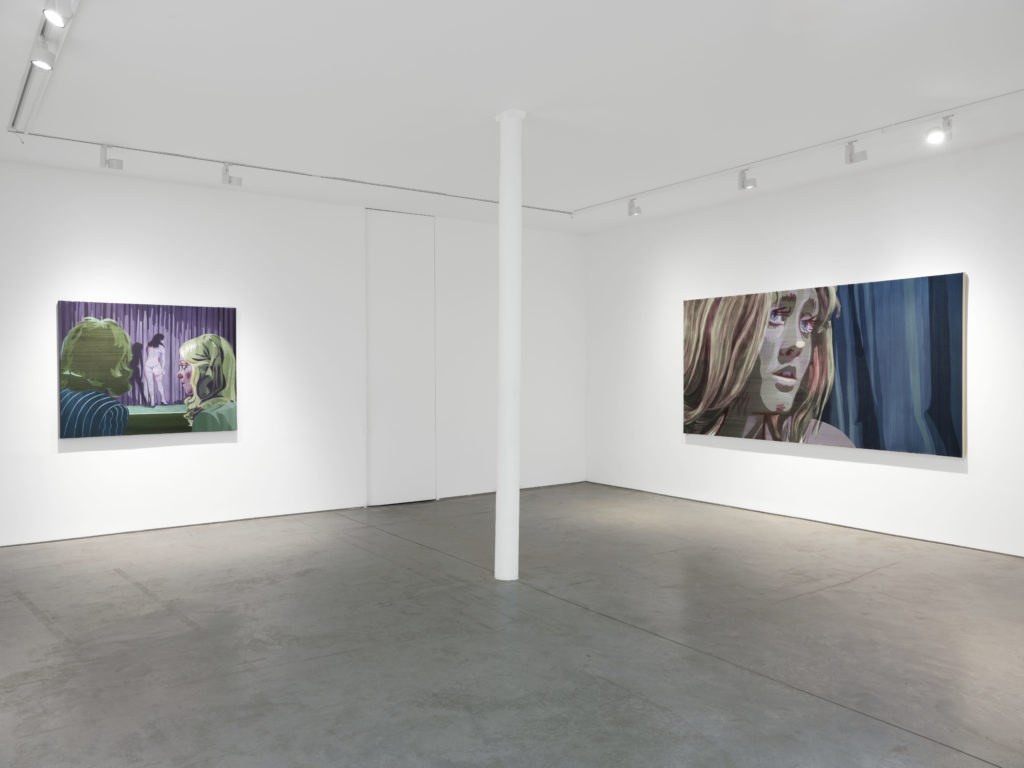
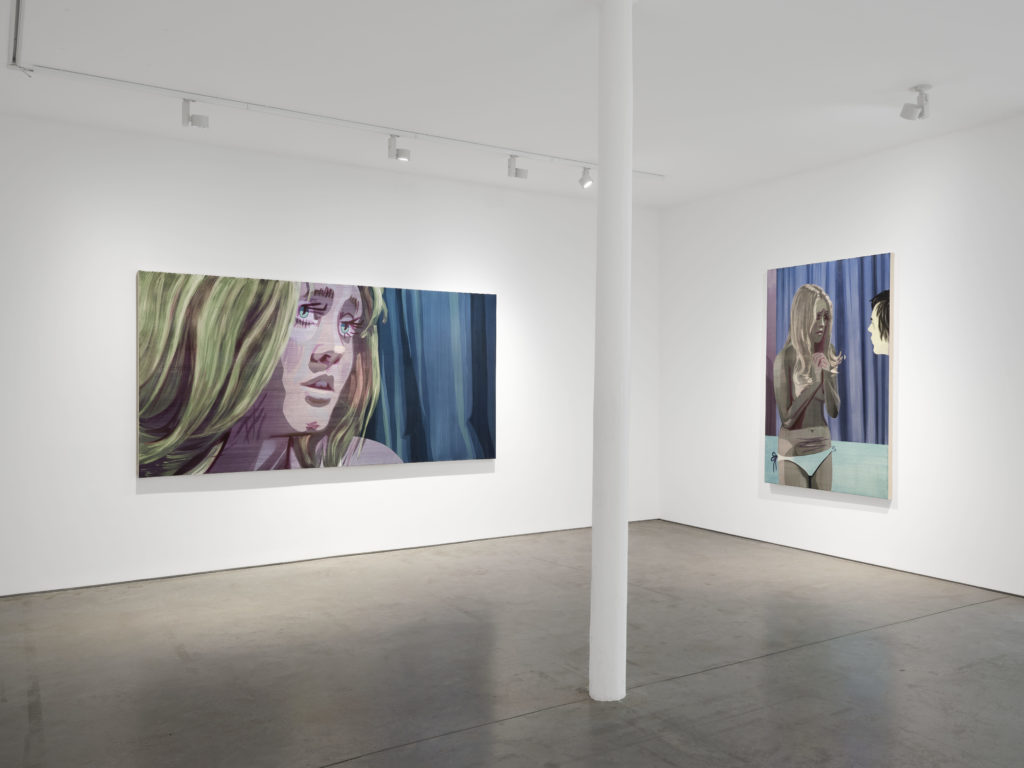
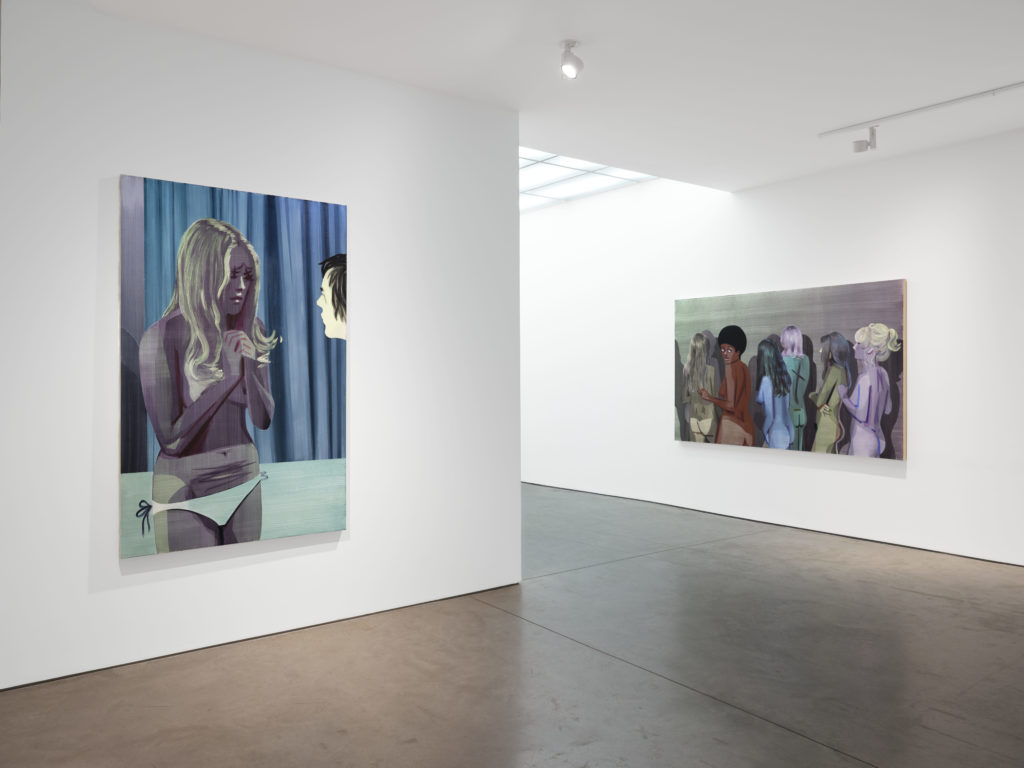
Vue de l’exposition | Exhibition view Nina Childress : Casting, Art : Concept, 2025. Courtsey the Artist and Art : Concept, Paris. Photo Objets pointusVue de l’exposition | Exhibition view Nina Childress : Casting, Art : Concept, 2025. Courtsey the Artist and Art : Concept, Paris. Photo Objets pointusVue de l’exposition | Exhibition view Nina Childress : Casting, Art : Concept, 2025. Courtsey the Artist and Art : Concept, Paris. Photo Objets pointusVue de l’exposition | Exhibition view Nina Childress : Casting, Art : Concept, 2025. Courtsey the Artist and Art : Concept, Paris. Photo Objets pointusVue de l’exposition | Exhibition view Nina Childress : Casting, Art : Concept, 2025. Courtsey the Artist and Art : Concept, Paris. Photo Objets pointusVue de l’exposition | Exhibition view Nina Childress : Casting, Art : Concept, 2025. Courtsey the Artist and Art : Concept, Paris. Photo Objets pointusVue de l’exposition | Exhibition view Nina Childress : Casting, Art : Concept, 2025. Courtsey the Artist and Art : Concept, Paris. Photo Objets pointusVue de l’exposition | Exhibition view Nina Childress : Casting, Art : Concept, 2025. Courtsey the Artist and Art : Concept, Paris. Photo Objets pointusVue de l’exposition | Exhibition view Nina Childress : Casting, Art : Concept, 2025. Courtsey the Artist and Art : Concept, Paris. Photo Objets pointusVue de l’exposition | Exhibition view Nina Childress : Casting, Art : Concept, 2025. Courtsey the Artist and Art : Concept, Paris. Photo Objets pointus
Art: Concept is pleased to present Nina Childress’s second solo exhibition.
Passionate about cinema and its icons, the artist has created a series of paintings entitled Casting. Continuing her technical research, Nina Childress uses iridescent pigments and chameleon pigments to create scenes and portraits in motion that question the nature of the gaze and the position of the viewer. The viewer becomes an actor in their perception of the image, with colours subtly varying as they move in front of the canvas. Cinematic framing, off-screen effects and striking expressions evoke the world of the big screen.
On the occasion of the exhibition, we will screen the video portrait of Nina Childress directed by Olivier Garouste, made possible with support from the ADAGP Fund.