

Ulla von Brandeburg – “It Has a Golden Sun and an Elderly Grey Moon” Film super-16-mm, colour, sound, 22 min 25 sec.

Le Grand Café is participating in the Trajectoires #9 dance festival* for the third consecutive year.
The art center is presenting three artistic creations at the crossroads of dance and visual arts, featuring tableaux vivants, body-objects, and memory theater.

It has a Golden Sun and an Elderly Grey Moon
Ulla von Brandenburg
2016
Film, duration 22 min 25 sec
Looped from 3pm to 6pm

Further information

Jan Eustachy Wolski, Untitled, 2025, oil on canvas, 73,5 x 101 cm. Photo: Szymon Sokołowski

In 2026, Art : Concept launches Ménage à Trois, a new exhibition cycle dedicated to presenting, for the first time in France, the work of artists in collaboration with the galleries that represent them.

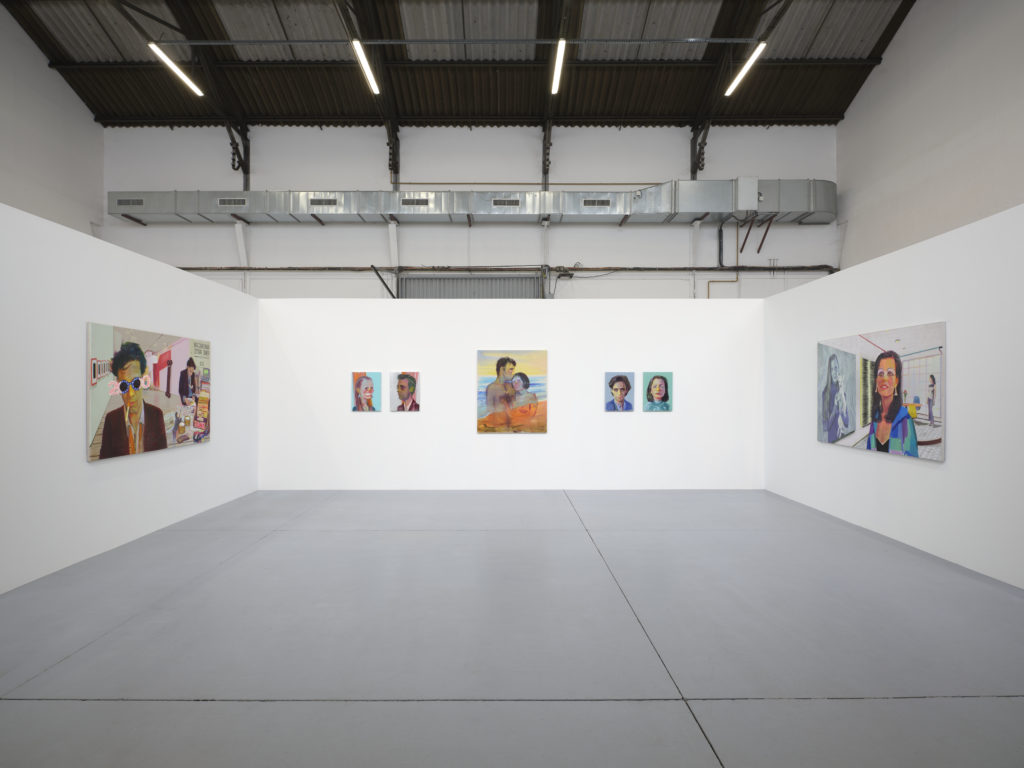
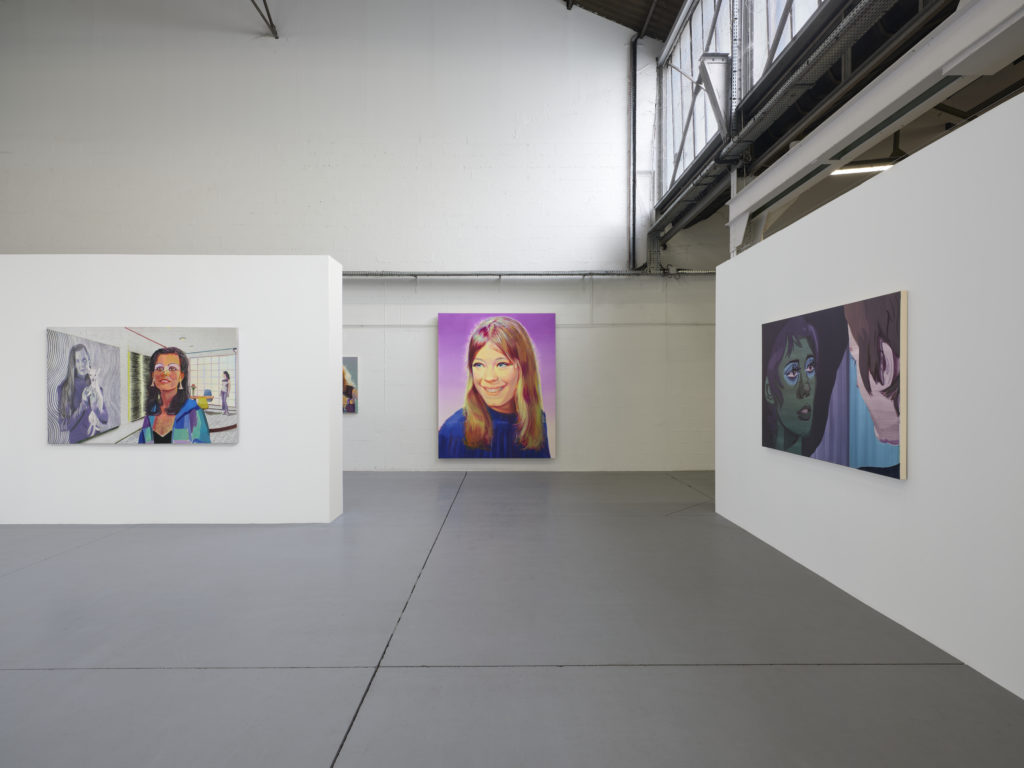
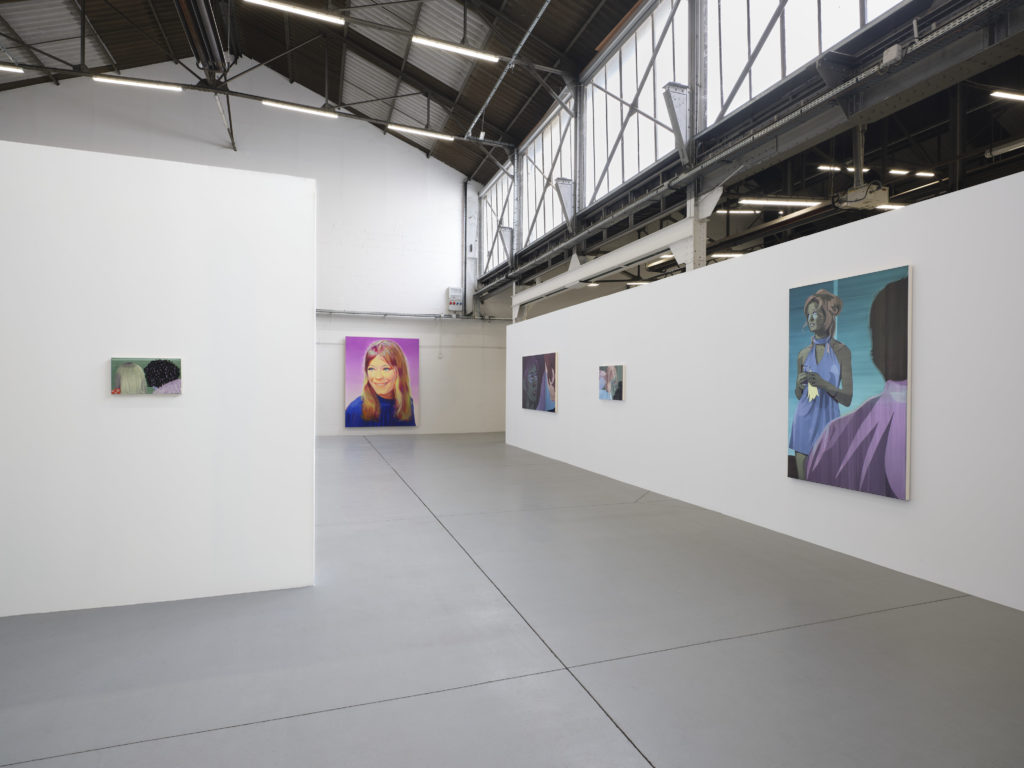
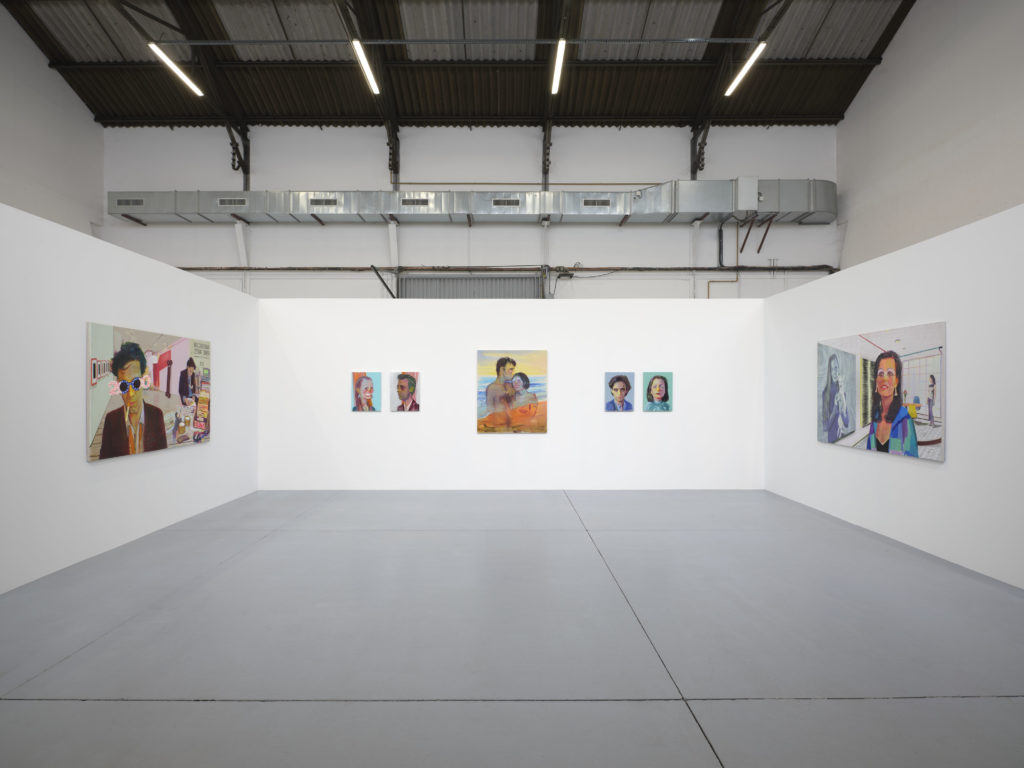
To inaugurate this new cycle, Art : Concept is pleased to present a solo exhibition by Jan Eustachy Wolski, in collaboration with Neue Alte Brücke. Titled after the Polish amalgam Powłoka, the exhibition takes its name from a term that does not fully yield itself to translation. Its semantic field spans notions of membrane, paint covering, film, and any surface that shelters from view, filters perception, or selectively reveals. 

Unlike in prior works, the series veers from abstraction to figuration in a way that it grants near-equal weight. At times, solitary figures are paired with disorienting, chromatic fields; elsewhere, cityscapes get corrupted into congested, loose paint patches. While hinting at a post-industrialized world, the narrative aspects of the works engineer a decisive incompleteness as the figuration does not give way to resolved narratives, adumbrating the works with sustained ambiguity. 

Wolski’s handling of texture with protruding paint, heavy impasto, and sweeping gestural strokes heightens the immediacy of the physical presence of paint. Anchored in bold colors, his painterly strategies relate an intentional tendency to sink the viewer into these worlds. Through a calculated interplay of fogged narratives, scrutiny of texture, and the unresolved duality of abstraction and figuration, Wolski foregrounds the skin of the painting as a physical and symbolic membrane through which the image and its meaning hesitate. 

Wolski’s practice rests on a form of dystopian worldbuilding, marked by ambiguous representations that navigate early twentieth-century expression, superfuture aesthetics, and the legacy of abstract art, where narrative coalesces with painterly components in densely textured surfaces.

Jan Eustachy Wolski (b. 1997, Cracow, PL) lives and works in Cracow. He studied at the university of Applied arts in Vienna and the Academy of Fine Arts in Cracow. Recent solo exhibitions were presented at Neue Alte Brücke, Frankfurt, and Piktogram, Warsaw. He has exhibited his works in group exhibitions at Contemporary Art Center Vilnius, Modern Art, Paris, Piktogram, Warsaw, Zachęta National Gallery of Art, Warsaw, Stefan Gierowski Foundation, Warsaw, and Museum of Modern Art, Warsaw, among other spaces. 

Further information

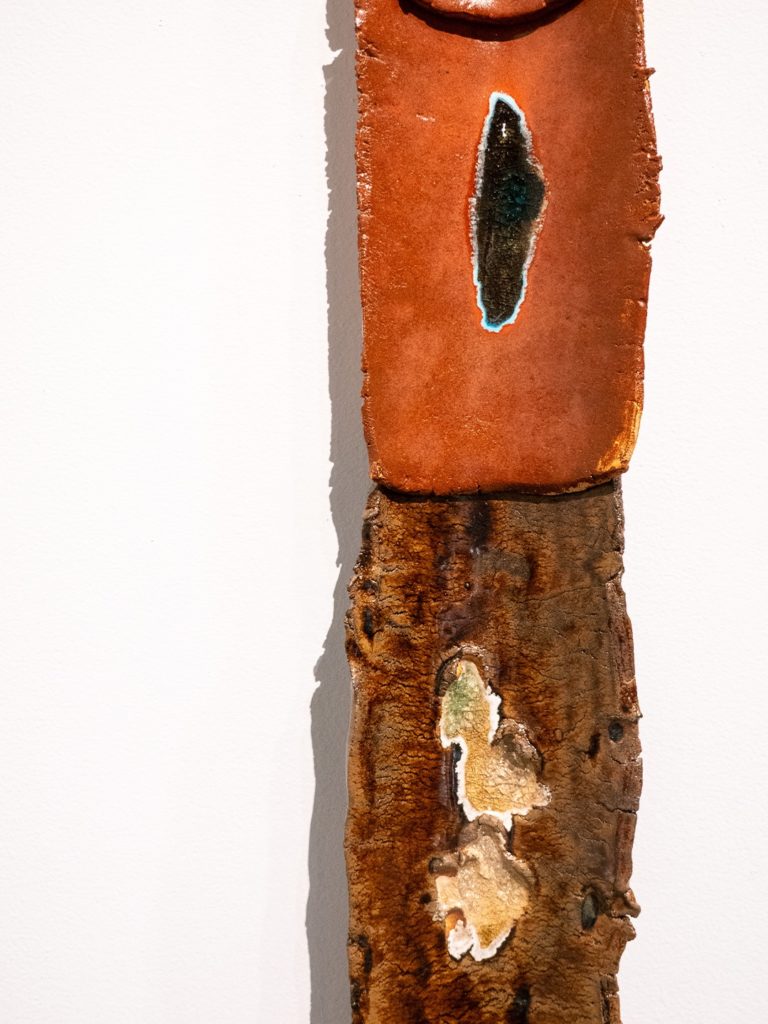
Corentin Grossmann, Miaou, 2018. Céramique, engobe / Ceramic, engobe
43 × 60 × 168 cm (16 ⅞ × 23 ⅝ × 6 ¼ inches). Courtesy the Artist and Art : Concept, Paris.

The exhibition Les Animaux ne portent pas de chaussures, curated by Anne-Laure Lestage, offers a sensitive way to engage with living beings. Sixteen works across painting, drawing, installation, sculpture, video and tapestry form a gentle, sometimes uncanny bestiary. The artists blur the line between human and animal, encouraging visitors to look differently and build their own story. At a time when debates over the protection or exploitation of nature are intensifying, the exhibition points toward a more respectful and balanced relationship with the living world.

Further information

Ten years after the artist’s first exhibition at the gallery, Jean-Michel Sanejouand: Real Spaces, Imaginary Spaces brings together two major bodies of his work, Calligraphies d’humeur [1968-1978] and Espaces-Peintures [1978-1986]. Some of the works shown on this occasion were presented at the artist’s retrospective exhibitions at the Palais des Beaux-Arts in Lyon in 1986 and at the Centre Pompidou in Paris in 1995. These two events provided decisive institutional recognition for a career governed by an internal logic in which each series paves the way for the next and allows it to be reborn in a new form.

While highlighting the seminal role of this period [1968-1986], the exhibition at Art: Concept also sheds light on the transitions, ruptures, and continuities that mark Jean-Michel Sanejouand’s thinking and practice. Sanejouand has constantly reinvented the terms of his relationship with space (real or imaginary), questioning its definition as well as its “organization” through various media. His “spatial techniques,” in which painting occupies the foreground, function as revelations of places whose boundaries we sometimes struggle to perceive, engaging not only our consciousness but our entire bodies.

To read (in French): Interview of Pierre Restany & Jean-Michel Sanejouand, 1986

Art: Concept is pleased to present Nina Childress’s second solo exhibition.

Passionate about cinema and its icons, the artist has created a series of paintings entitled Casting. Continuing her technical research, Nina Childress uses iridescent pigments and chameleon pigments to create scenes and portraits in motion that question the nature of the gaze and the position of the viewer. The viewer becomes an actor in their perception of the image, with colours subtly varying as they move in front of the canvas. Cinematic framing, off-screen effects and striking expressions evoke the world of the big screen.

On the occasion of the exhibition, we will screen the video portrait of Nina Childress directed by Olivier Garouste, made possible with support from the ADAGP Fund.

Ulla von Brandenburg’s multifaceted and multi-layered work is characterised by a multimedia practice that finds its characteristic expression in expansive, site-specific installations. The forms of expression and methods of theatre are an important starting point: the artist creates stage-like settings from architectural set pieces and curtains, in which films, drawings, sculptural objects and textile works enter into a complex interplay with dance, performance and song. The boundaries between inside and outside, reality and illusion become blurred. The cultural-historical and philosophical currents of modernism form the frame of reference for von Brandenburg’s works. Diverse references to literature and art history, circus, anthropology and spiritualism, among others, create a dense associative cosmos. Embedded in a loose narrative, her works reflect fundamental conditions of human existence and social coexistence, be it the relationship between the individual and the group or the constitutive significance of role-playing games and rituals.

The exhibition at the Wilhelm-Hack-Museum presents a comprehensive overview of current works from the last five years. In addition, a new work has been created by the artist especially for the presentation in Ludwigshafen, focussing on her examination of the traditions of geometric abstraction. The interplay of body and space, movement and perception is an essential component of Ulla von Brandenburg’s artistic strategy; in this sense, the artist transforms the exhibition space with colours and fabrics into an immersive course that leads visitors into fantastic, sensually tangible spaces of experience and allows them to become part of the staging.

Ulla von Brandenburg, born in Karlsruhe in 1974, lives and works near Paris and in Karlsruhe. From 1995 to 1998, she studied scenography and media art at the University of Arts and Design in Karlsruhe, and from 1998 to 2004, fine art at the University of Fine Arts in Hamburg. Ulla von Brandenburg has been a professor of painting and graphic art at the Academy of Fine Arts Karlsruhe since 2016.

Curator: Dr. Astrid Ihle

Further information

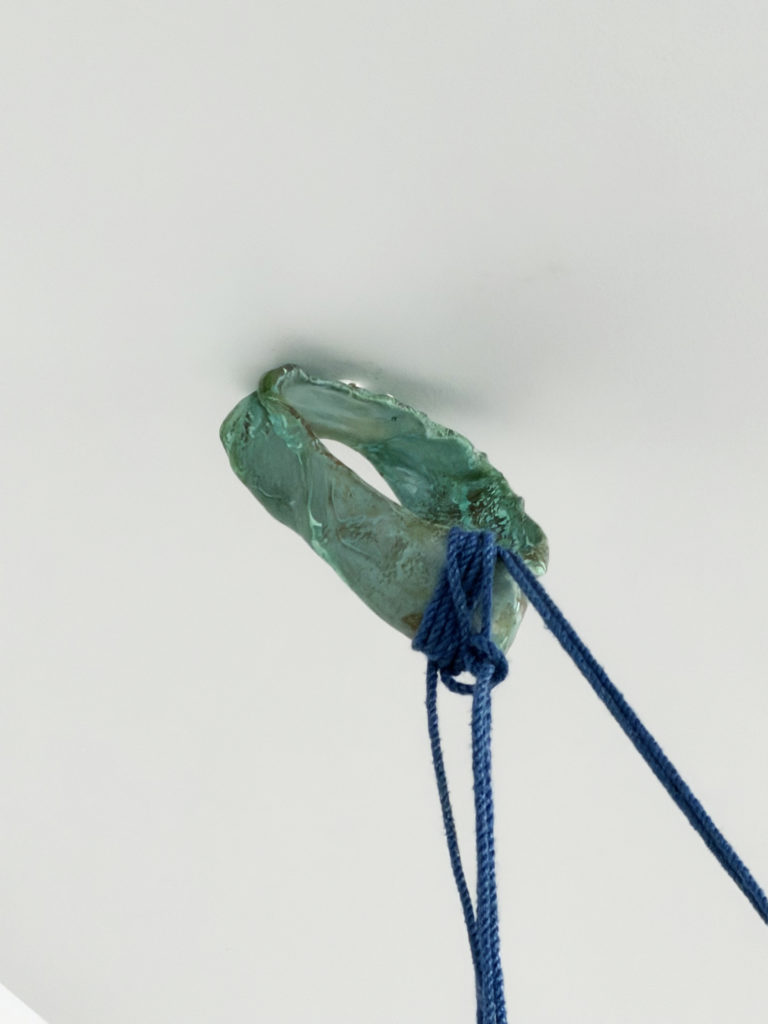
A Line Through Time inserts over 30 metres of handmade drain tile into the ground along Singapore’s Rail Corridor. Typically used for water management, the perforated ceramic lengths were set in consultation with landscape specialists to align with the site’s natural hydrology and land use. Glazed with slip made from Singapore clay, the work ties its material directly to the ground it inhabits.

Sited along a route that was repurposed from colonial railway to an important post-independence transport line, and, later, a public green space, the work attends to how ground and infrastructure co-produce the Corridor. The tile line assimilates into this living landscape, its clay body mirroring the local soil, and its function following existing natural flows. The work exists in conversation with the weather, the soil and the passing of days—what endures is not its form but its ongoing exchange with place.